
Key Highlights
- Incident:A tour bus collided with two freight trucks in Cirebon, Indonesia.
- Casualties:Two passengers died instantly, and several others were injured.
- Investigation:Authorities are examining the bus's braking system and the circumstances of the crash.
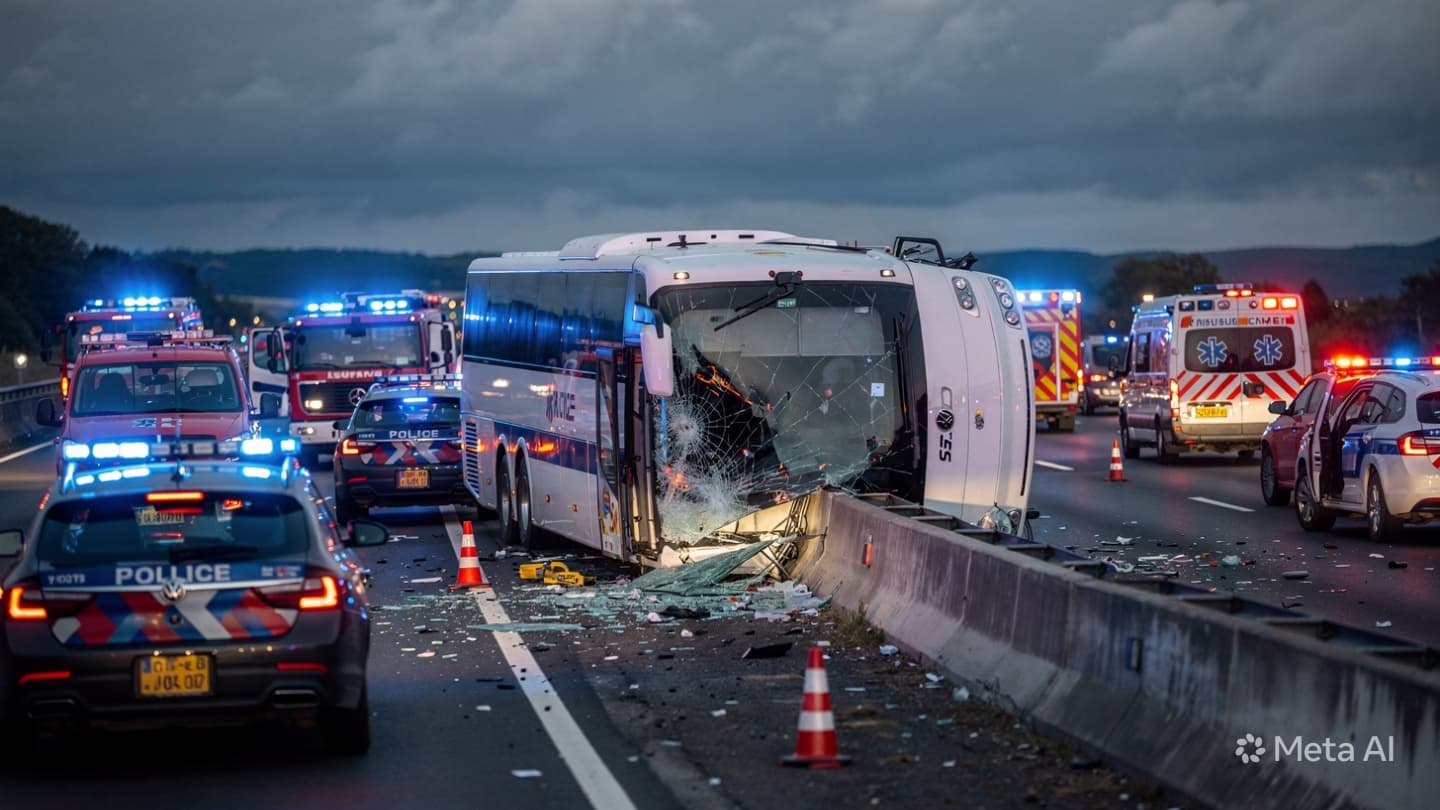
On Saturday morning, a devastating accident occurred on the main coastal highway in Cirebon, Indonesia, when a commercial tour bus carrying forty-five passengers collided with two freight trucks. The crash took place at kilometer marker 142 during a busy period of commercial transit along the northern Java artery. Tragically, two passengers seated in the front rows of the bus died instantly when the vehicle struck the rear of a stationary flatbed trailer.
Emergency responders arrived at the scene to find the tour bus wedged beneath the steel frame of the cargo truck, with four passenger cars piled into the wreckage behind them. Using hydraulic cutting tools, emergency medical teams worked tirelessly to free fifteen trapped occupants from the twisted metal chassis. The injured were transported to three local district hospitals, where four individuals remain in critical condition.
Traffic investigators from the National Police Traffic Corps are currently examining skid marks that stretch for forty meters before the point of impact. Initial witness accounts suggest that the freight truck slowed abruptly to avoid a broken-down utility van in the fast lane. The bus driver, who survived with minor leg fractures, is undergoing mandatory toxicology testing at the precinct as part of the investigation.
The collision caused an immediate traffic jam that extended twenty kilometers in both westbound lanes toward Jakarta. Highway operators managed to open a single lane on the shoulder after three hours of clearing debris, but heavy container trucks remained immovable. Logistics firms have warned that delivery schedules for perishable goods across Central Java will experience delays of up to twelve hours due to the incident.
Mechanical inspectors are focusing their attention on the bus's braking system, which reportedly suffered pneumatic pressure loss prior to the crash. The vehicle's registration papers indicate it was operating on a temporary permit after failing its previous provincial safety inspection. If systematic maintenance neglect is proven, the transport company could face potential license revocation.
Local residents played a crucial role in assisting emergency crews by providing water to stranded drivers who were stuck in their vehicles during the midday heat. Tow trucks struggled to access the core of the pileup due to the absence of an emergency lane on this specific section of the highway. The wreckage of the two commercial trucks required specialized heavy-duty recovery cranes from the port authority to clear the scene.
The regional government has faced repeated demands to install overhead lighting and clearer warning signage along this high-speed freight corridor. Statistical data indicates that this particular intersection has seen five major commercial vehicle accidents since the start of the year. Officials have stated that a budget for infrastructure upgrades has been approved, but construction will not begin until the dry season.
As maintenance crews work to clean a large diesel spill from the asphalt surface, the highway remains partially obstructed. Heavy sand layers have been spread across the lanes to prevent secondary skidding when traffic flow is fully restored later tonight. Police expect the road to return to normal capacity by dawn on Sunday.
Published by Banx Network. This article is part of the Banx decentralized media programme, powered by the BXE token on the XRP Ledger.



