
Key Highlights
- Incident:A passenger bus plunged into a ravine in Oaxaca, Mexico, resulting in multiple fatalities.
- Response:Emergency services mobilized quickly, with helicopters evacuating critically injured passengers.
- Investigation:Authorities are examining potential mechanical failures and safety compliance of the bus company.
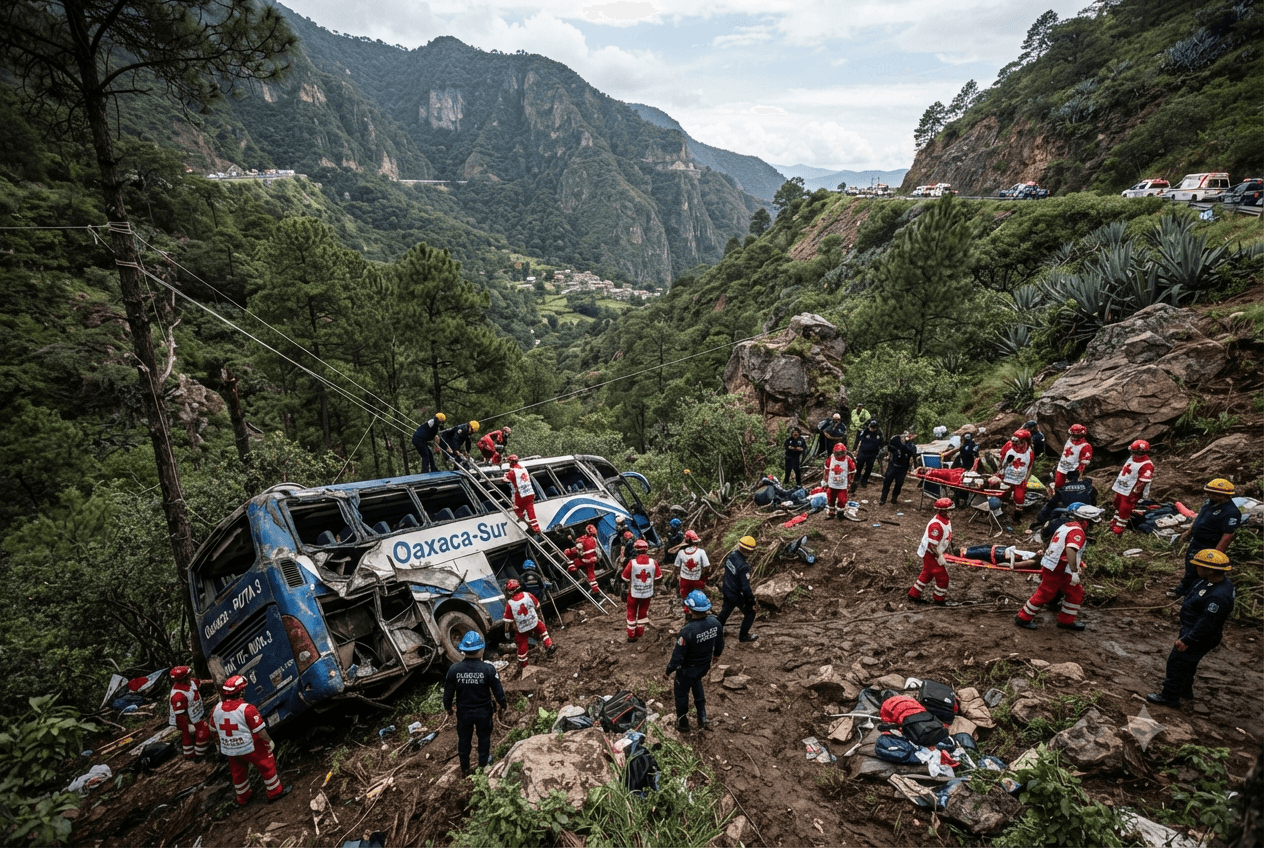
Oaxaca, Mexico—A devastating bus accident occurred on a treacherous mountain route, leading to a tragic loss of life. The passenger coach veered off course on a blind curve, colliding with a rock wall before tumbling into a deep ravine. Eyewitnesses reported hearing screams as survivors attempted to escape through shattered windows. Emergency dispatchers received urgent calls from motorists who witnessed the horrific scene, prompting immediate action from state police and National Guard units.
Rescue teams faced significant challenges as they rappelled down the steep embankment to reach the overturned bus. Paramedics set up triage stations on the highway above, treating critically injured passengers. Red Cross helicopters were dispatched to transport those in need of urgent medical care to hospitals in Oaxaca City, which had activated emergency protocols, recalling off-duty medical staff to handle the influx of patients. Tragically, state officials confirmed that several passengers were trapped inside the wreckage, leading to a grim recovery operation.
Preliminary investigations suggest that brake failure may have contributed to the accident. Transport ministry records revealed that the bus had missed a scheduled safety inspection earlier in the month, raising serious concerns about the maintenance practices of the operating company. Survivors reported a burning smell from the brakes prior to the crash, indicating potential mechanical issues that had gone unaddressed. Federal inspectors cordoned off the crash site to gather data from the bus's onboard computer, which may provide further insights into the incident.
As families gathered at local terminals seeking information about their loved ones, state prosecutors initiated a formal investigation into the actions of the bus driver and the operating company. Heavy cranes were brought in to recover the bus from the ravine, while traffic on the vital federal highway was severely disrupted for hours. Long lines of impatient truck drivers formed as emergency crews worked tirelessly to clear the wreckage and restore normalcy to the route.
Civil engineers conducted inspections of the roadside barriers, which were deemed inadequate for the hazardous conditions of the mountain pass. Transport unions criticized the lack of proper highway maintenance and warning signage, arguing that these factors contributed to the severity of the crash. In response, federal legislators called for stricter regulations on long-distance passenger carriers operating in mountainous areas, emphasizing the need for enhanced safety measures.
As night fell over the rugged landscape, emergency lighting illuminated the crash site, where forensic teams continued their work to recover personal belongings and identify victims. The federal transport secretariat announced plans for nationwide audits of regional bus fleets to prevent future tragedies. The wreckage of the bus was loaded onto a flatbed tow truck, while the mountain highway was reopened to restricted traffic under police escort, marking a somber end to a tragic day in Oaxaca.
Published by Banx Network. This article is part of the Banx decentralized media programme, powered by the BXE token on the XRP Ledger.



