A routine journey can become catastrophic in seconds.
Passengers board trains expecting ordinary movement: stations, tickets, conversations, long stretches of track disappearing into distance.
But transportation systems also represent crowded public spaces where violence can produce devastating consequences rapidly and indiscriminately.
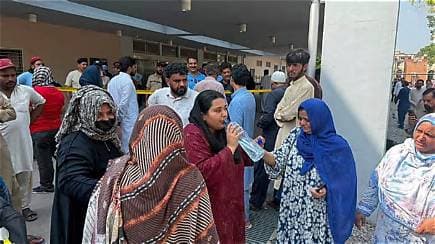
Authorities in say a suicide car bomb attack targeting a train killed at least 24 people, with emergency responders rushing to the scene following the explosion.
Officials reported that the blast struck near or alongside the train route, causing severe damage and triggering large-scale rescue efforts.
Rescue workers and medical teams were deployed to:
Recover victims Treat survivors Secure the area Investigate the attack Assess infrastructure damage The full number of casualties may continue changing as authorities verify conditions and identify victims.
Why Rail Systems Are Vulnerable Railways play a critical role across South Asia because they move:
Workers Families Goods Long-distance travelers Large passenger systems often connect densely populated urban and rural areas daily.
However, trains and rail infrastructure can also become vulnerable targets because they involve:
Predictable routes High passenger density Public accessibility Limited evacuation options during attacks Security forces in multiple countries have long faced challenges protecting expansive transportation networks spanning thousands of kilometers.
Pakistan’s Ongoing Security Challenges has experienced years of militant violence involving attacks targeting:
Security personnel Civilians Religious sites Public transportation Government infrastructure Different extremist and separatist groups operate across various regions with differing political and ideological motivations.
Authorities continue conducting security operations aimed at preventing attacks and dismantling militant networks.
Incidents involving mass-casualty bombings often lead to:
Heightened security alerts Expanded investigations Military or police operations Political debate over internal security measures The Human Impact of Transportation Attacks Attacks on trains carry particular psychological weight because rail travel represents ordinary civilian life.
Passengers are rarely combatants. They are commuters, families, students, workers, and travelers sharing temporary public space.
That reality makes transportation attacks especially traumatic: they target movement itself — the simple expectation that people should be able to travel safely from one place to another.
Beyond immediate casualties, such attacks can leave lasting effects involving:
Public fear Disrupted transportation systems Economic strain Long-term psychological trauma Violence and Public Spaces Modern terrorism often focuses on symbolic public environments because visibility amplifies fear.
Transportation hubs, markets, concerts, and public gatherings become targets not only because of crowd density but because they represent shared civilian normality.
An attack against a train therefore resonates beyond the physical location itself. It affects how societies perceive safety in everyday movement.
That broader emotional impact is often part of the intended strategy behind attacks targeting civilians.
A Wider Reflection Railways historically symbolize connection: cities linked by steel tracks, movement across landscapes, the ordinary rhythm of public life.
When violence strikes those spaces, it interrupts more than transportation. It interrupts routine human trust — the assumption that daily life can proceed without catastrophe.
The attack in Pakistan reflects the continuing challenge many societies face in protecting open public systems while preserving normal civic life.
And perhaps that is part of what makes attacks on civilian transportation feel especially painful: they occur in places built not for conflict, but for movement, encounter, and the simple human act of traveling forward together.
AI Image Disclaimer Images are AI-generated illustrations and are intended for visual representation only, not real-world documentation.
Source Check Authorities in say a suicide car bomb attack targeting a train killed at least 24 people and injured many others, prompting emergency response operations and renewed security concerns in the region.
Published by Banx Network. This article is part of the Banx decentralized media programme, powered by the BXE token on the XRP Ledger.