Key Highlights
- Incident:A commuter train derailed in Buenos Aires, resulting in three fatalities and over eighty injuries.
- Response:Emergency services deployed twenty-four ambulances and established a triage center for victims.
- Investigation:Federal transport safety officers are examining maintenance records and the conditions leading to the derailment.
Buenos Aires, Argentina—A tragic train derailment occurred Sunday morning along a suburban commuter line, claiming the lives of three passengers and injuring at least eighty others. The incident unfolded when the lead engine of the high-speed train derailed on a curve, dragging two passenger cars into a concrete support embankment before coming to a halt. Eyewitnesses described a scene of chaos as first responders rushed to assist trapped commuters.
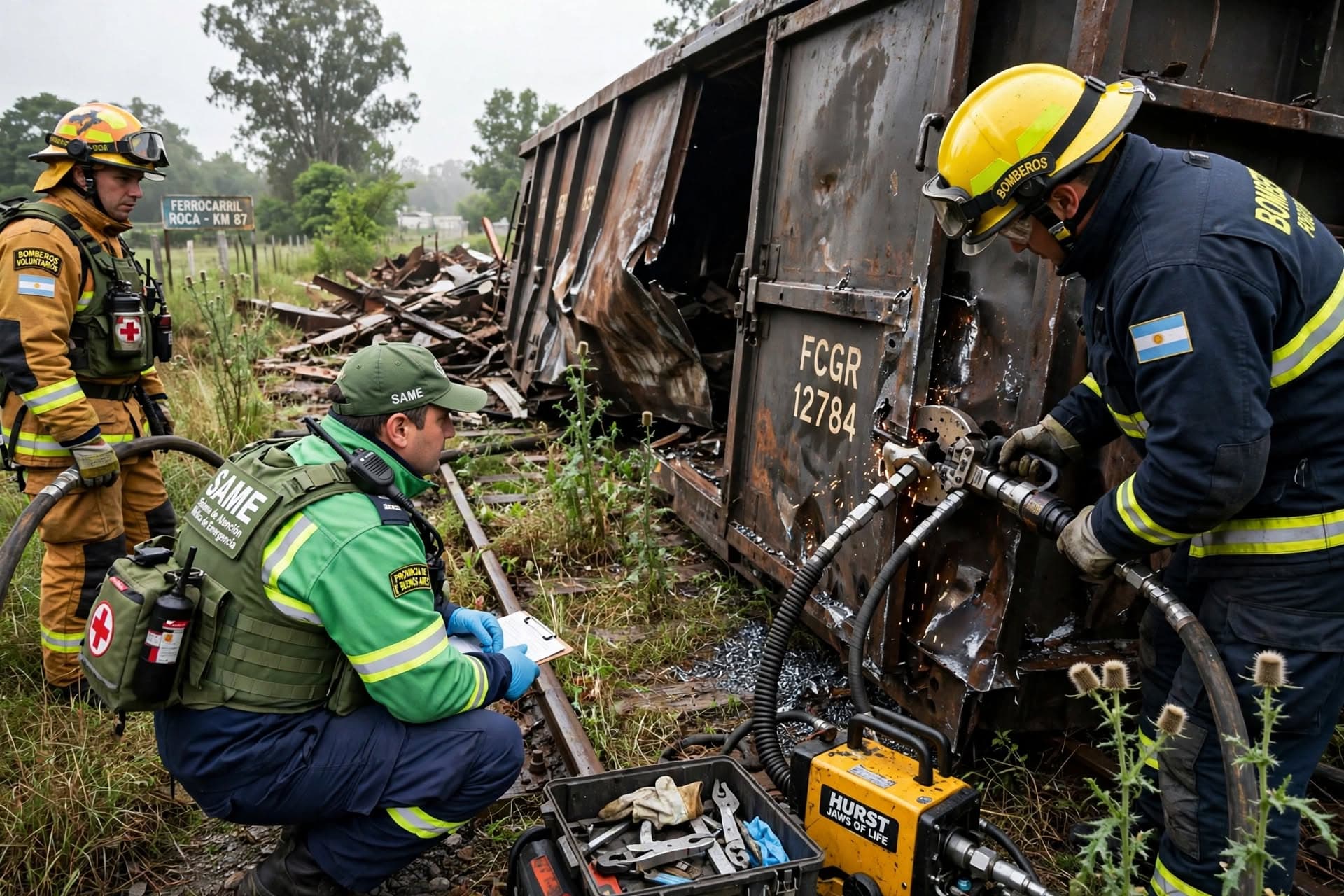
Emergency services quickly mobilized, deploying twenty-four ambulances to the site. Paramedics worked tirelessly to extract passengers from the wreckage, utilizing hydraulic spreaders to open crushed doors and pulling individuals through shattered windows. A triage center was established on the adjacent gravel right-of-way, where water and medical supplies were distributed to disoriented passengers waiting for assistance.
Investigations into the cause of the derailment are already underway. Municipal investigators obtained track maintenance records indicating that the switch assembly at the junction had undergone emergency repairs just days prior, following reports of signal alignment errors. Field inspectors noted visible stress fractures along the outer rail line near the derailment site, raising concerns about the integrity of the track. The primary switch gear reportedly failed to lock in position as the express train approached at sixty miles per hour, leading to the catastrophic incident.
Commuter union representative Marcos Gimenez spoke to reporters, expressing concerns over safety protocols. "We raised formal safety warnings regarding track bed degradation along this sector three weeks ago," he stated. "The replacement ties remained stacked in the maintenance yard because crew schedules were cut." His comments highlight ongoing issues within the rail system that may have contributed to the accident.
In the aftermath of the derailment, surrounding suburban train lines suspended service across the southern rail corridor, leaving thousands of weekend commuters stranded at municipal terminals. Emergency transit buses were dispatched to alleviate the backlog at intermediate stations, but road congestion significantly delayed passenger transfers, compounding the chaos.
Hospitals throughout the capital region declared a Code Red status as trauma units prepared to receive victims. Many passengers suffered from crush injuries, bone fractures, and severe lacerations. As of Sunday afternoon, eight individuals remained in critical condition in intensive care units following emergency surgeries.
In response to the disaster, ministry officials confirmed that rail safety regulators would conduct thorough inspections of all switch mechanisms along the line before allowing passenger operations to resume. Federal prosecutors have also opened a criminal inquiry into maintenance oversight procedures and contractor compliance records, aiming to hold accountable those responsible for the safety of the rail system.
As night fell, work teams using heavy rail cranes continued efforts to lift the overturned carriages off the trackbed. Investigators plan to clear the main wreckage overnight to grant track repair crews access to the destroyed rail segment, ensuring that the necessary repairs can be made swiftly to restore service.
Published by Banx Network. This article is part of the Banx decentralized media programme, powered by the BXE token on the XRP Ledger.