MADRID — At least 68 people have been killed and dozens more severely injured after a high-speed passenger train smashed into a stationary train on Thursday morning, October 29, 2026 marking one of the worst railway disasters in Europe in recent years.
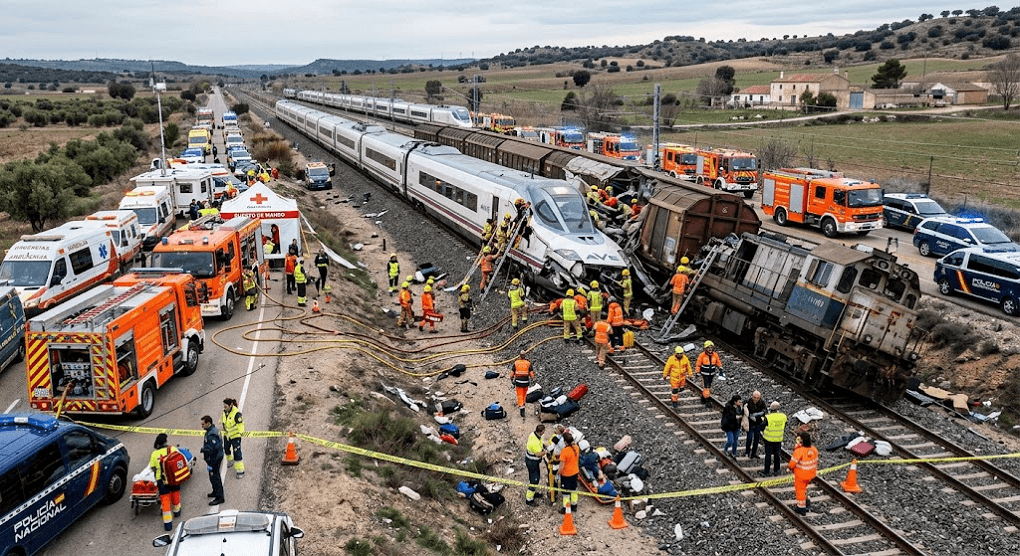
Emergency services, fire crews, and medical teams rushed to the scene shortly after the high-speed service, traveling at significant velocity, plowed into the back of a stopped passenger train along a major rail corridor.
The force of the impact derailed several carriages, crushing metal framework and trapping numerous passengers inside the twisted wreckage. Rescuers worked feverishly using specialized cutting tools to free trapped survivors amidst heavy debris.
Triage stations were quickly erected alongside the track as fleets of ambulances and medical helicopters transported critically injured passengers to nearby regional trauma centers. Authorities confirmed that dozens of survivors remain in intensive care, with doctors working around the clock to stabilize victims.
Spain’s Ministry of Transport and regional authorities immediately coordinated emergency relief, dispatching specialized disaster response units and setting up support centers for grieving families seeking information about loved ones.
Rail operator officials and police crash investigators have launched an urgent inquiry to determine how the high-speed service entered the occupied track block without automatic safety interventions engaging. Preliminary investigations are focusing on potential signaling malfunctions, automated braking system failures, or central control communication breakdowns.
Prime Minister and senior government figures expressed profound sorrow over the catastrophe, announcing national mourning while promising a swift, transparent investigation into the causes of the collision. Rail traffic across the affected corridor remains completely suspended as recovery teams clear debris and investigators secure the site.
In response to the tragedy, European rail safety regulators announced an emergency audit of automated train control and signaling networks operating on high-speed lines across the continent. International leaders and neighboring governments have offered immediate technical assistance and disaster relief resources, while rail worker unions called for a comprehensive safety review to prevent similar system oversights in the future.
Published by Banx Network. This article is part of the Banx decentralized media programme, powered by the BXE token on the XRP Ledger.