KFAR RUMMAN, LEBANON — Heavy Israeli overnight air strikes struck the southern Lebanese town of Kfar Rumman late Sunday night into early Monday, September 7, 2026, killing at least 11 people, including two children and two paramedics, local officials and state media reported.
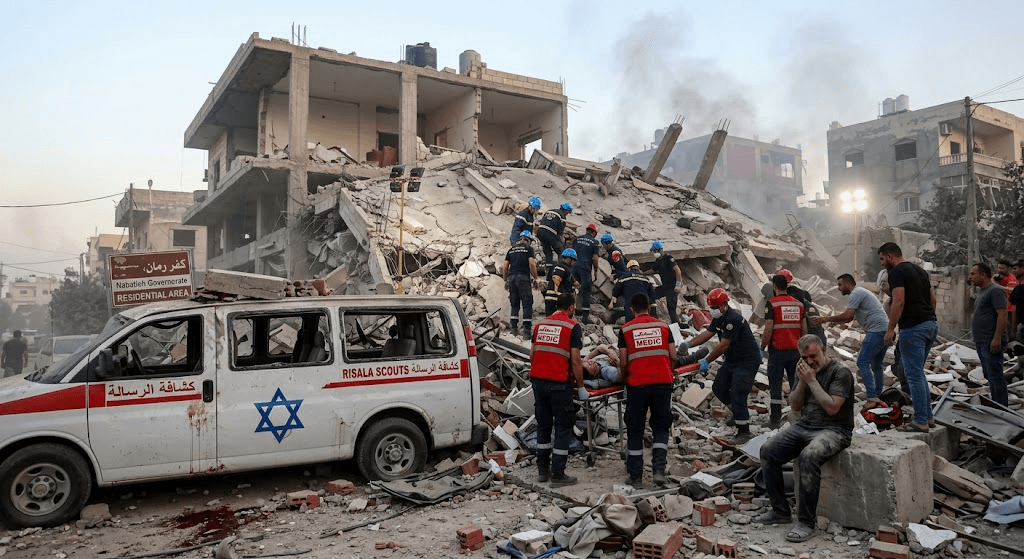
The bombardment targeted multiple locations across the municipality, with the primary strike leveling a multi-story residential building after midnight. Nine occupants, including young children, were killed instantly under the collapse of the concrete structure, while at least five other residents sustained serious injuries and were pulled from the rubble by rescue teams.
A secondary targeted drone strike struck an emergency vehicle in the same municipality, killing two paramedics affiliated with the Risala Scouts medical association who were responding to the initial blast. Emergency crews operating in the surrounding Nabatieh region faced significant operational challenges throughout the night as persistent drone overflights delayed further rescue and recovery efforts.
Lebanese state authorities and international observers strongly condemned the escalation, emphasizing that targeting first responders and residential areas constitutes a grave violation of international humanitarian law. Local health centers issued urgent calls for blood donations as medical facilities in nearby cities struggled to treat incoming survivors suffering from severe trauma and blast injuries.
The military strikes coincided with widespread artillery shelling and bombardment in neighboring towns across southern Lebanon, sending fresh waves of displaced residents fleeing northward toward safer zones.
Lebanese emergency services continue to search the debris for missing persons, while regional diplomatic representatives are calling for an immediate de-escalation of hostilities to prevent further civilian loss.
United Nations human rights monitors and international relief agencies have launched a formal record-gathering process, documenting the destruction of civilian infrastructure and the targeting of certified medical personnel in the sector. Humanitarian organizations warned that continued strikes along main access roads threaten to completely sever vital supply corridors, impeding the delivery of essential medical equipment and emergency aid to isolated frontline communities in the south.
Published by Banx Network. This article is part of the Banx decentralized media programme, powered by the BXE token on the XRP Ledger.