TYRE, Lebanon — A fresh wave of Israeli airstrikes hit multiple locations across southern and eastern Lebanon, leaving at least three people dead and 23 others injured, according to statements released by the Lebanese Health Ministry.
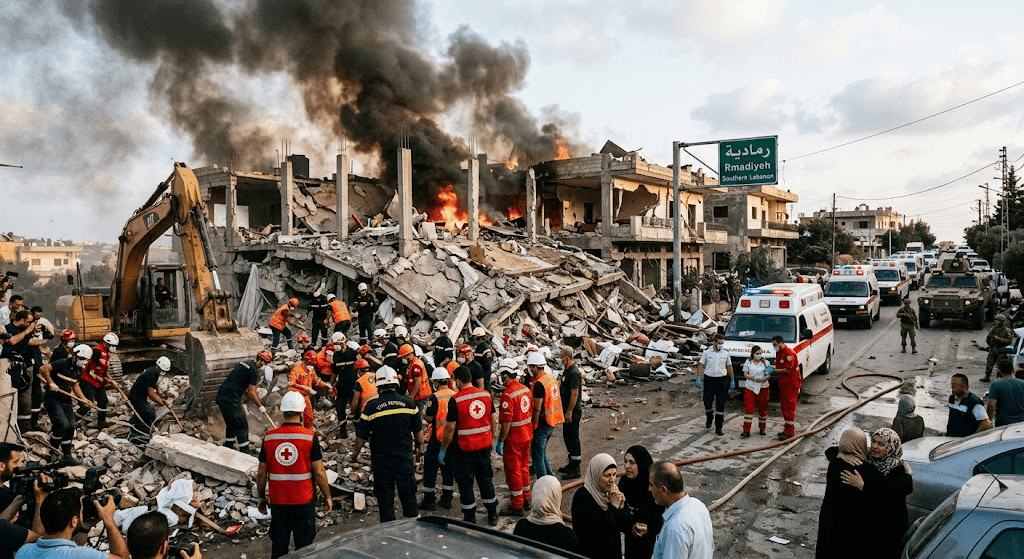
The bombardment targeted several strategic regions, including five separate strike locations spanning the Tyre and Nabatieh districts as well as parts of the eastern Bekaa Valley. In one incident near the city of Nabatieh, two young men were killed when an aerial strike hit their motorcycle in the vicinity of the strategic Ali Al-Taher Ridge. A separate strike on a residential home in the village of Rmadiyeh, located south of Tyre, resulted in a third fatality and injured 15 individuals—including women, children, and emergency first responders.
Israeli military officials stated that the coordinated air raids were conducted in response to a hostile drone launched by Hezbollah toward Israeli forces operating in the area. According to military statements, the drone was intercepted and downed, prompting direct retaliatory strikes on what were described as active military sites and command infrastructure.
Lebanese emergency personnel and rescue services dispatched multiple teams to clear debris and transport casualties to local hospitals across southern governorates. Local authorities condemned the strikes, pointing to the growing civilian impact in shelter areas where families displaced from previous border fighting had sought refuge.
The intense aerial activity marks a volatile resumption of hostilities despite international diplomatic efforts and existing truce agreements intended to reduce cross-border fire. Regional security analysts warn that continued breaches along the southern border threaten to trigger broader military escalation across northern command sectors.
International mediators and United Nations peacekeeping officials have renewed calls for immediate restraint on both sides of the Blue Line to prevent a total breakdown of the fragile ceasefire framework. With humanitarian agencies warning that local healthcare facilities are reaching capacity under the strain of sudden mass casualties; diplomatic envoys are intensifying talks to reinforce de-escalation protocols before the regional violence spreads further.
Published by Banx Network. This article is part of the Banx decentralized media programme, powered by the BXE token on the XRP Ledger.