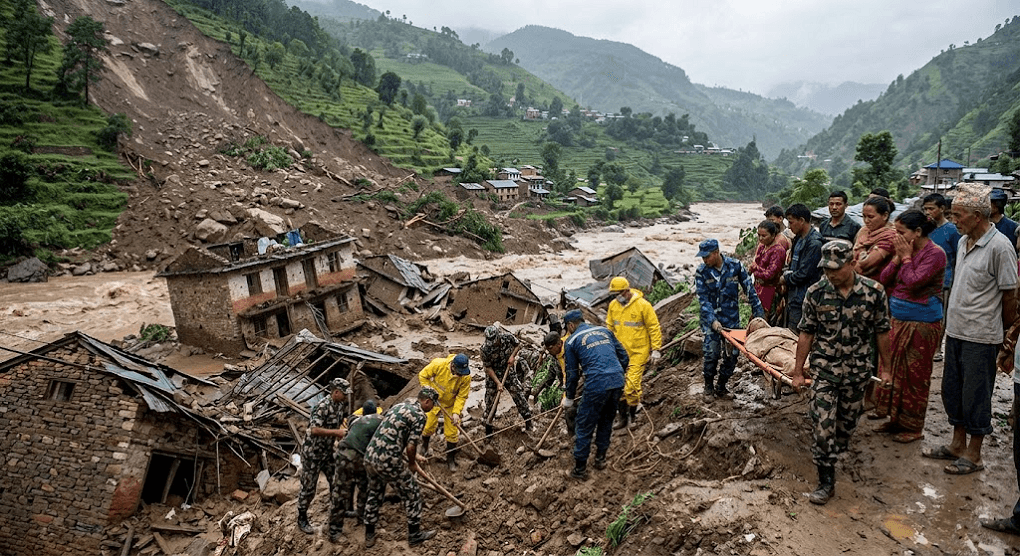
KATHMANDU, Nepal — At least 14 people have lost their lives and 11 others remain missing after relentless heavy rainfall and violent storms triggered catastrophic flooding and landslides across Nepal.
Torrential downpours over recent days have caused major rivers and their tributaries to swell past danger levels, inundating low-lying residential areas, washing away homes, and cutting off crucial transportation links. Landslides triggered by saturated soil have swept through hillside communities and blocked key national highways, severely complicating early rescue operations.
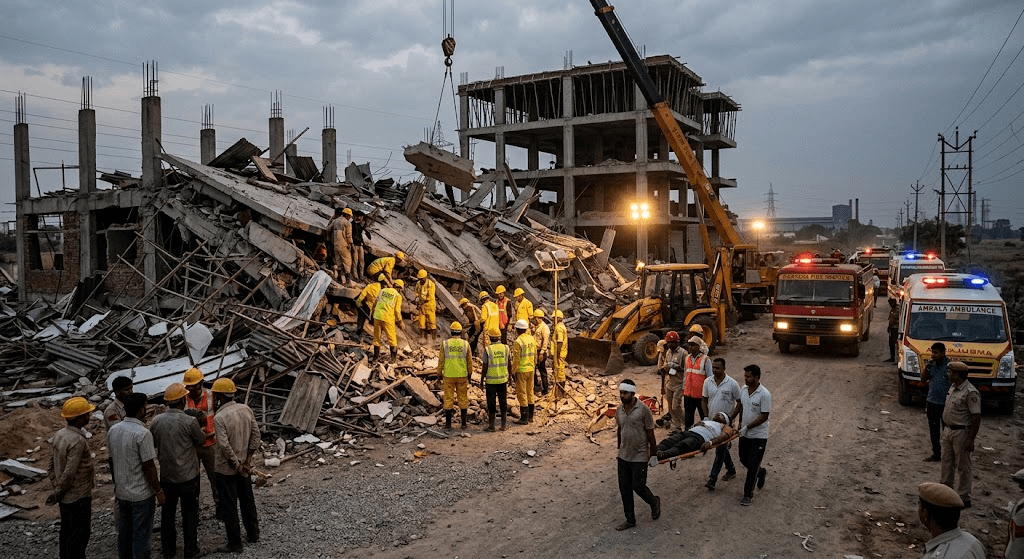
Emergency response teams, including personnel from the Nepalese Army, Armed Police Force, and local volunteer groups, have been deployed to the worst-affected regions to carry out search and rescue missions. Rescuers are navigating deep mud, debris, and raging waters to locate those still unaccounted for and evacuate stranded families to temporary shelters set up in schools and public facilities.
Meteorological authorities have issued flash flood alerts for dozens of districts across the country, warning that water levels in key river basins are expected to remain dangerously high. Local officials are advising residents living near riverbanks and landslide-prone mountain slopes to move to higher ground immediately and remain on high alert.
Government agencies are working round-the-clock to restore power and communication lines while assessing structural damage to bridges and public infrastructure. Disaster management authorities warn that the death toll could climb further as rescue teams clear heavy debris and gain access to remote, isolated villages.
Humanitarian agencies and local non-governmental organizations have begun mobilizing relief packages containing food, clean drinking water, tarpaulins, and medical supplies to support displaced families. However, damage to primary transit corridors and secondary mountain roads continues to delay the distribution of critical aid, forcing response teams to rely on military helicopters for aerial drops in the most severely isolated highland communities.
Climate scientists and disaster management experts have noted that the increasing frequency and intensity of unseasonal monsoon deluges present an unprecedented threat to the nation's fragile topography. With soil stability compromised across vast stretches of the country, officials warn that even moderate localized rainfall in the coming days could trigger secondary landslides, prolonging the humanitarian crisis and complicating long-term reconstruction efforts.
Published by Banx Network. This article is part of the Banx decentralized media programme, powered by the BXE token on the XRP Ledger.