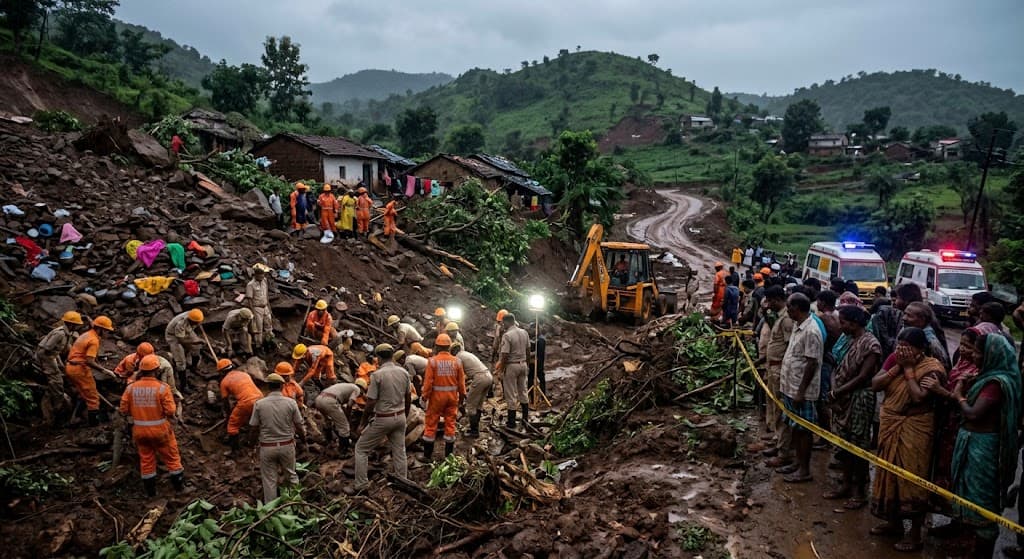
KANDHAMAL, India — At least three people were killed after a catastrophic landslide struck Odisha’s Kandhamal district on Saturday, October 31, 2026 following relentless torrential rainfall unleashed by Cyclone Arnab.
The intense weather system, which has been pounding coastal and inland regions of the state over the past 24 hours, triggered massive earth movements along hilly terrains, burying several structures and blocking vital transit routes across the district.
Emergency first responders, including teams from the National Disaster Response Force (NDRF) and local law enforcement, swiftly deployed to the affected area to initiate search-and-rescue operations. Rescuers worked through hazardous conditions and heavy downpours to clear tons of mud, debris, and fallen trees in an effort to reach trapped residents. Authorities confirmed that three bodies have been recovered so far, while several others are being treated for injuries at nearby medical centers.
Local officials report that the heavy rainfall has severely impacted infrastructure in Kandhamal, leading to widespread power outages and disruption of telecommunication networks. Road networks connecting vulnerable villages to major towns remain heavily obstructed, hindering relief supplies from reaching remote communities.
State authorities have issued high alerts for multiple low-lying and landslide-prone districts across Odisha as Cyclone Arnab continues to bring heavy precipitation and strong winds across the eastern seaboard. District collectors have been instructed to evacuate residents from high-risk zones to temporary shelter centers, where food, clean water, and medical aid are being provisioned.
The India Meteorological Department (IMD) forecasts that rainfall will persist over the next 24 to 48 hours, urging citizens to stay indoors and follow official safety directives while disaster management teams remain on high alert.
In response to the growing crisis, the Odisha state government has announced an emergency relief fund to provide immediate financial assistance to the families of the deceased and support those who have lost their homes. Chief Minister officials confirmed that specialized medical units and mobile health clinics are being dispatched to the worst-hit areas in Kandhamal to prevent the outbreak of waterborne diseases amidst standing floodwaters. Meanwhile, regional emergency teams continue to work around the clock using heavy machinery to clear critical road arteries, ensuring that essential supplies, medical equipment, and further humanitarian aid can reach isolated communities as quickly as possible.
Published by Banx Network. This article is part of the Banx decentralized media programme, powered by the BXE token on the XRP Ledger.