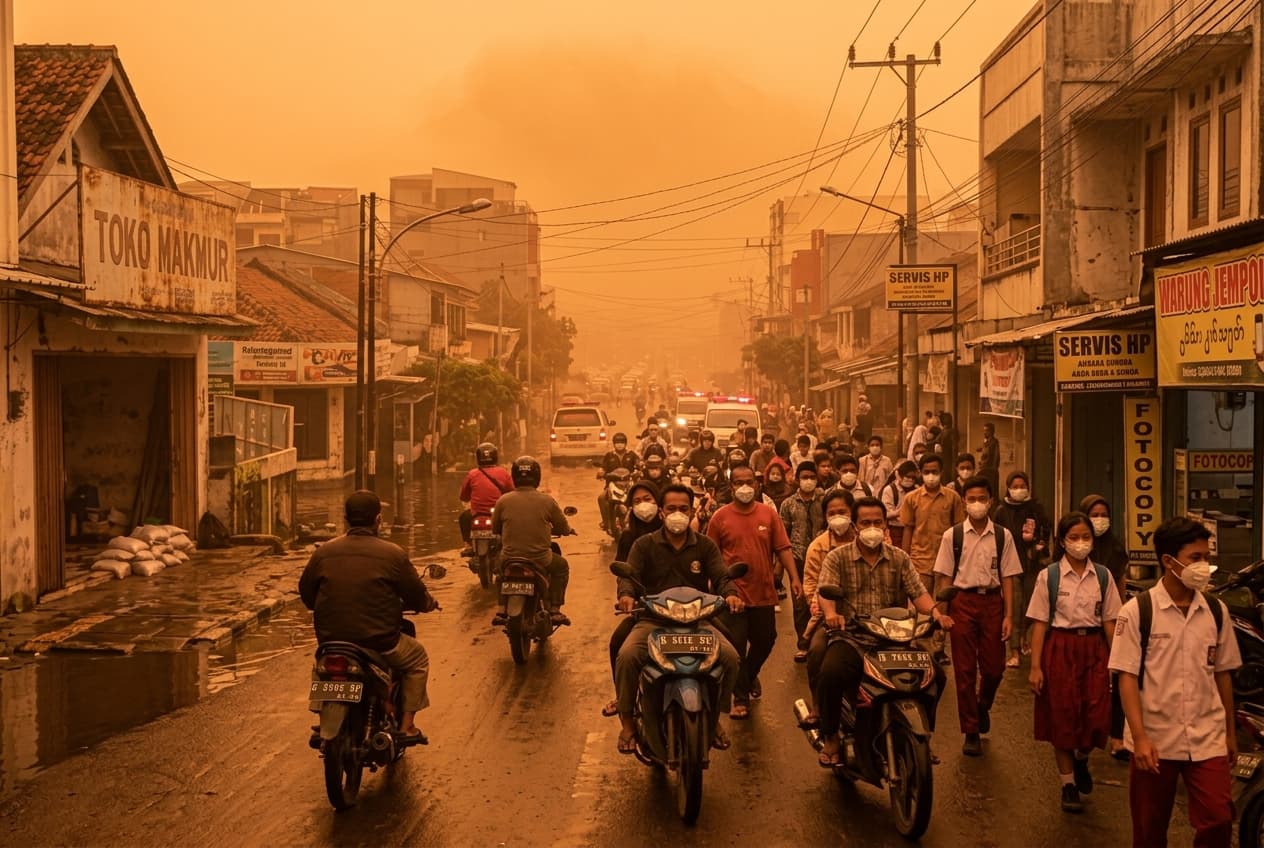
Jakarta, Indonesia—Health authorities recorded over 280,000 acute respiratory infection cases on October 16, 2026, as toxic wildfire haze continued smothering provinces across Sumatra and Kalimantan.
Ground-level air quality indexes in major provincial capitals spiked past hazardous thresholds before dawn. Dense particulate matter from peatland fires trapped low-altitude smoke layers over urban centers, forcing regional governments to close schools and issue mask directives.
Hospitals and community clinics across affected provinces reported overcrowded triage rooms as residents sought emergency oxygen therapy. Emergency medicine stockpiles of bronchodilators and respiratory masks continue running critically low across rural district health centers.
"The volume of patients suffering from severe shortness of breath doubled overnight, completely overwhelming our isolation wards," said Dr. Retno Wardhani, a chief pulmonary specialist working at a regional public hospital in Pekanbaru.
Peat fires burning deep underground prove exceptionally difficult to suppress despite continuous aerial water-bombing sorties deployed by national disaster response teams. Dry wind corridors continue pushing acrid smoke plumes across international maritime channels, disrupting regional flight operations and shipping lanes.
Environmental monitoring networks report thousands of active thermal hotspots across drainage canal zones where peatlands were drained for agricultural concessions. Unregulated land-clearing burning combined with prolonged dry season conditions created ideal ignition grounds across hundreds of thousands of hectares.
Regional health departments instructed vulnerable demographics, including young children and elderly residents with pre-existing conditions, to remain entirely indoors behind sealed enclosures. Field dispensaries continue distributing basic face coverings at public transit hubs as emergency personnel attempt to secure additional medical supplies.
Firefighting teams continue battling underground peat blazes with specialized ground injectors along forest fringes. Public health personnel remain deployed across provincial clinics as patient admissions for severe respiratory distress continue climbing daily.
Published by Banx Network. This article is part of the Banx decentralized media programme, powered by the BXE token on the XRP Ledger.