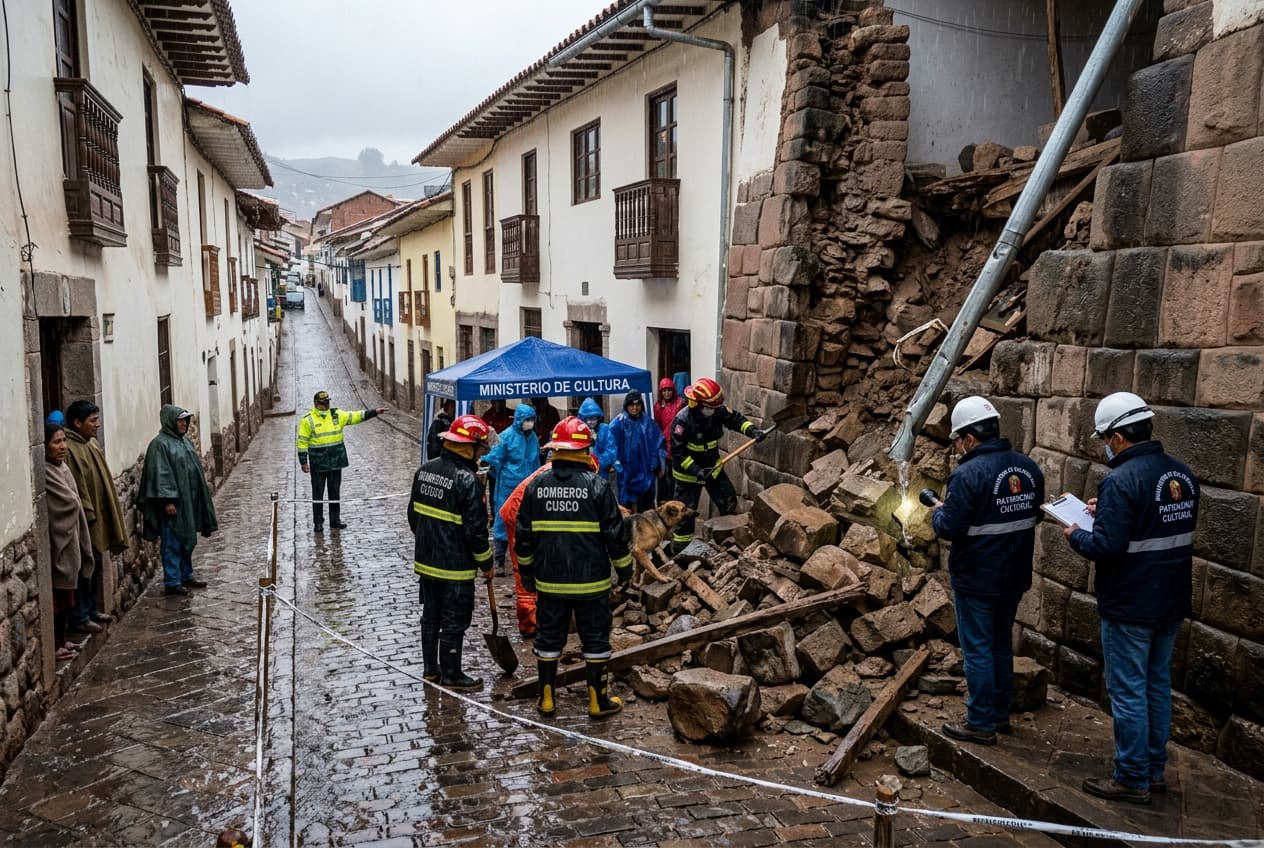
Cusco, Peru—An ancient stone retaining wall collapsed onto a crowded walkway today in Cusco, crushing and killing a local tourist guide. Heavy seasonal rain bared down on the historic city center for hours leading up to the collapse, saturating the earthen fill behind the centuries-old masonry. The structural failure occurred along a frequently traveled pedestrian path connecting major historic landmarks.
Tons of massive stone blocks and mud broke loose from the upper terrace without warning, cascading down onto the stone-paved alleyway below. Tourists and nearby street vendors scattered as the debris field slammed across the walkway. First responders confirmed the victim was leading a small tour group when the upper retaining section buckled under immense hydrostatic pressure.
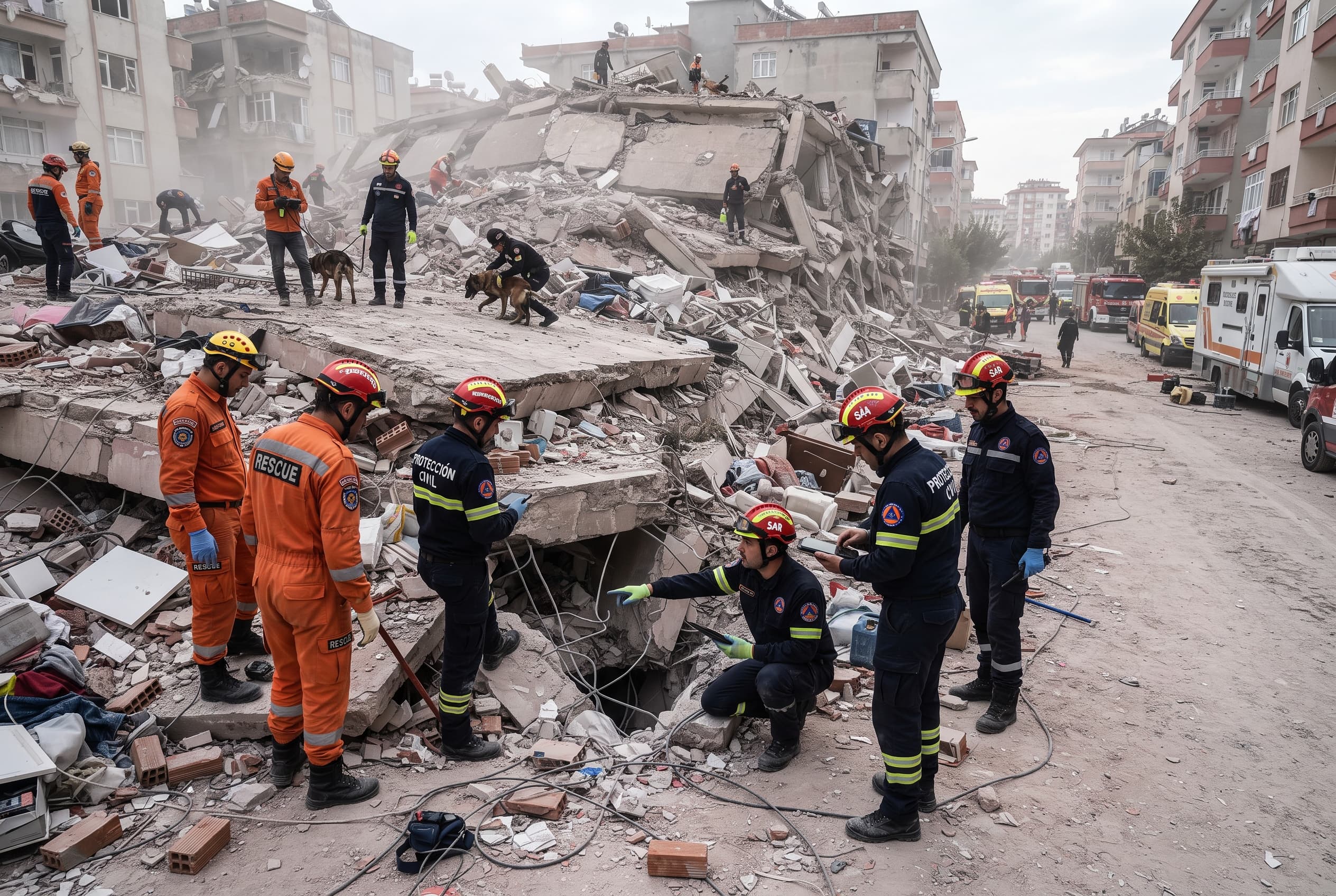
Emergency responders, police, and local residents rushed to the scene with crowbars and bare hands to lift heavy granite slabs from the rubble. Paramedics attempted resuscitation on the tour guide, but the victim was pronounced dead at the scene from severe crushing trauma. No tourists in the group sustained critical injuries, though several were treated for shock and minor abrasions.
Municipal heritage inspectors immediately closed off access to adjacent walkways and historic alleys. "The prolonged rainfall infiltrated deep into the soil behind the dry-stone terrace, creating extreme pressure," stated Maria Huaman, a civil defense coordinator on site. "These historic structures lack modern drainage channels, making extreme rain events a immediate structural hazard."
The incident highlights growing concerns over preserving historic masonry across the high-altitude region as erratic rainfall patterns intensify. Hundreds of pre-colonial and colonial stone walls throughout Cusco support upper streets and terraces, attracting millions of visitors each year. Water saturation repeatedly erodes the ancient clay binding material, causing sudden shifts in foundational balance.
Culture ministry officials dispatched specialized conservation architects to evaluate the structural integrity of neighboring retaining walls. Authorities suspended all walking tours through the immediate historic zone while structural engineers conduct emergency risk assessments. Workers erected wooden scaffolding to shore up remaining sections of the damaged terrace above the path.
Police cordoned off the alleyway with heavy barriers as forensic teams completed initial on-site documentation. Municipal crews deployed small motorized winches to carefully move historic stone fragments to secure storage facilities for potential reconstruction. Local guide associations expressed outrage, citing prior warnings submitted to city administrators regarding visible structural cracks along the upper terrace.
Technical teams equipped with laser measuring tools spent the late afternoon scanning nearby historic walls for subtle signs of structural displacement. Heavy rain continues to fall across the city, complicating safety evaluations and forcing municipal crews to tarp vulnerable stone masonry across the sector.
The pedestrian passage remains fully barricaded to public access as structural safety reviews continue. City officials confirmed that emergency restoration crews will remain on site overnight to monitor the upper terrace for potential secondary collapses.
Published by Banx Network. This article is part of the Banx decentralized media programme, powered by the BXE token on the XRP Ledger.