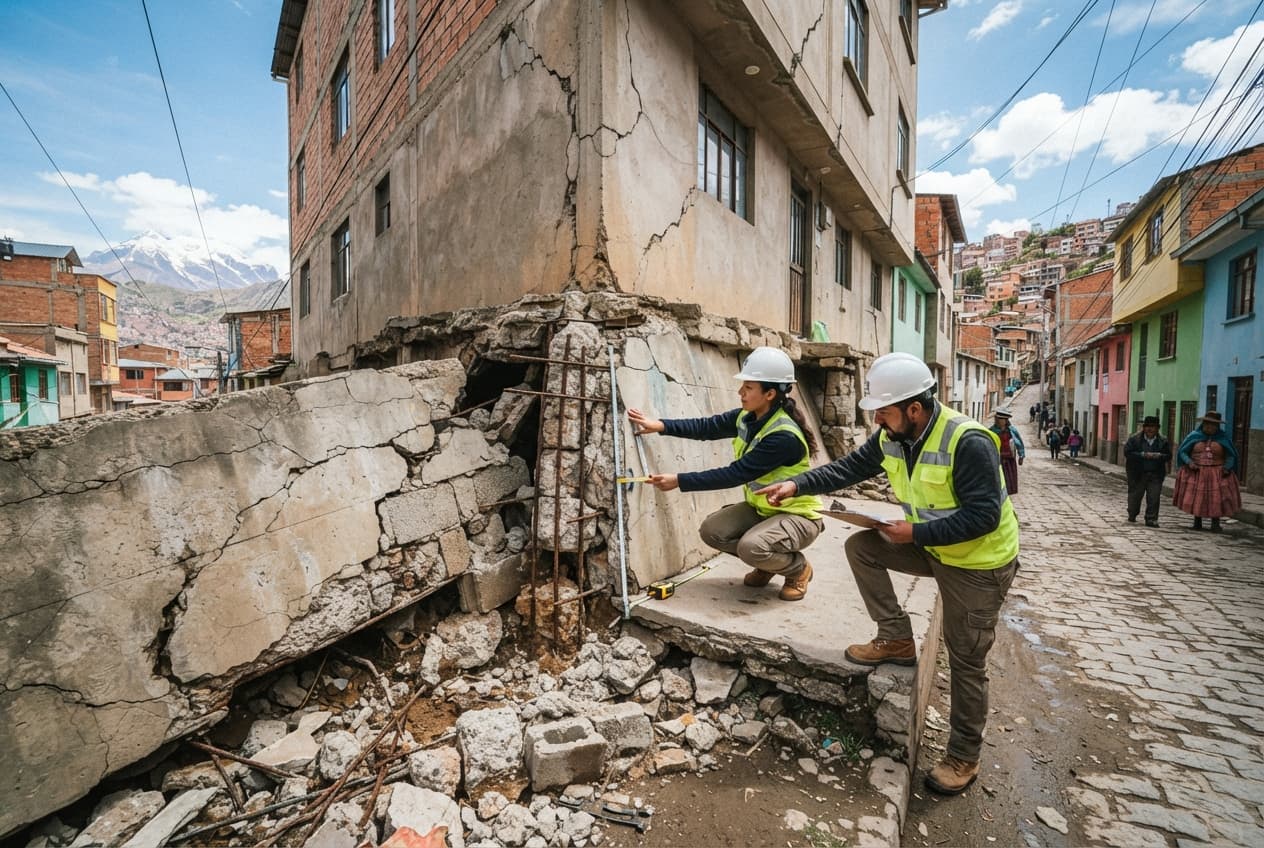
La Paz, Bolivia—A multi-level residential structure pancaked into a pile of jagged concrete and exposed rebar at noon on Monday following relentless downpours. Saturated hillside foundations gave way without warning, causing the building to shear vertically and crash into the narrow street below. Neighbors fled their homes as thick clouds of masonry dust billowed across the densely packed urban canyon.
Municipal rescue squads arrived rapidly, deploying acoustic listening devices and sniffer dogs to detect signs of life beneath the collapsed rubble. Paramedics transported several injured occupants to regional hospitals while firefighters worked to shut off leaking natural gas lines. City officials confirmed that heavy antecedent rainfall had compromised the subterranean soil stability across the entire slope district.
Engineering inspectors had previously flagged several neighboring properties for structural shifting caused by improper drainage and unmanaged runoff. Property owners expressed shock and anger over the lack of municipal oversight regarding urban planning along fragile hillside terrain. City representatives countered that many hillside dwellings lacked formal construction permits and evaded municipal safety inspections.
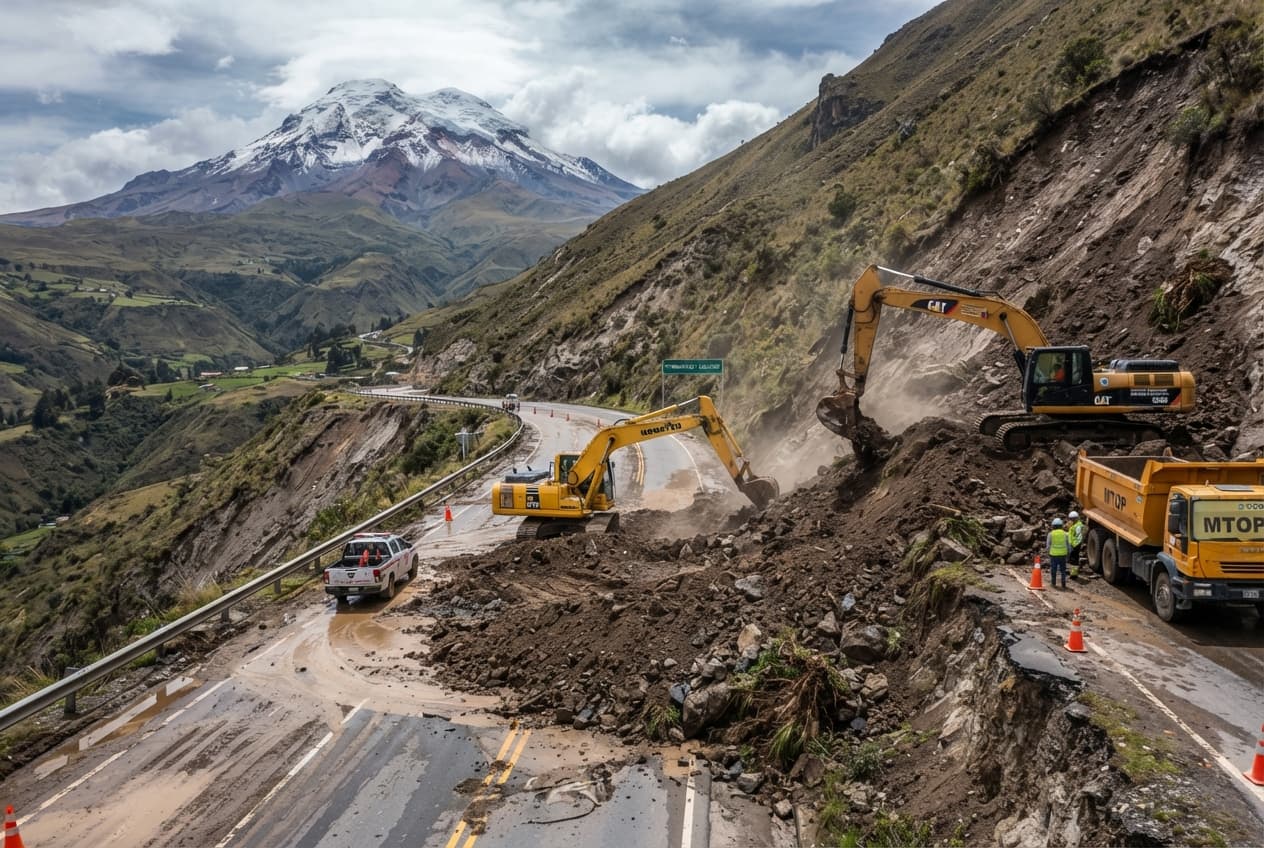
Heavy equipment moved slowly through winding, congested streets to assist with debris removal while avoiding further destabilizing adjacent foundations. Police established a wide security perimeter around the disaster zone to prevent curious onlookers from interfering with heavy extraction machinery. Structural engineers monitored remaining walls for signs of secondary movement using laser surveying instruments.
Disaster relief workers set up temporary processing tables to register displaced families needing emergency housing assistance in municipal facilities. Local community kitchens prepared hot meals for rescue personnel working through intermittent afternoon downpours. Government ministers arrived at the disaster site to assess the mounting structural risks threatening dozens of surrounding homes.
Technical teams drilled core samples into the remaining roadbed to evaluate subsurface erosion rates driven by underground water seepage. Municipal councils debated implementing mandatory evacuation orders for all residences situated along the high-risk geological fault line. Traffic police diverted public buses and private vehicles away from the arterial roads leading into the unstable sector.
As twilight descended over the high-altitude valley, portable floodlights illuminated the massive mound of grey rubble and twisted steel girders.
Rescue operations continued without interruption as structural engineers evaluated whether controlled demolition of adjacent leaning walls became necessary.
Published by Banx Network. This article is part of the Banx decentralized media programme, powered by the BXE token on the XRP Ledger.