There is a quiet theater that plays out above us every night, a drama of light and shadow performed on a stage so vast that its scale resists comprehension. On Saturday evening, just before midnight, that theater will offer a scene visible only to those who know where to look: the small moon Dione will pass in front of Saturn, its tiny shadow trailing alongside like a secret whispered across the solar system.
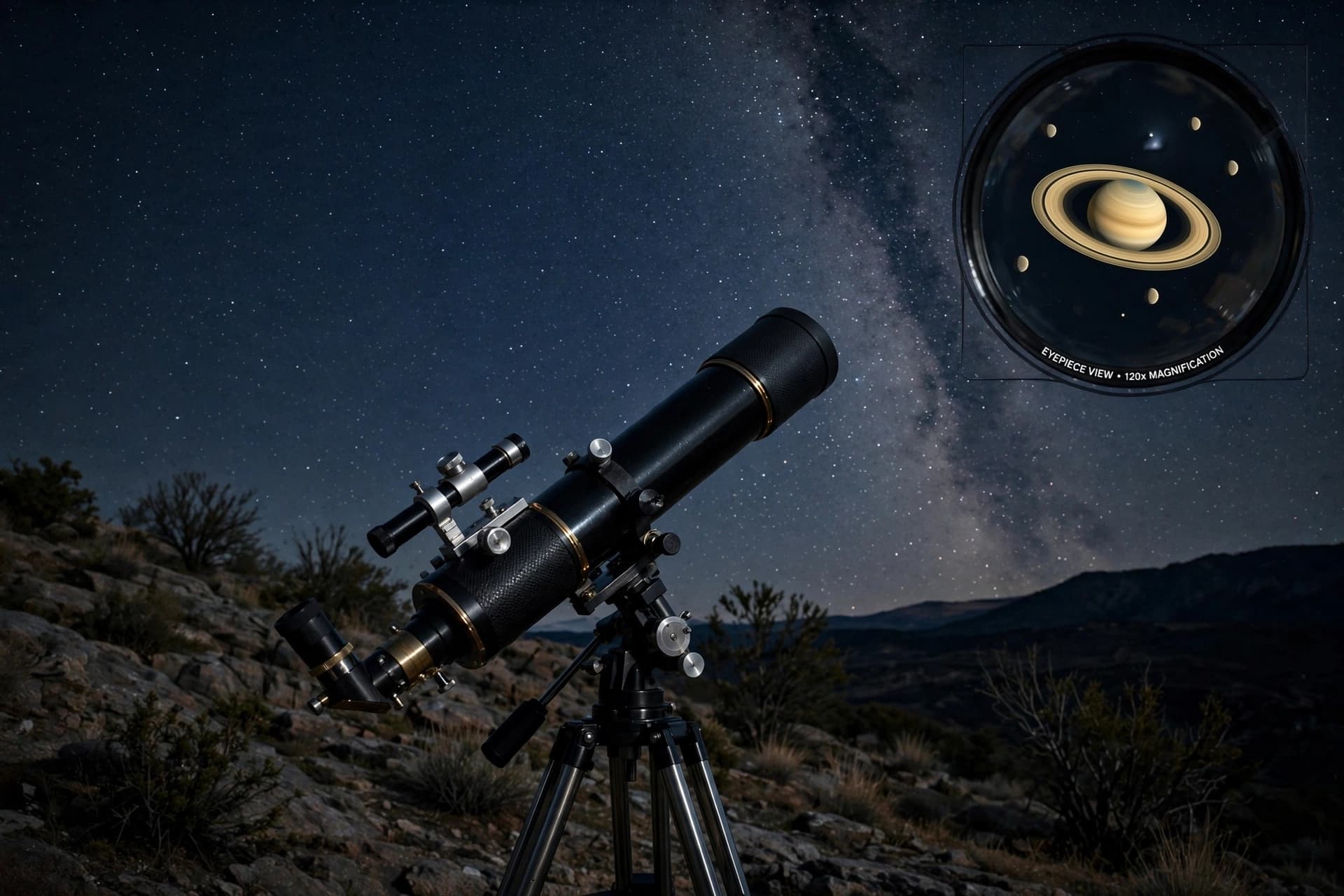
Dione, a moon barely a thousand kilometers in diameter, will begin its transit across Saturn's northern hemisphere just minutes after 11:40 p.m. Eastern Daylight Time, taking approximately an hour and a half to complete the crossing . At tenth magnitude, Dione is faint—far too dim to see with the naked eye, but within reach of a modest telescope. Its shadow, however, will be all but impossible to pick up visually. Only astrophotographers experienced with high-speed planetary video capture might catch it, and even then, it will appear just north-northwest of Dione, very close to the moon itself .
While Dione makes its crossing, two other moons of similar brightness lie nearby, waiting for the patient observer. Tethys and Rhea are both positioned to Saturn's west, with Tethys closer to the planet than Rhea . Titan, the largest of Saturn's moons and some 1.5 magnitudes brighter than the others, lies 3.3 arcminutes east of Saturn—on the opposite side of the planet from its siblings . Together, these four moons form a kind of miniature solar system, their movements predictable, their positions clockable, their presence a reminder that the night sky is not static but constantly in motion.
For observers in North America, the timing is favorable. Dione's transit occurs late in the evening, well after sunset, when Saturn is high in the sky. The Moon, a waning crescent at 44 percent illumination, will not rise until after the transit is over, leaving the sky dark enough for the faint moon to be visible . The date also coincides with the last quarter Moon, which occurs at 13:25 UTC, though the Moon's late rising means it will not interfere with Saturn viewing .
Saturn itself is currently near opposition—the point in its orbit when it lies directly opposite the Sun from Earth's perspective—which makes this an ideal time to observe the ringed planet and its moons . The planet is visible for most of the night, and its rings, tilted toward Earth, offer one of the most striking sights in amateur astronomy. The transit of Dione is a bonus, a chance to see the mechanics of the solar system in action, to watch one small world pass before a larger one, its shadow a slender dark thread across the planet's clouds.
There is something almost meditative about watching such an event—an act of attention that connects the observer to a chain of cause and effect stretching across a billion kilometers. Dione has been orbiting Saturn for billions of years, its transit of the planet repeating with clockwork regularity. Tonight, for a brief hour and a half, that regularity becomes visible to anyone with a telescope and the willingness to stay up late. The sky does not demand our attention. But it rewards it.
AI Image Disclaimer: The visual elements in this article were created using AI generation tools and are intended for illustrative purposes only.
Sources: Astronomy Magazine, Yahoo, IGN España
Published by Banx Network. This article is part of the Banx decentralized media programme, powered by the BXE token on the XRP Ledger.