
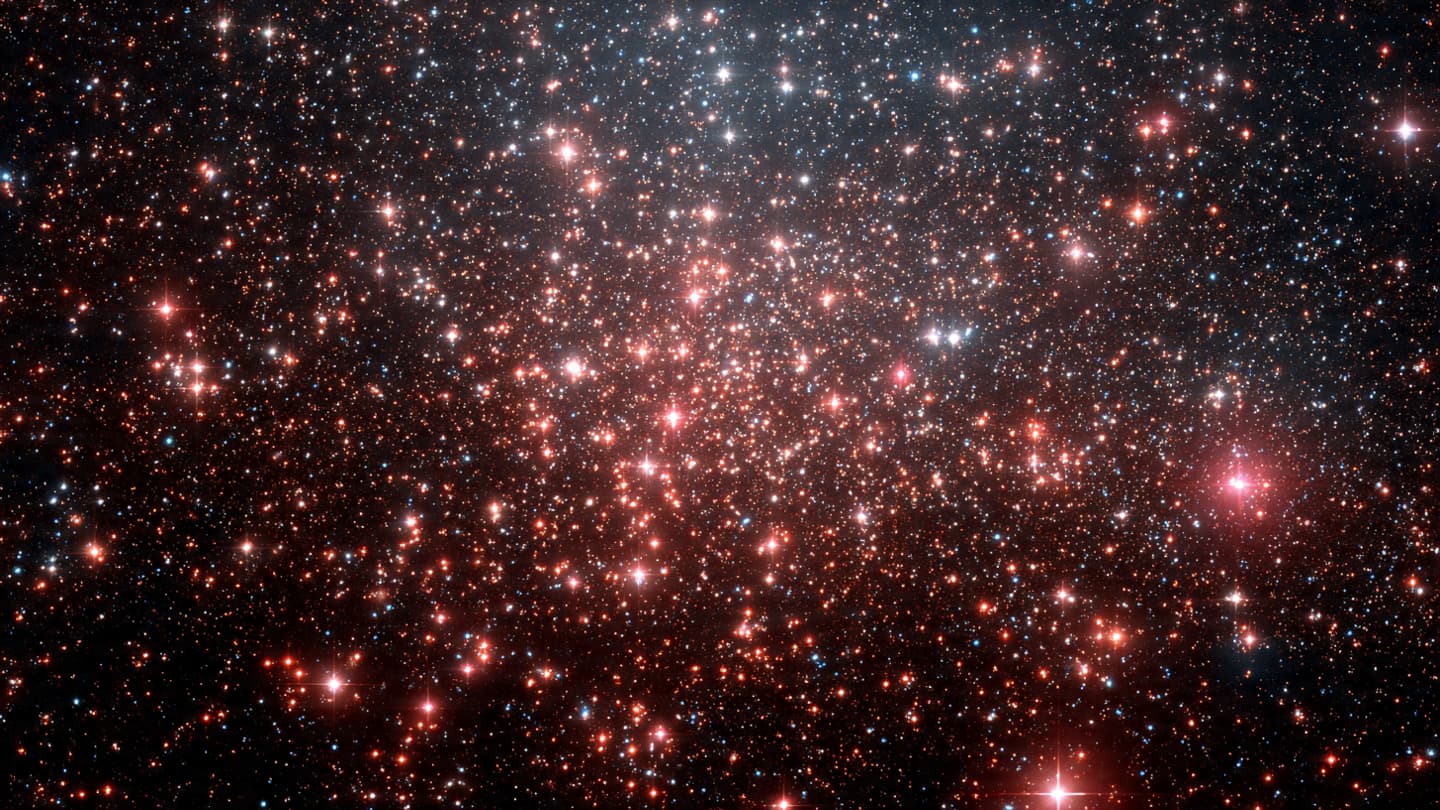
The deeper humanity looks into the universe, the more the cosmos seems willing to answer with new riddles. Through the powerful infrared vision of the James Webb Space Telescope, astronomers have begun noticing strange objects scattered across the early universe — tiny, intensely red points of light that appear unexpectedly massive, compact, and bright. Quietly, these “little red dots” have become one of modern astronomy’s most intriguing mysteries.
When Webb first began sending back observations from distant cosmic eras, scientists expected to find young galaxies still slowly assembling themselves after the Big Bang. Instead, researchers encountered objects that appeared unusually mature and energetic for such an early period in cosmic history. The small red sources seemed too bright and dense to fit comfortably within existing models of galaxy evolution.
Astronomers now believe these objects may represent several different phenomena rather than a single category. Some researchers suspect they are compact galaxies experiencing rapid bursts of star formation, while others argue they may contain actively feeding supermassive black holes hidden behind thick layers of dust. In some cases, both processes could be occurring simultaneously.
The red appearance itself is significant. Because the universe is expanding, light from distant objects becomes stretched into longer infrared wavelengths by the time it reaches Earth. Webb’s instruments are specifically designed to detect this ancient, redshifted light, allowing astronomers to observe galaxies formed billions of years ago.
One challenge facing researchers is determining how these early structures became so massive so quickly. Standard cosmological models suggest galaxy formation should have been slower during the universe’s earliest stages. Yet some of the little red dots appear to contain enormous concentrations of stars or black hole activity within surprisingly compact regions.
The findings have encouraged scientists to revisit assumptions about how galaxies evolved shortly after the Big Bang. Rather than overturning existing physics entirely, researchers say the observations may reveal missing details about star formation rates, gas dynamics, or black hole growth during the early universe.
Webb’s unprecedented sensitivity has also made it possible to observe details previously hidden from older telescopes. Features once blurred into faint background light are now appearing as distinct objects with measurable properties. In many ways, the telescope is exposing layers of cosmic history that astronomers could previously only theorize about.
Researchers continue collecting spectroscopic data to better understand the composition, movement, and energy sources associated with these mysterious objects. Future observations may help determine whether the little red dots are rare exceptions or a common stage in the universe’s early development.
For now, the tiny red signals remain reminders that the universe still contains chapters not yet fully understood, waiting patiently within the oldest light reaching Earth.
AI Image Disclaimer: Some accompanying space illustrations were generated using AI-assisted visualization techniques.
Sources: NASA Space.com Nature Astronomy Scientific American
Published by Banx Network. This article is part of the Banx decentralized media programme, powered by the BXE token on the XRP Ledger.



