
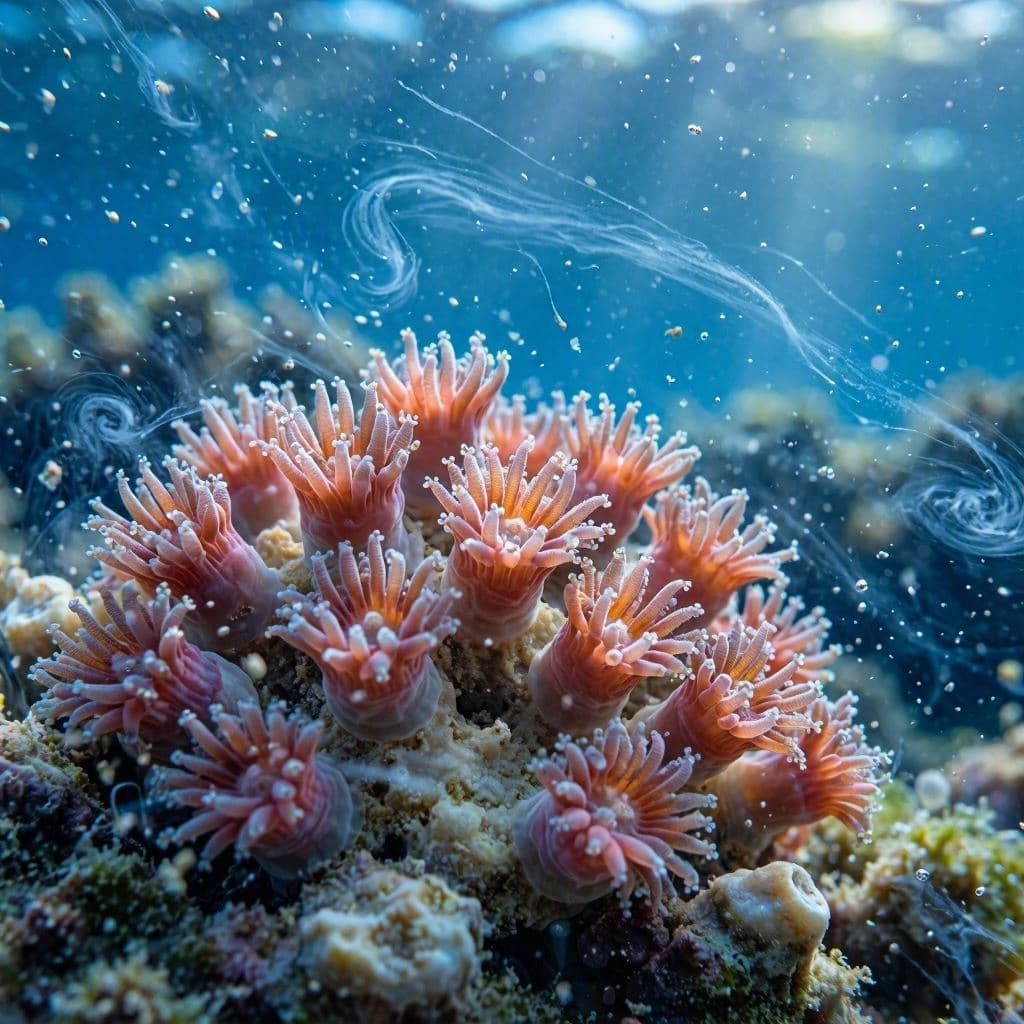
Beneath the shimmering surface of tropical oceans, coral reefs are often perceived as static gardens of color and stone. However, recent scientific discoveries have revealed that corals are far more active than they appear. To survive in stagnant water, many coral species generate tiny, swirling vortices—microscopic whirlpools—that help flush out waste and bring in fresh oxygen. This ingenious biological mechanism allows them to thrive in calm waters, but it has a critical weakness: rising temperatures.
Researchers using advanced imaging techniques observed that corals use their cilia, tiny hair-like structures, to create these micro-currents. These vortices enhance mass transfer, ensuring that the coral polyps receive enough nutrients and oxygen while removing metabolic byproducts. It is a delicate dance of fluid dynamics, orchestrated at a microscopic scale, that sustains life in some of the most biodiverse ecosystems on Earth. Without this self-made circulation, corals in low-flow environments would struggle to breathe.
However, this vital function is highly sensitive to heat. As ocean temperatures rise due to climate change, the efficiency of these vortices diminishes. High temperatures cause thermal stress, which disrupts the ciliary beating and reduces the formation of vortices. Consequently, the coral’s ability to exchange gases and nutrients is compromised, leading to hypoxia and increased susceptibility to bleaching. The very mechanism that helps them survive becomes impaired when they need it most.
This finding adds a new layer of understanding to the crisis facing coral reefs. While bleaching is often discussed in terms of symbiotic algae loss, the physical inability to manage internal physiology under heat stress is equally damaging. The breakdown of these micro-currents means that corals are not just starving for light or nutrients, but literally suffocating in their own waste products.
The implications for reef conservation are significant. Protecting reefs requires not only reducing carbon emissions but also preserving local water flow conditions. Areas with natural currents may offer refuges where corals can rely less on their own vortices and more on environmental mixing. Identifying and protecting these resilient zones could be key to saving reef systems in a warming world.
Scientists are now exploring whether certain coral species are better at maintaining vortex production under heat stress. Understanding genetic variations in ciliary function could help identify super-corals that are more resistant to climate change. These insights offer hope for restoration projects aimed at rebuilding reefs with harder stock.
The discovery of coral vortices highlights the intricate ingenuity of marine life. Yet, it also underscores the fragility of these systems in the face of global warming. As oceans warm, the silent spin of these microscopic whirlpools slows, reminding us that even the smallest mechanisms are vulnerable to planetary change.
AI Image Disclaimer: Visuals associated with this article are AI-generated to illustrate the scientific and marine biology context of the story.
Sources: Nature Communications Smithsonian Ocean BBC Science
Published by Banx Network. This article is part of the Banx decentralized media programme, powered by the BXE token on the XRP Ledger.



