
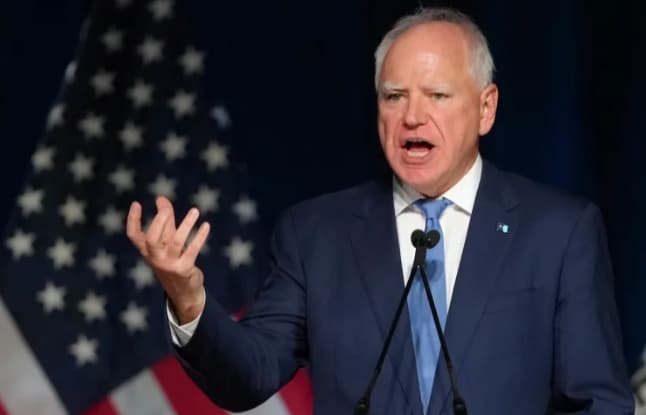
Key Highlights
- Incident:Donald Trump referred to Governor Tim Walz as 'seriously retarded' during a rally.
- Response:Walz condemned the remark, calling for respectful political dialogue.
- Support:Walz's statement received backing from various political leaders and advocacy groups.
Minnesota Governor Tim Walz recently found himself at the center of controversy after former President Donald Trump referred to him as 'seriously retarded' during a rally. This derogatory comment, which sparked widespread outrage, prompted Walz to issue a strong response, emphasizing the importance of respectful language in political discourse.
In his statement, Walz expressed that remarks like Trump's not only undermine serious discussions about pressing issues but also contribute to a culture of disrespect. 'We need to lift each other up,' Walz stated, urging political leaders to engage in constructive dialogue rather than resorting to personal attacks. He highlighted the significance of language, especially when it comes from influential figures who shape public opinion.
Walz further pointed out the critical challenges facing Minnesota, including healthcare, education, and economic recovery. He called for a shift in focus towards collaborative solutions that address these issues, rather than getting caught up in personal disputes. 'It's time we center our discussions on what truly matters to our communities,' he passionately asserted.
The governor's response has resonated with many, garnering support from various political leaders and advocacy groups. They echoed Walz's sentiment that such derogatory language has no place in civil discourse. As the political landscape continues to be charged with tension, Walz's rebuttal serves as a reminder of the need for respect and understanding in public discussions.
In the wake of this incident, political analysts are observing how such remarks and responses shape the ongoing dialogue in American politics. The emphasis on respectful communication may influence how future political interactions unfold, particularly as the nation approaches the next election cycle.
As discussions around political rhetoric intensify, Walz's firm stance against Trump's comment highlights a broader call for civility in political conversations. His commitment to focusing on substantive issues rather than personal attacks reflects a growing desire among many leaders to elevate the tone of political discourse.
In conclusion, the exchange between Walz and Trump underscores the critical need for political figures to engage in respectful dialogue, prioritizing the issues that affect their constituents over personal grievances. As the political climate evolves, the emphasis on civility and respect may play a pivotal role in shaping future discussions.
Published by Banx Network. This article is part of the Banx decentralized media programme, powered by the BXE token on the XRP Ledger.



