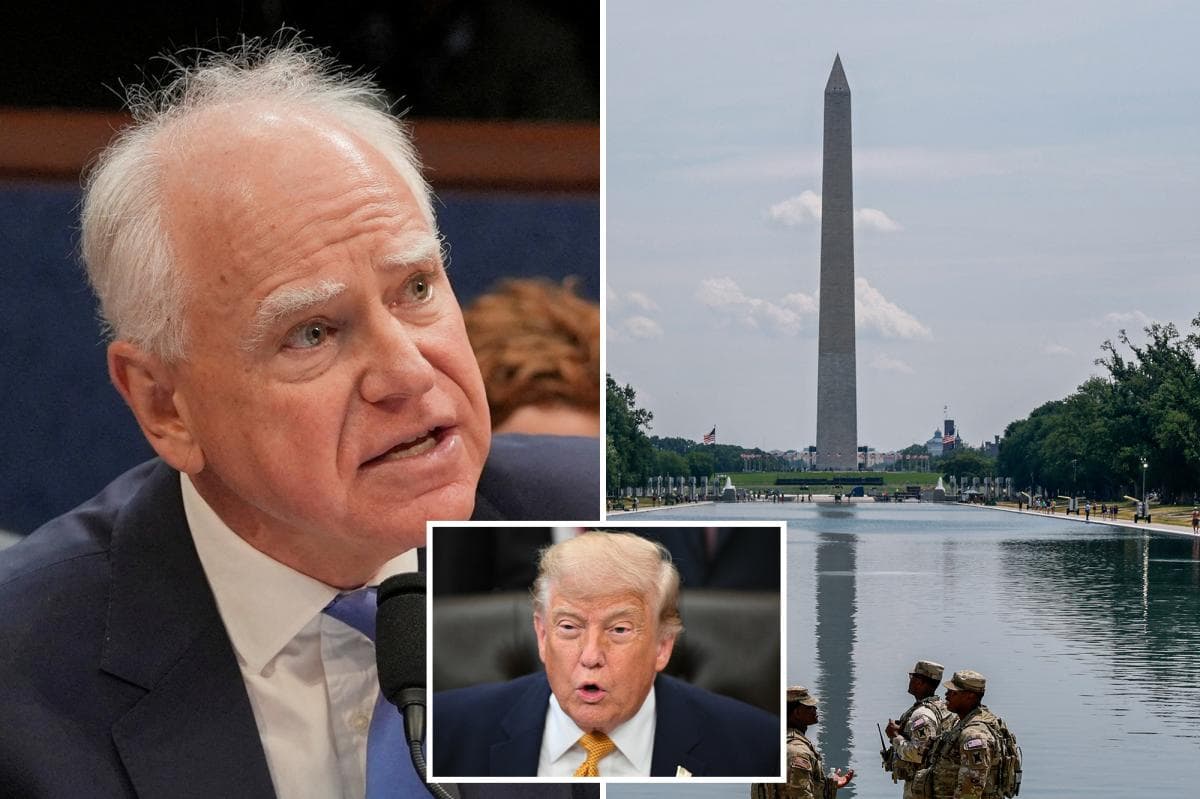
Political controversy erupted after remarks attributed to Minnesota Governor Tim Walz regarding a visit to Washington's Reflecting Pool generated criticism from opponents and renewed debate across social media platforms. The episode quickly became another example of how political comments can become focal points in an increasingly polarized environment. The Reflecting Pool, located between the Lincoln Memorial and the Washington Monument, holds symbolic significance within American public life. It has served as the backdrop for historic speeches, demonstrations, commemorations, and national gatherings. Because of its importance, comments involving the site often attract heightened public attention. Critics argued that Walz's remarks were inappropriate or politically motivated, while supporters contended that the reaction exaggerated the original comments. As frequently occurs in modern political disputes, competing interpretations emerged almost immediately, with each side emphasizing different aspects of the broader context. The controversy gained traction through media coverage, online discussions, and commentary from political figures. Social media platforms accelerated the spread of clips, excerpts, and reactions, allowing the debate to reach audiences far beyond traditional news consumers. Such dynamics increasingly shape how political narratives develop and evolve. Political analysts note that symbolic locations often carry outsized importance during election cycles. Statements connected to national monuments, memorials, and historic landmarks can become proxies for larger disagreements about patriotism, leadership, and public values. As a result, even relatively brief comments can generate extensive scrutiny. Supporters of Walz argue that critics are focusing on isolated remarks while ignoring broader policy discussions. They contend that political opponents frequently use symbolic controversies to distract from substantive issues involving governance, economic policy, healthcare, education, and public safety. Opponents maintain that elected officials should exercise greater care when discussing locations associated with national history and remembrance. They argue that public figures have a responsibility to communicate respectfully and avoid remarks that may be interpreted as dismissive or partisan. The incident highlights a broader trend within contemporary politics, where symbolic moments often compete with policy debates for public attention. News cycles driven by social media engagement can amplify controversies rapidly, encouraging political actors to respond quickly and forcefully. Whether the dispute has lasting political consequences remains uncertain. Many controversies fade quickly as new developments emerge, while others become recurring themes during campaigns. Public reaction often depends on broader political conditions and existing perceptions of the individuals involved. For now, the debate surrounding Walz's comments demonstrates the sensitivity of political communication in a highly connected media environment. As election-related discussions continue, symbolic issues are likely to remain prominent alongside debates about policy, governance, and national priorities.
Published by Banx Network. This article is part of the Banx decentralized media programme, powered by the BXE token on the XRP Ledger.