
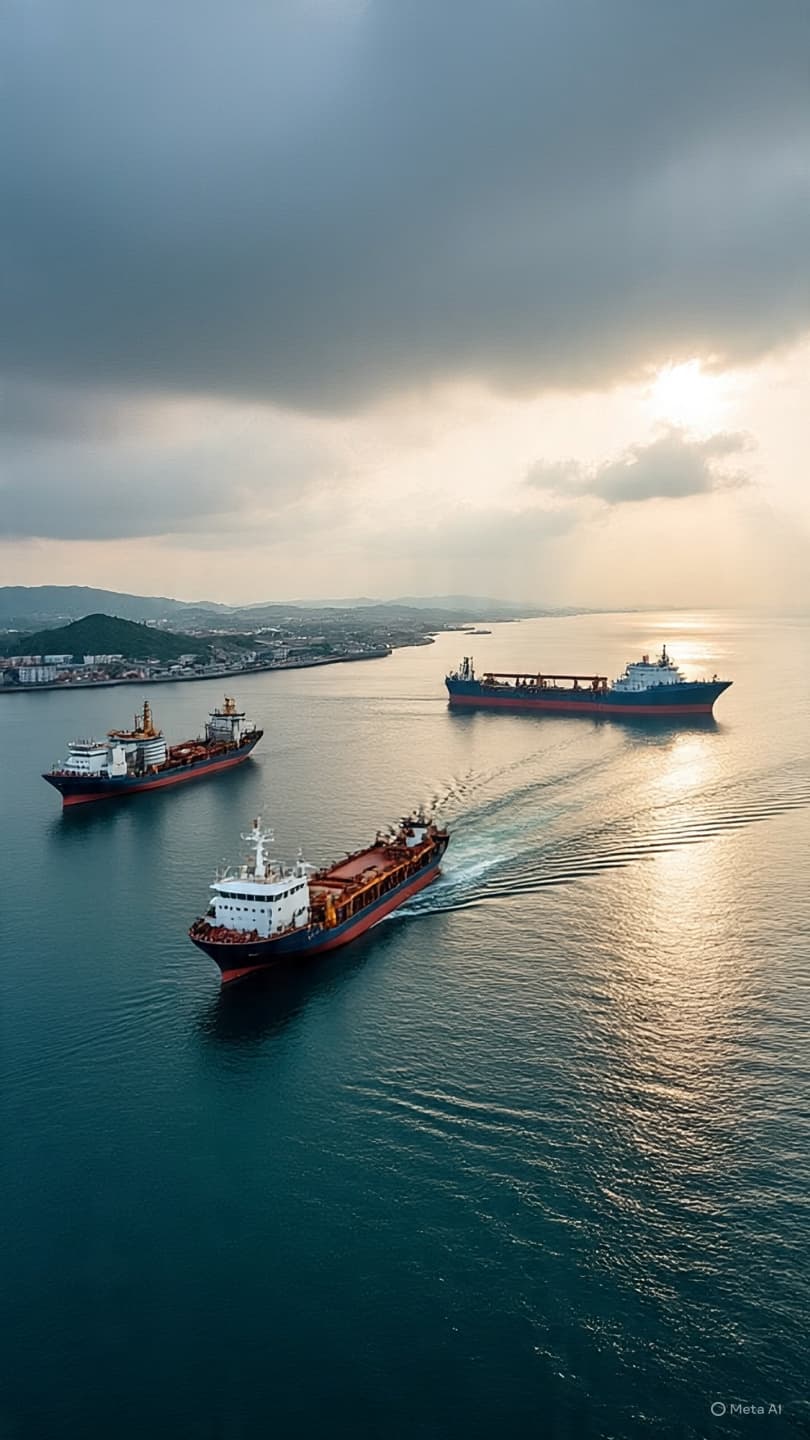
Key Highlights
- The Strait of Hormuz is a critical energy corridor for global markets.
- Potential disruptions could lead to significant economic impacts.
- Geopolitical tensions are rising in key maritime routes.
The Strait of Hormuz, a vital maritime passage, remains a focal point of global energy security. This narrow waterway, which connects the Persian Gulf to the Arabian Sea, is responsible for transporting a significant portion of the world's oil and liquefied natural gas (LNG). As geopolitical tensions escalate, particularly with Iran's influence in the region, the implications for global energy markets are profound.
Recent discussions among analysts have raised concerns about the potential for disruptions in energy flows through the Strait of Hormuz. With Iran's history of leveraging its strategic position, the possibility of similar tactics being employed by other nations, such as China in the Taiwan Strait, has become a pressing issue. The Taiwan Strait is another critical energy corridor, transporting LNG to East Asia, and any halt in shipments could have far-reaching consequences.
Should China decide to restrict LNG flows through the Taiwan Strait, the repercussions would be felt globally. Countries reliant on this energy supply would be forced to seek alternatives, potentially leading to increased energy prices and economic instability. The ripple effects could extend to manufacturing, transportation, and domestic heating, highlighting the interconnectedness of global energy markets.
The situation is further complicated by the intricate web of international relations and trade agreements. Nations dependent on these maritime routes must navigate a landscape fraught with uncertainty. The potential for conflict or disruption raises questions about energy resilience and the strategies countries must adopt to safeguard their energy security.
Amid these geopolitical calculations, life continues along the shores of these vital waterways. Ports are bustling with activity, as crews and engineers work tirelessly to ensure the smooth operation of trade routes. Local economies are adapting to the shifting landscape, responding to both policy changes and market fluctuations. This dynamic environment underscores the delicate balance between geopolitical realities and the everyday operations of global trade.
As the sun sets over the Strait of Hormuz, it casts a long shadow over the future of energy security. The potential for disruption looms large, but so does the ingenuity of those who navigate these waters. The ongoing tension serves as a reminder of the power embedded in geography and the critical importance of maintaining open and secure maritime routes for the stability of global energy markets.
Published by Banx Network. This article is part of the Banx decentralized media programme, powered by the BXE token on the XRP Ledger.



