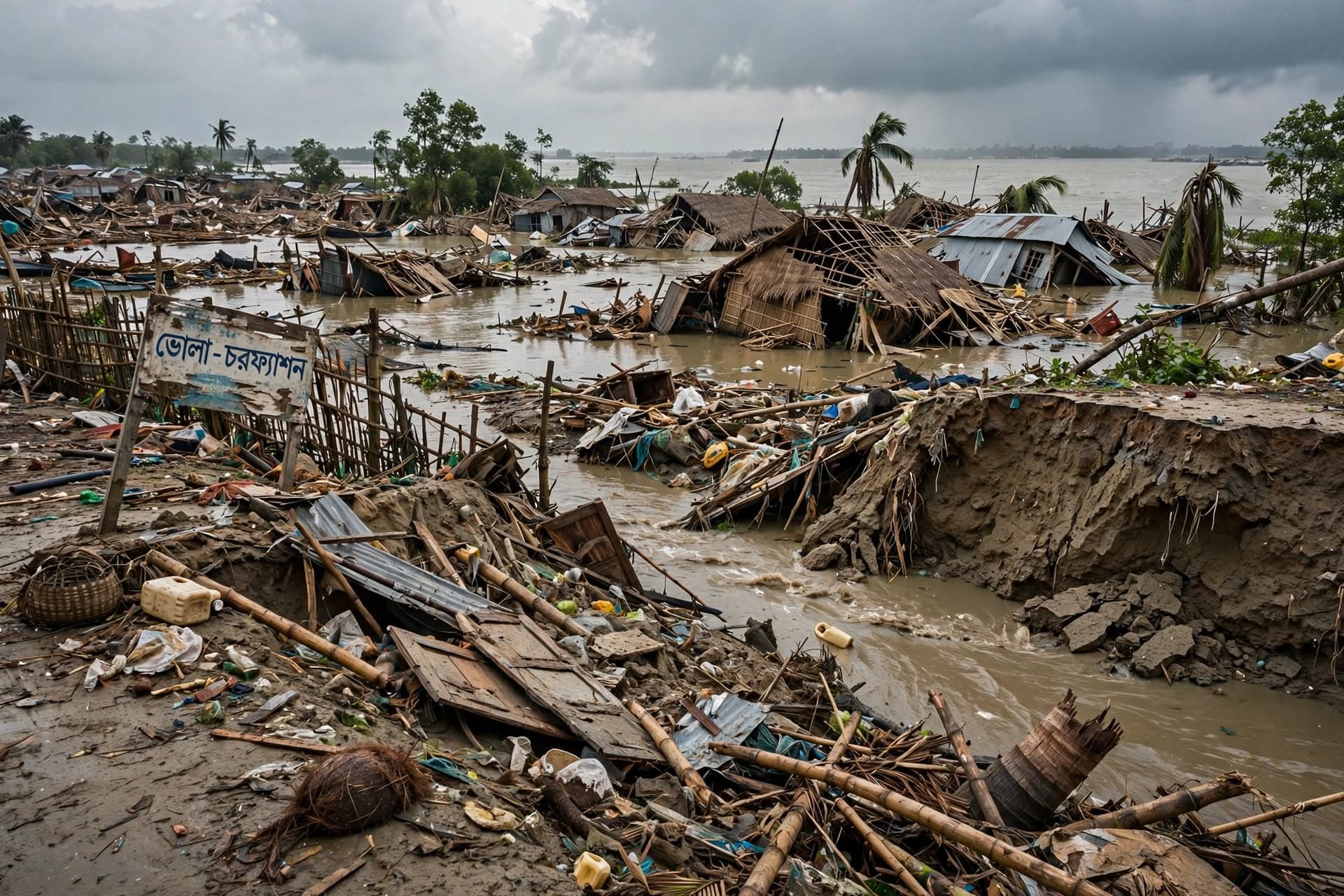
Bhola, Bangladesh— The tide did not stop at the embankment on October 30, 2026. A wind-driven tidal surge of 2 to 3 feet above normal astronomical tide, pushed by a severe cyclonic storm over the Bay of Bengal, flooded low-lying islands and offshore shoals across 14 coastal districts from Satkhira to Cox's Bazar in Bangladesh and into West Bengal in India, sweeping thatched dwellings into the sea.
The Bangladesh Meteorological Department listed the districts at risk: Satkhira, Khulna, Bagerhat, Barguna, Barishal, Jhalakathi, Pirojpur, Patuakhali, Bhola, Laxmipur, Noakhali, Feni, Chattogram and Cox's Bazar. The offshore islands — Kutubdia, Sandwip, Bhola, Hatiya, Manpura — are less than two meters above sea level. When a surge hits, there is nowhere to go. TV stations reported embankments either washed away or damaged, dozens of villages flooded.
In West Bengal, roofs on thatched houses were blown away while electric poles and trees were uprooted in coastal districts. Heavy downpours inundated streets and homes in low-lying areas of Kolkata. The pattern matched Cyclone Remal in May 2024, which flooded coastal villages, blew away roofs and left hundreds of thousands without power Monday in southern Bangladesh and eastern India. At least 16 died then. Nearly a million were evacuated.
"We ran to the cyclone shelter when water came over the embankment, our house is gone," said a fisherman from Bhola's Char Fasson, speaking by phone from a shelter. IPS reported on October 1, 2026 from Shyamnagar, Satkhira, that villagers rush to vulnerable spots of the embankment when early warning of rising tide comes, but every monsoon tidal water breaks or overflows the embankment, damaging homes and crops.
The friction is embankments and land use. Many embankments in Bangladesh were built in the 1960s and have not been raised despite sea-level rise. They are earthen, low, and cut by shrimp farmers for pipes. When a surge hits, water pours through those cuts. Offshore islands have no embankments at all. A new UN report published August 31, 2026 said more than 14 million people in South Asia are at risk from tide-related loss and damage.
In the Sundarbans, forest guards reported saline water entering freshwater ponds, killing drinking water sources. In Bhola, 4.5 million people were affected by earlier floods in eastern Bangladesh this year, according to the Ministry of Disaster Management. That number is now climbing again. Soldiers in lifeboats ferried people in India's Tripura during earlier floods, but boats are scarce on offshore islands.
By October 30, 2026, the surge was receding but damage remained. Families returned to find floors covered in mud, walls collapsed, fishing nets gone. Power was out across coastal Bhola and Patuakhali. The BMD said further tidal inundation was possible if wind persists. The offshore islands remained under water.
Boats that survived were tied to trees. Those that did not were already at sea.
Published by Banx Network. This article is part of the Banx decentralized media programme, powered by the BXE token on the XRP Ledger.