Key Highlights
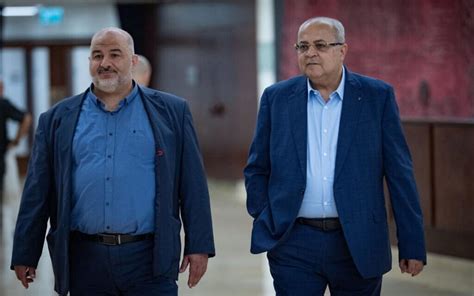
- Ahmad Tibi, a Joint List lawmaker, revealed messages purportedly from Natan Eshel, a close associate of Prime Minister Benjamin Netanyahu.
- The messages suggest Netanyahu's camp sought support from Arab lawmakers to counter Gadi Eisenkot's bloc, despite public denouncements of cooperation with Arab parties by Likud.
- Likud has categorically denied Tibi's claims, labeling them as "a complete lie."
Ahmad Tibi, a prominent member of the Joint List, has recently disclosed messages that he claims were sent by Natan Eshel, a longtime aide to Prime Minister Benjamin Netanyahu. Tibi asserts that these messages indicate a strategic effort by Netanyahu's camp to garner support from Arab lawmakers in opposition to Gadi Eisenkot's political bloc. This revelation comes at a time when Likud has been vocally critical of any collaboration with Arab parties, creating a stark contrast between public rhetoric and private communications.
In the messages, Tibi alleges that Eshel sought to engage Arab lawmakers to help thwart initiatives led by Eisenkot, who is a significant figure in the opposition. This situation highlights the complexities of Israeli politics, where alliances can shift rapidly, and public statements may not always reflect behind-the-scenes negotiations.
Moreover, Tibi mentioned that a government minister had approached him, urging him not to support an Eisenkot-led government and instead to favor the prospect of another election. This adds another layer of intrigue to the ongoing political landscape, suggesting that there are factions within the government that are actively working against the formation of a new coalition.
In response to Tibi's allegations, Likud officials have firmly rejected the claims, describing them as unfounded and misleading. They have characterized Tibi's statements as an attempt to distort the truth and undermine the party's position. Eshel himself has denied that he was acting on Netanyahu's behalf, further complicating the narrative.
This incident underscores the ongoing tensions within Israeli politics, particularly regarding the role of Arab parties in the Knesset and their interactions with mainstream political factions. As the political climate continues to evolve, the implications of these revelations could have significant consequences for future coalitions and governance in Israel.
The situation remains fluid, and as more information comes to light, it will be essential to monitor how these dynamics play out in the coming weeks. The interplay between public statements and private negotiations will likely continue to shape the political discourse in Israel.
Published by Banx Network. This article is part of the Banx decentralized media programme, powered by the BXE token on the XRP Ledger.