
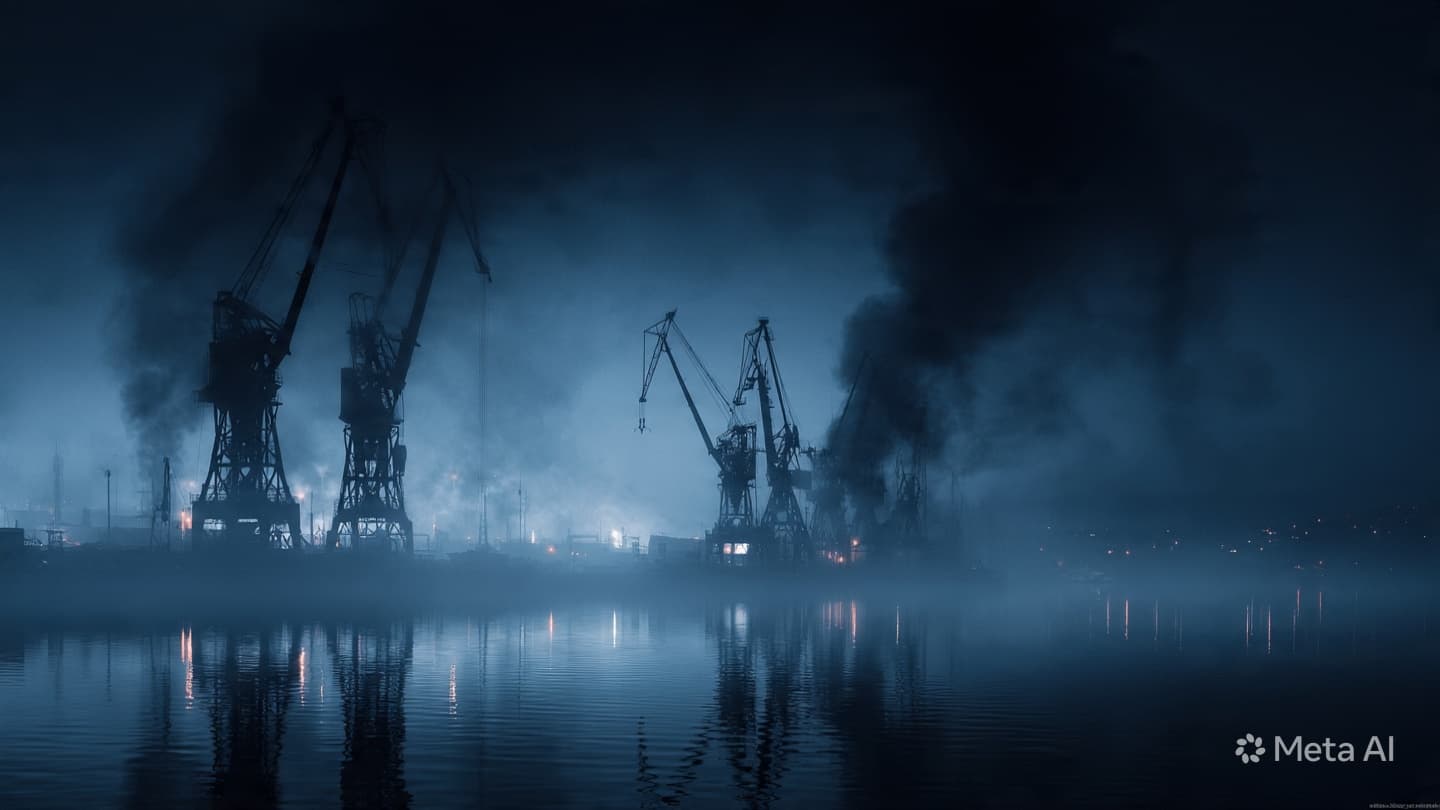
The maritime gateway of Odesa Oblast has long been a place where the world feels vast and interconnected, defined by the constant rhythm of the tides and the steady arrival of vessels from distant horizons. Here, the air is thick with the scent of brine and industrial grease, and the horizon is dominated by the towering silhouettes of loading cranes and massive grain elevators. It is a landscape built on the ancient promise of commerce, serving as a vital artery through which the bounty of the land flows outward to sustain distant populations.
Yet, the immense economic significance of these coastal hubs also renders them uniquely vulnerable when the night sky becomes a theater of sudden, aggressive intent. On a recent evening, the quiet hum of the maritime operations was shattered by a coordinated nighttime strike that targeted the critical infrastructure lining the water's edge. In a matter of minutes, the orderly world of maritime logistics was transformed into a chaotic arena of smoke, fire, and structural devastation.
The aftermath of an aerial assault on a port facility is a scene of profound, mechanical desolation that unfolds under the harsh glare of emergency spotlight beams. The air hangs thick with the acrid stench of burning fuel and pulverized concrete, obscuring the stars that normally guide the ships safely into the harbor. Twisted iron girders, crumpled shipping containers, and fractured concrete docks serve as a stark testament to the precision and force of the overnight incursion.
To walk through the ruined sections of the port is to confront a strategy designed to sever the economic lifelines of an entire nation, projecting the consequences of the conflict far beyond the immediate geography of the shoreline. The destruction of specialized loading equipment and transit warehouses does not merely disrupt the daily schedule of the dockworkers; it creates a ripple effect that alters global shipping routes and threatens international food security. It is this broader, systemic fragility that becomes apparent when the smoke clears over the water.
The response of the harbor fire crews and emergency personnel was immediate, moving with a weary, practiced efficiency into the heart of the blaze while the danger of secondary explosions still loomed. Working by the flickering light of the fires, they fought to contain the damage to the oil and grain terminals, their movements silent against the roar of the water cannons and the groaning of damaged metal. It is a dangerous, vital labor performed in the cold hours before the dawn.
The geopolitical discourse surrounding the safety of maritime corridors frequently centers on international treaties, grain deals, and freedom of navigation discussed in abstract diplomatic chambers. On the ground, however, those discussions are replaced by the immediate, practical reality of a port authority trying to clear a blocked channel or a crane operator surveying a ruined workstation. The true measure of the event is found in the resilience of the crews who must rebuild the infrastructure from the water up.
By the time the morning sun began to illuminate the Black Sea coast, the initial fires had been brought under control, leaving only thin plumes of white smoke to drift across the horizon. The harbor sat in an unusual, expectant stillness, its regular operations temporarily suspended as structural engineers arrived to assess the integrity of the remaining docks and warehouses.
Maritime transport officials confirmed that a nighttime strike caused severe structural damage to port infrastructure installations in Odesa Oblast. The regional military administration reported that the attack, which deployed multiple waves of unmanned aerial vehicles, damaged specialized loading equipment and storage facilities, though emergency crews successfully contained the resulting fires before they could spread to neighboring civilian sectors.
Published by Banx Network. This article is part of the Banx decentralized media programme, powered by the BXE token on the XRP Ledger.


.jpg&w=3840&q=75 "Convicted War Criminal Ratko Mladić to Be Buried With Full State Honors")