For generations, humanity has looked toward the night sky searching for answers about where everything began. Today, advanced space technology is allowing scientists to explore deeper into the universe than ever before. The James Webb Space Telescope has become one of the most powerful instruments in this ongoing journey of discovery.
Launched as a new era of astronomical exploration, the telescope was designed to observe distant objects with remarkable sensitivity. Its powerful instruments allow researchers to study galaxies, stars, and planetary systems that existed billions of years ago.
The observations made by the telescope provide scientists with important information about the early stages of the universe. By studying ancient light traveling across enormous distances, researchers can examine how galaxies formed and evolved over time.
One of the most significant contributions of the telescope is its ability to observe regions of space that were previously difficult to study. Its advanced technology allows scientists to explore cosmic structures with greater detail and precision.
Researchers are also using James Webb observations to study planets beyond our solar system. These studies may help scientists better understand the diversity of planetary environments throughout the galaxy.
The discoveries from the telescope continue to expand scientific knowledge while also creating new questions. Each observation provides another piece of a much larger cosmic story that researchers are still working to understand.
Astronomers around the world continue collaborating through shared research and analysis. The telescope’s findings represent a global scientific effort involving institutions, engineers, and researchers from many countries.
The James Webb Space Telescope represents humanity’s curiosity reaching beyond Earth. Through its observations, scientists continue exploring the origins of the universe and the possibilities that exist among the stars.
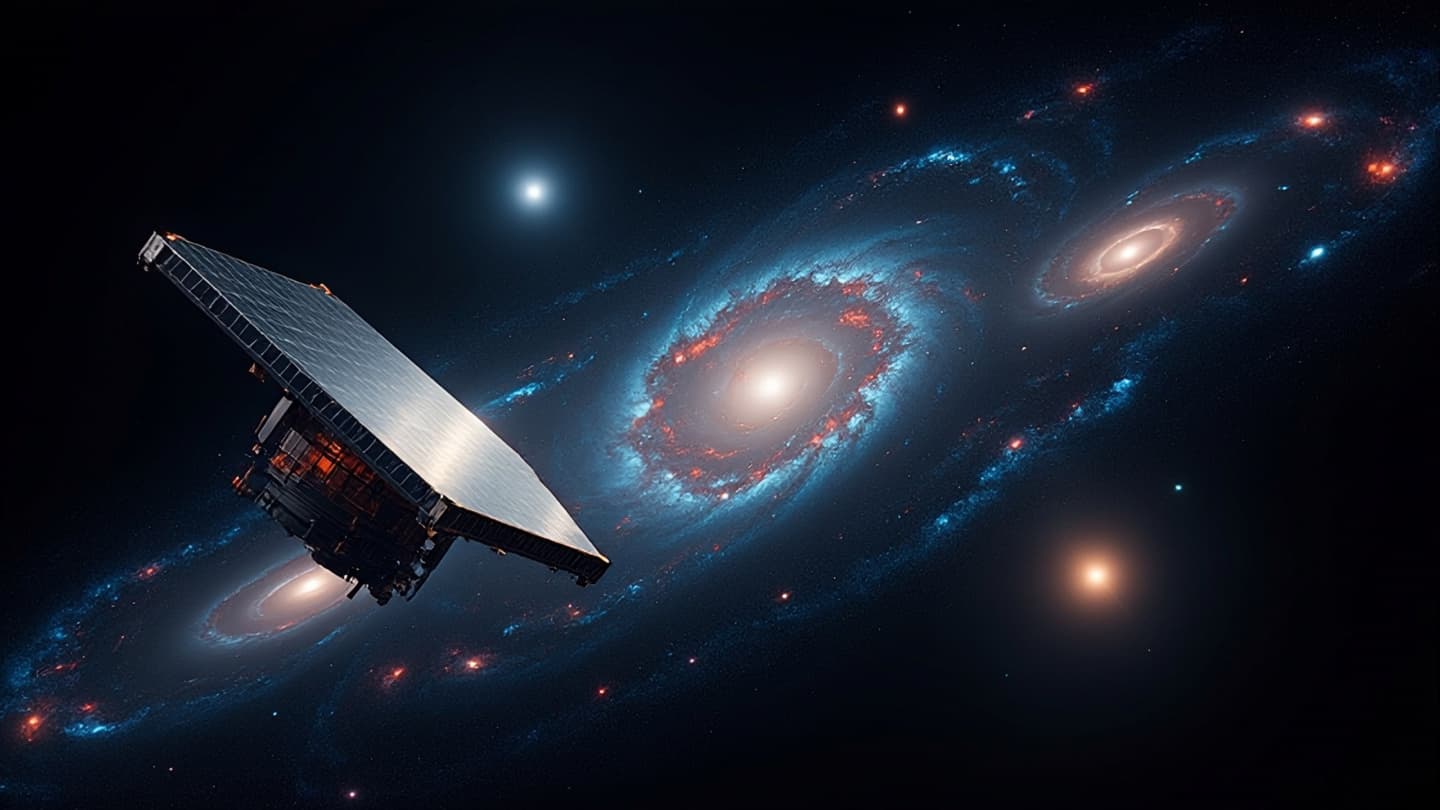
AI Image Disclaimer: The images used in this article are AI-generated visual representations inspired by astronomical research and space exploration themes.
Sources Verification Check: Verified sources available from: NASA, European Space Agency (ESA), Space Telescope Science Institute, Nature Astronomy
Published by Banx Network. This article is part of the Banx decentralized media programme, powered by the BXE token on the XRP Ledger.