
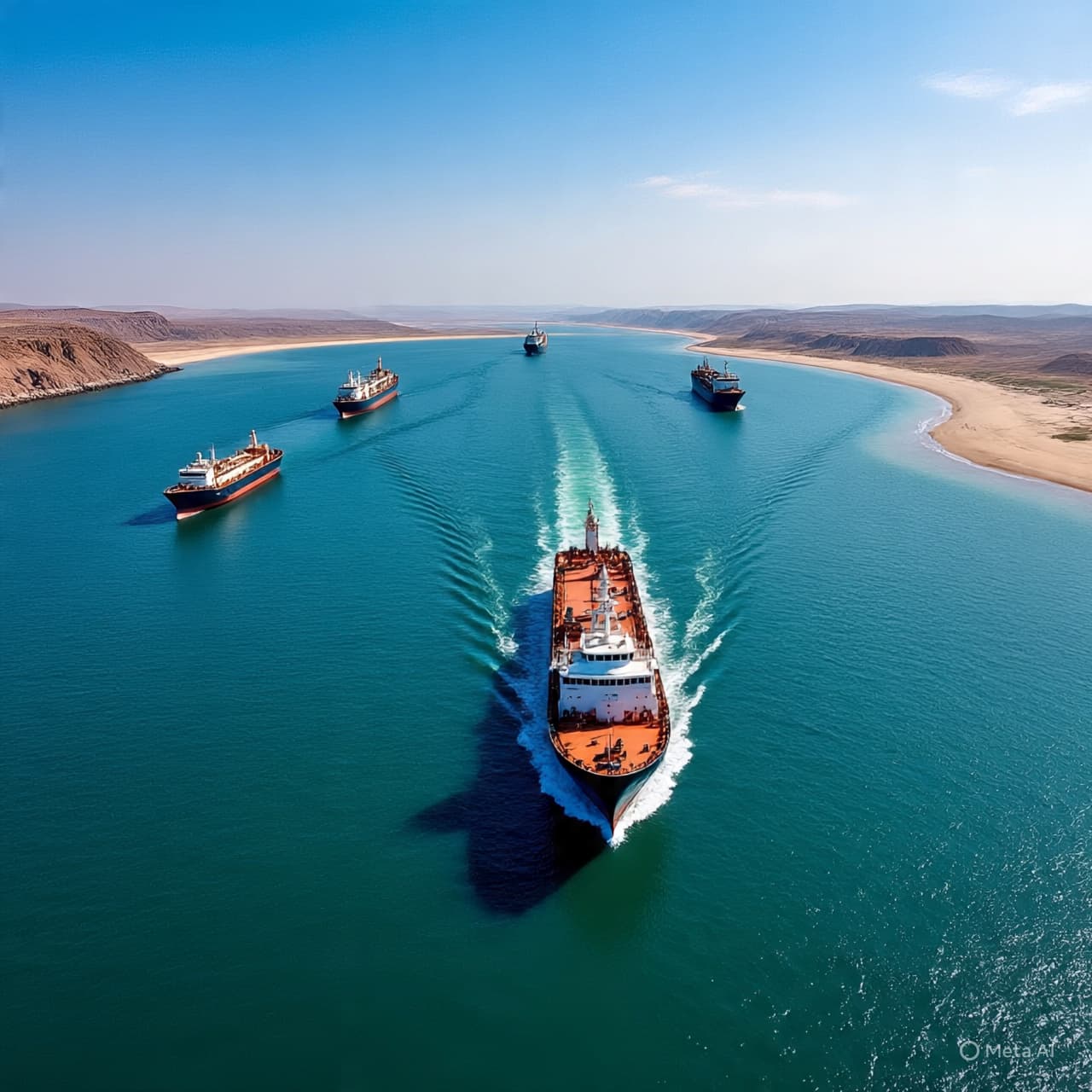
Key Highlights
- Iran proposes new maritime routes to enhance shipping safety.
- The Strait of Hormuz is crucial for global oil and gas trade.
- Rising regional tensions prompt a reevaluation of navigation strategies.
The Strait of Hormuz, a vital waterway for global energy trade, is witnessing a significant shift as Iran announces the introduction of alternative maritime routes for vessels navigating its narrow passage. This development comes amid escalating tensions in the region, raising concerns about the reliability of established shipping lanes. The strait, which connects the Persian Gulf to the Arabian Sea, is a critical conduit for oil and gas, with approximately 20% of the world's petroleum passing through its waters.
Iranian officials have framed the introduction of these alternative routes as a precautionary measure, aimed at ensuring the continued movement of ships in a context where traditional pathways may be compromised. The announcement reflects a broader strategic recalibration in the region, where maritime navigation has become intertwined with security considerations. As geopolitical dynamics shift, the implications of movement through the Strait of Hormuz extend beyond commercial interests, influencing international relations and energy markets.
The proposed routes are designed to minimize exposure to potential flashpoints, allowing vessels to navigate with greater flexibility. While details remain sparse, the intent is clear: to adapt to a landscape characterized by uncertainty. Shipping companies and energy markets are now faced with the dual challenge of maintaining operational continuity while navigating the complexities introduced by these new routes.
The Strait of Hormuz has long been a focal point for global energy security, and any disruption in this corridor can have far-reaching consequences. The introduction of alternative routes may provide a buffer against potential disruptions, but it also raises questions about safety, cost, and coordination among shipping operators. Navigating these waters has always required precision, and the added layer of complexity necessitates careful planning and execution.
As tensions involving Iran, Israel, and other regional actors continue to evolve, the maritime domain is increasingly viewed as a theater for strategic signaling. The movement of vessels through the strait is no longer merely a commercial endeavor; it carries implications for deterrence and military presence in the region. This shift underscores the need for shipping companies to remain vigilant and adaptable in the face of changing geopolitical realities.
Despite the ongoing developments, the daily operations along the shores of the Gulf appear largely unchanged. Ports remain active, crews prepare their vessels, and the sea continues to facilitate its steady flow of traffic. However, beneath this surface continuity lies a growing awareness that the routes themselves are being reconsidered. The introduction of alternative navigation paths signifies a recognition that stability in the region cannot be taken for granted.
As Iran moves forward with the development of these new maritime routes, the effectiveness of such measures will depend on their adoption by shipping companies and the broader stability of the region. For now, vessels continue to traverse the Strait of Hormuz, their journeys shaped by both tradition and the need for adaptation in a complex and evolving maritime landscape.
Published by Banx Network. This article is part of the Banx decentralized media programme, powered by the BXE token on the XRP Ledger.



