
Key Highlights
- A sanctioned tanker recently navigated the Strait of Hormuz, testing U.S. enforcement measures.
- The passage raises questions about the effectiveness of sanctions on oil flows linked to Iran.
- Regional actors closely monitor the implications for global energy markets.
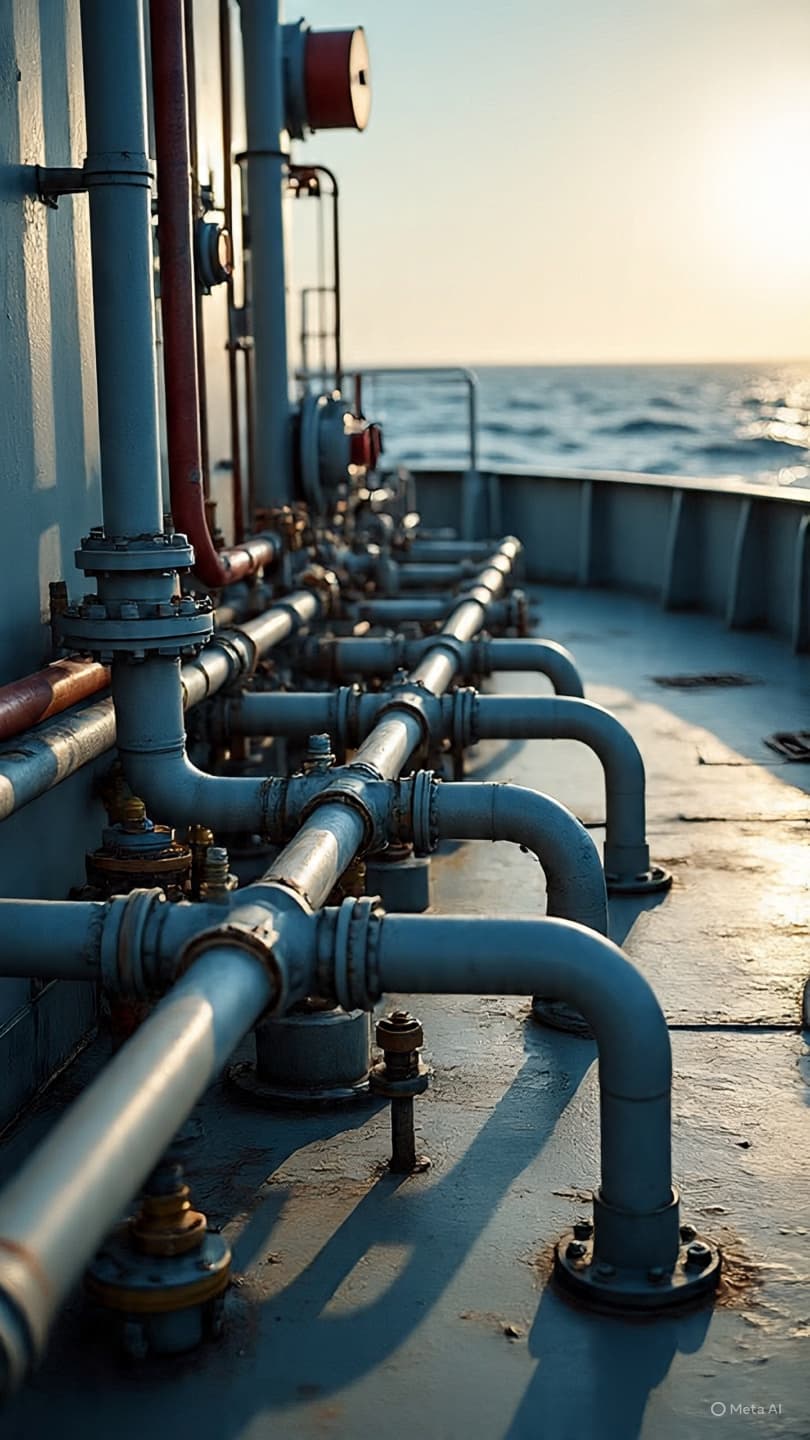
The Strait of Hormuz, a critical maritime corridor, has long been a focal point of geopolitical tension and economic significance. At dawn, the waters carry an unspoken tension, with tankers moving cautiously through its narrow passage. Each vessel's journey is routine yet laden with potential consequences, as the strait is a vital artery for global oil supply.
Recently, a tanker identified as being under U.S. sanctions traversed this strategic waterway, effectively testing the enforcement of sanctions that have been in place since the Trump administration. While the vessel's passage did not provoke confrontation, it raised significant questions about the practical application of these restrictions in one of the world's most scrutinized maritime zones.
The sanctions are part of a broader strategy aimed at limiting oil exports from Iran, a country whose relationship with the U.S. has fluctuated dramatically over the years. These measures depend not only on legal frameworks but also on the cooperation of shipping companies, insurers, and port operators. This intricate web of compliance can be challenging to maintain, especially in international waters where jurisdiction is often ambiguous.
The successful navigation of the sanctioned tanker through the strait suggests a moment where enforcement mechanisms may not have been as robust as intended. Analysts are now considering whether the actual reach of sanctions is more inconsistent than their formal scope would suggest. Given that a significant portion of the world's oil supply passes through this narrow passage daily, even minor shifts in enforcement can have substantial repercussions for global energy markets.
Regional stakeholders are acutely aware of these dynamics. The waters surrounding the Strait of Hormuz are influenced by a complex interplay of commercial, political, and strategic interests. Naval patrols, surveillance operations, and diplomatic communications coexist in this confined space, creating an environment where movement is constant yet fraught with complexity. Each transit contributes to a broader narrative, reflecting the ongoing dialogue between policy intentions and practical realities.
For those observing the evolution of sanctions policy, this incident highlights the challenges of implementation. While sanctions may be clearly articulated, their enforcement often unfolds in a fluid landscape. Changes in ship ownership, flagging practices, and routing can complicate the regulatory framework, making it difficult to enforce restrictions uniformly.
Beyond the strategic implications, the daily rhythm of maritime life continues unabated. Crews embark on their journeys, ports receive their cargo, and the Strait of Hormuz remains a vital passageway. The sanctioned tanker’s voyage serves as both an anomaly and a representation of a system that is perpetually negotiating its boundaries.
As the day progresses and more vessels fill the horizon, the implications of this transit become clearer. The tanker’s journey through the Strait of Hormuz, despite existing U.S. sanctions, underscores the complexities of enforcing such restrictions in an interconnected maritime environment. Whether this incident marks a shift in enforcement practices or remains an isolated case will depend on future developments. For now, it serves as a reminder that even in heavily monitored waters, movement persists, revealing the ongoing tension between policy and reality.
Published by Banx Network. This article is part of the Banx decentralized media programme, powered by the BXE token on the XRP Ledger.



