Airports are places of departure and arrival, of reunions and farewells, of the quiet anticipation that precedes a journey. They are designed to be thresholds, not targets. When violence enters such a space, it unsettles more than the immediate moment; it unsettles the idea that some places are meant to be neutral ground.
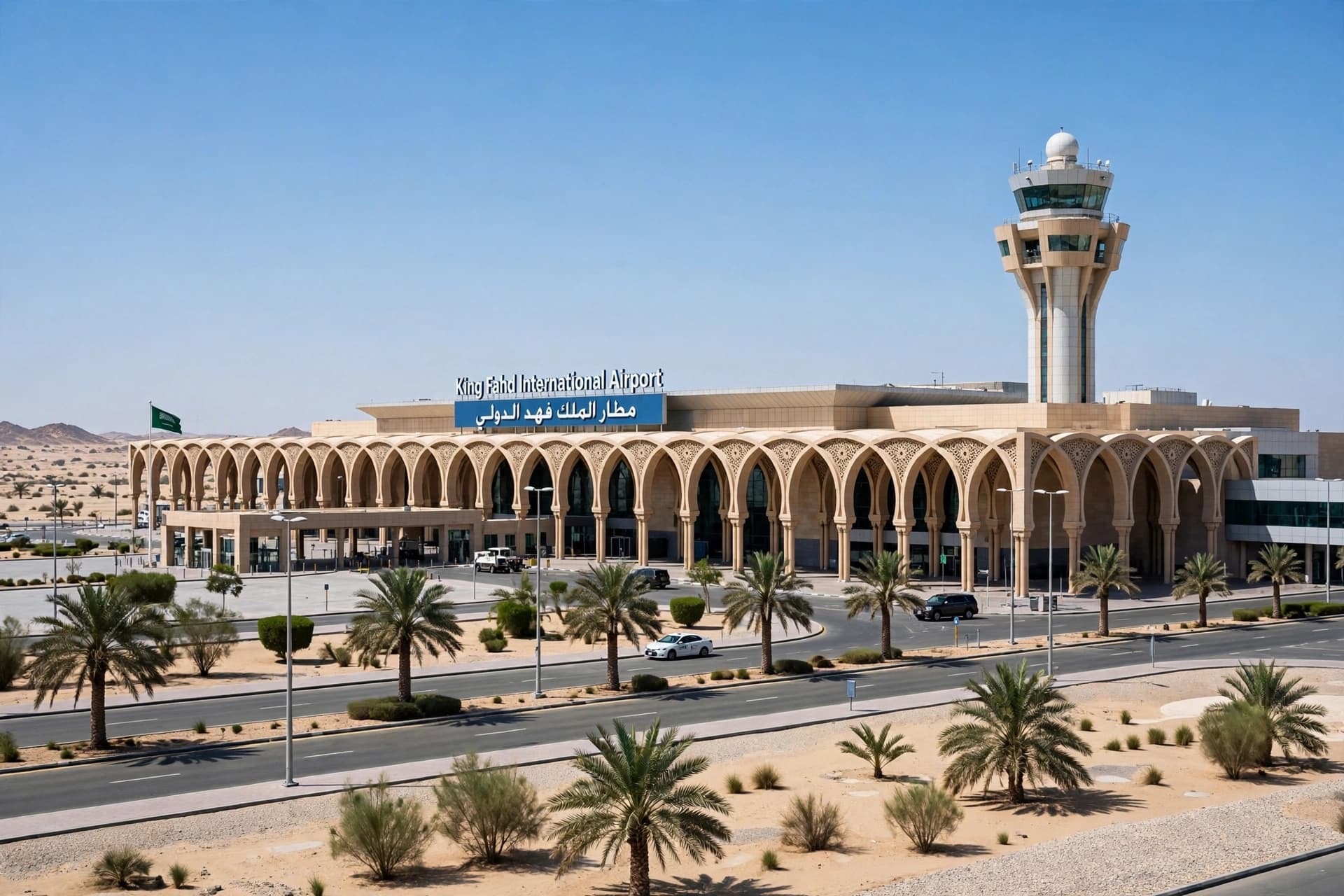
An attack on King Fahd International Airport in Dammam, Saudi Arabia, on Wednesday evening killed two people and injured eight others, according to the kingdom's General Authority of Civil Aviation . The dead were identified as a Saudi citizen and an Indian national, and the injuries ranged from minor to serious. Airport operations were temporarily disrupted but resumed, and air traffic returned to normal, the authority said .
The attack on the airport coincided with a separate incident involving a drone targeting an oil facility. Saudi Arabia's Energy Ministry reported that falling debris from the successful interception of a drone aimed at the Shaybah oil field near the UAE border killed two people—a Filipino and a Nepali—and injured two others . The ministry stated that the attempted attack caused a fire in a vehicle belonging to a contractor outside the facility's perimeter, though oil operations were unaffected .
No group immediately claimed responsibility for either attack, and Saudi authorities did not specify the origin of the drone or the nature of the assault on the airport. The kingdom has been a target of drone and missile attacks in the past, often attributed to Houthi rebels in Yemen, though the current incidents have not been formally linked to any particular actor. The eastern province, where both Dammam and the Shaybah field are located, holds much of Saudi Arabia's oil infrastructure and has been a focal point of security concerns for years.
What makes these attacks particularly unsettling is their proximity to civilian life. King Fahd International is one of the kingdom's largest airports, serving millions of passengers annually. The Shaybah field, while a strategic energy asset, sits in a remote desert region where contractors and workers live and move. The casualties in both incidents were not combatants but individuals going about their work—a Saudi citizen and an Indian national at the airport, a Filipino and a Nepali at the oil facility. Their names have not been released, but their nationalities speak to the global labor networks that sustain the region's infrastructure.
The Saudi government has framed its security posture as one of vigilance against external threats, and the rapid resumption of airport operations suggests an effort to project normalcy. Yet the fact that debris from an intercepted drone can kill people on the ground is a reminder that defense systems, however effective, cannot always prevent harm from falling from the sky. The physics of interception are unforgiving; what goes up must come down somewhere.
In the broader regional context, these incidents add another layer of tension to an already volatile landscape. The conflict with Iran, the ongoing war in Yemen, and the persistent threat of asymmetric attacks have made the Gulf a place where security is measured in layers—at borders, at facilities, at airports, at oil fields. Each layer is designed to protect, and each layer has its limits.
For the families of those killed, the limits are not abstract. They are the reason a chair sits empty, a journey ended before it began, a worker did not return home. The investigation will continue, the security assessments will be revised, and the airport will remain open. But somewhere, the silence of an unexpected loss will linger longer than the news cycle.
The images accompanying this article are AI-generated and intended for illustration only.
Sources: New Straits Times, Arab News PK, Daily Times
Published by Banx Network. This article is part of the Banx decentralized media programme, powered by the BXE token on the XRP Ledger.