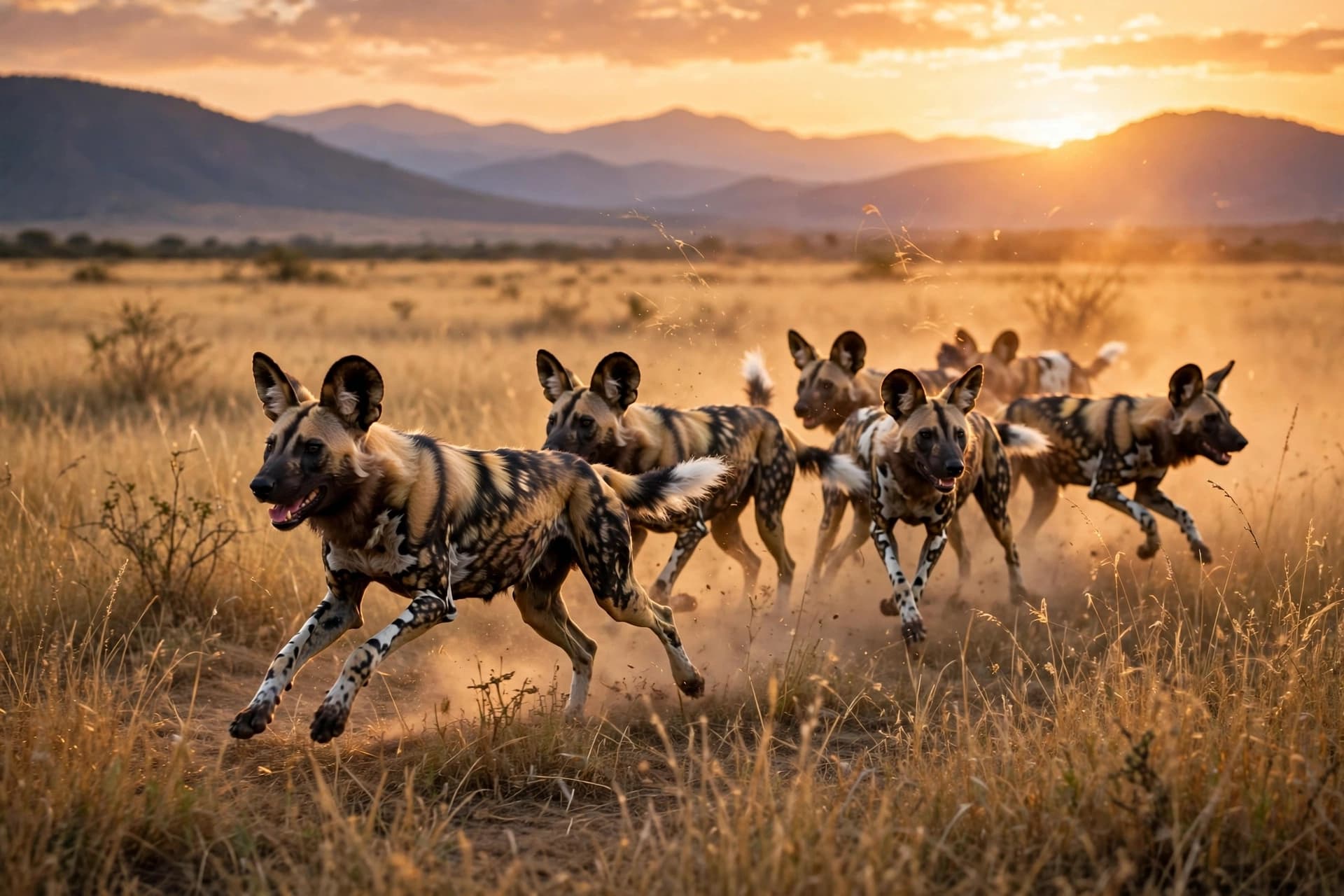
In the vast and rugged landscapes of Africa, where survival is a daily negotiation with nature, the drive to continue one’s lineage can lead to extraordinary journeys. A new study has revealed that African wild dogs, also known as painted wolves, are capable of trekking thousands of kilometers in search of mates, displaying a level of endurance and determination that rivals the most famous migrations on the continent. This discovery reshapes our understanding of their behavior, highlighting not just their social complexity but their remarkable physical resilience in the face of fragmented habitats.
The research, published in the journal Ecology, tracked a group of three male siblings from a pack in Zambia. Over the course of eight months, these brothers covered an astonishing 4,126 kilometers, crossing through multiple countries and navigating human-dominated landscapes. This distance represents the longest recorded dispersal for any African mammal, a testament to the lengths these animals will go to find new territories and breeding partners. Their journey took them through diverse terrains, from dense woodlands to open savannas, challenging the notion that wild dogs are strictly territorial stay-at-homes.
For conservationists, this finding is both inspiring and concerning. On one hand, it demonstrates the incredible adaptability of the species, which is currently listed as endangered. The ability to traverse such vast distances suggests that wild dogs can connect isolated populations, potentially boosting genetic diversity and strengthening the overall health of the species. On the other hand, the journey highlights the dangers they face, including roads, fences, and conflict with humans, which pose significant threats to their survival.
The study utilized GPS collars to monitor the dogs’ movements, providing a detailed map of their route. The data showed that the brothers moved with purpose, often covering dozens of kilometers in a single day. They avoided large human settlements but were forced to navigate through areas of agricultural activity, where the risk of poisoning or shooting is high. Their success in completing the journey is a rare victory in a world where wildlife corridors are increasingly shrinking.
This behavior is driven by the social structure of wild dog packs. Typically, young males leave their natal pack to find new groups or establish their own. In a landscape where suitable habitat is patchy, the search for mates can become a long-distance expedition. The brothers’ journey underscores the importance of connectivity between protected areas, allowing animals to move freely and safely across borders. Without these corridors, such vital genetic exchanges would be impossible.
The implications for conservation policy are significant. Protecting wild dogs requires more than just safeguarding individual parks; it demands a regional approach that considers the entire landscape. Governments and NGOs must work together to create safe passage for these travelers, mitigating conflicts with local communities and reducing hazards like traffic and poaching. The story of these three brothers serves as a powerful argument for transboundary conservation efforts.
For the public, the tale of the traveling wild dogs offers a glimpse into the hidden lives of one of Africa’s most charismatic predators. It challenges the perception of them as merely hunters, revealing them as explorers and survivors with complex social needs. Their journey is a reminder of the wild spirit that persists despite the pressures of modern development. It invites us to look at the landscape not just as a resource, but as a home for creatures with their own destinies.
As we reflect on this record-breaking trek, we are reminded of the interconnectedness of life. The fate of the African wild dog is tied to the health of the ecosystems they traverse. By supporting their right to roam, we support the vitality of the continent itself. Their steps, though small, echo loudly in the call for a more harmonious coexistence between humans and wildlife.
AI Image Disclaimer: The visual representations included here are AI-generated illustrations designed to depict African wildlife and landscapes, not actual photographs of the specific wild dogs tracked in the study.
Sources: Reuters Ecology Journal Mongabay
Published by Banx Network. This article is part of the Banx decentralized media programme, powered by the BXE token on the XRP Ledger.