
Key Highlights
- Israel's military campaign against Iran is expected to last at least three more weeks.
- The focus is on degrading Iran's military infrastructure and capabilities.
- Ongoing tensions between Israel and Iran have historical roots and significant regional implications.
Morning unfolds slowly along the Mediterranean coast of Tel Aviv. The sea carries its steady rhythm against the shore, and the first light of day touches the glass towers and quiet streets. From balconies and cafés, the city watches another day begin, as it has countless times before. Yet beyond the calm of the coastline, the horizon of the region continues to shift, shaped by decisions made far from the quiet shoreline.
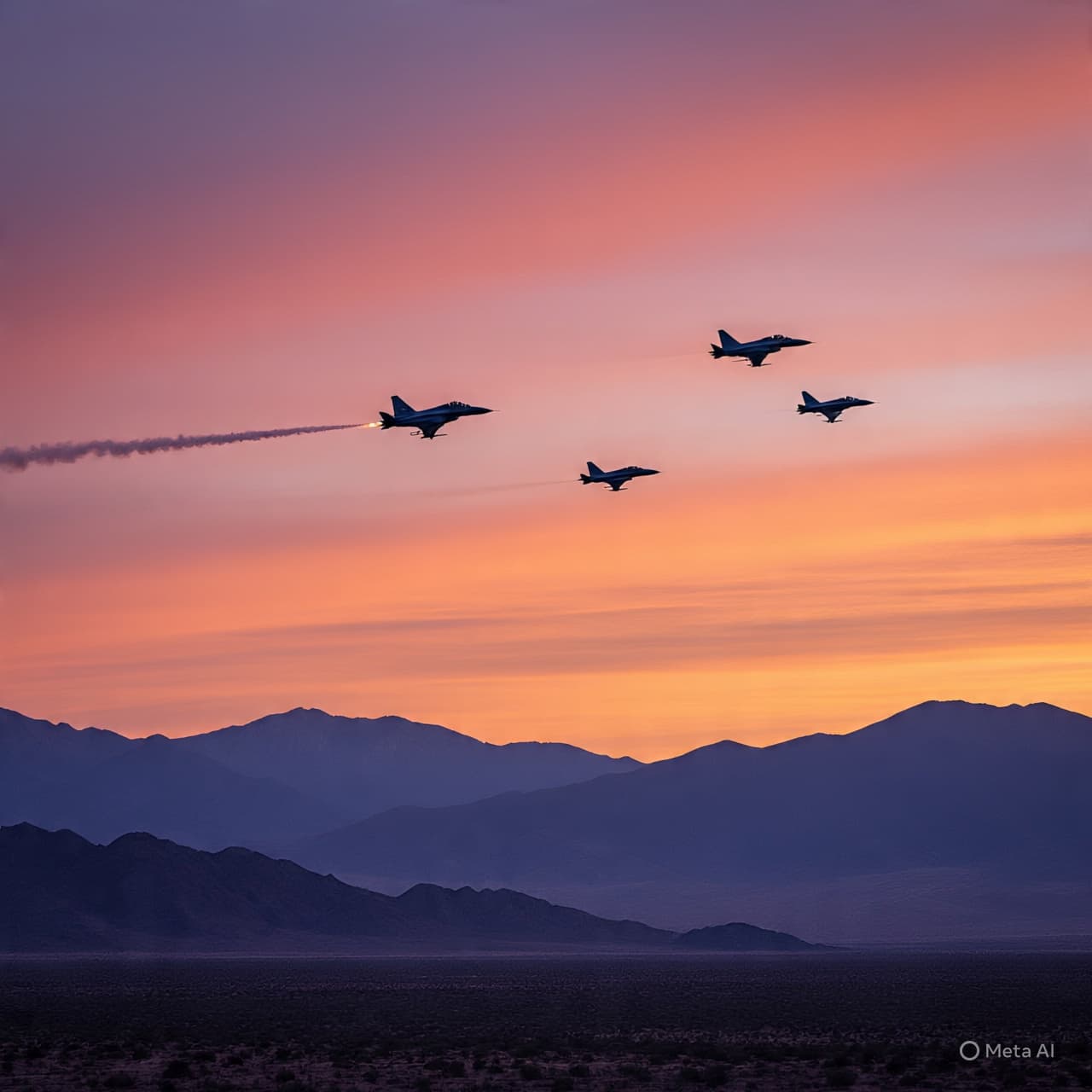
In recent remarks reported by CNN, a spokesperson for the Israel Defense Forces (IDF) indicated that Israel expects its military campaign against Iran to continue for at least three more weeks. This statement offers a glimpse into a strategy measured not in sudden movements but in sustained effort, as Israeli forces continue airstrikes aimed at sites connected to Iran’s military infrastructure.
Military campaigns planned across several weeks often reflect a deliberate rhythm. Rather than seeking immediate resolution, they unfold through a sequence of operations intended to gradually weaken the systems that sustain defense capability. Israeli officials have suggested that the focus of these strikes includes facilities linked to Iran’s weapons production, technological development, and logistical networks.
The rivalry between Israel and Iran has long existed like a distant storm on the geopolitical horizon—sometimes quiet, sometimes rumbling with distant thunder. For years, tensions between the two states have been expressed through indirect confrontations, regional alliances, and covert operations. The current phase, however, has drawn that rivalry into clearer view.
Across Tehran, where the wide boulevards stretch toward the foothills of the Alborz Mountains, the country’s defense industry has grown over decades of isolation and adaptation. Faced with international sanctions that limited access to foreign weapons markets, Iran invested heavily in domestic research, engineering, and military manufacturing. Laboratories, factories, and research institutes became part of a broader effort to sustain national defense capabilities.
Israeli officials say their current operations are intended to reduce the effectiveness of that network. By targeting infrastructure associated with weapons development and production, they aim to gradually erode the technological foundation that supports Iran’s military programs.
Yet the story of such operations rarely belongs solely to strategy. Military actions ripple outward through the everyday systems that connect the region. Airlines adjust their routes as airspace conditions change. Governments watch events carefully from diplomatic offices. Markets respond to uncertainty with quiet shifts in energy prices and security planning.
And in the cities themselves, life continues with its familiar patterns. In Tel Aviv, cyclists move along the beachfront promenade while the midday sun reflects off the Mediterranean. In Tehran, the flow of traffic fills avenues lined with plane trees and apartment towers. These ordinary scenes exist alongside a conflict that unfolds far above the streets.
The Israeli spokesperson’s remarks suggest that the campaign is expected to continue for at least three more weeks, with operations focused on degrading Iran’s defense industry. Whether the timeline holds steady may depend on the shifting realities that shape every conflict—political pressures, military developments, and the responses of other nations watching closely.
For now, the skies over the region remain a meeting place of calm air and distant motion. Aircraft trace paths that few on the ground ever see, carrying the weight of decisions made far from the everyday rhythm of city life.
And as the days move forward—quiet mornings turning into long evenings across cities separated by deserts and seas—the unfolding campaign becomes another moment in the long, complex relationship between two nations whose histories and ambitions continue to shape the landscape around them.
Published by Banx Network. This article is part of the Banx decentralized media programme, powered by the BXE token on the XRP Ledger.



