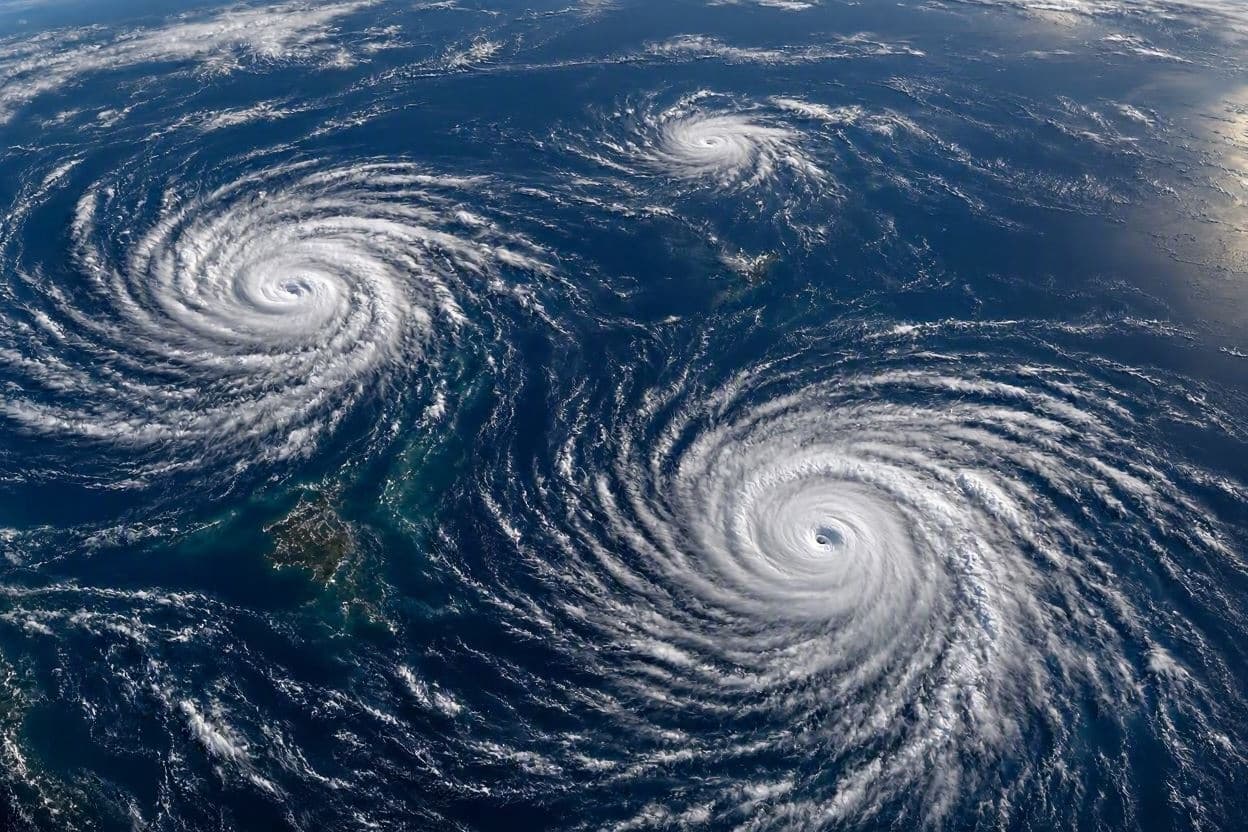
The Pacific Ocean, vast and deep, is currently hosting a rare meteorological spectacle: three hurricanes swirling simultaneously within its basin. This convergence of powerful storms serves as a dramatic reminder of the ocean’s immense energy and the dynamic nature of our planet’s climate system. While multiple tropical cyclones can occur during peak season, the presence of three distinct systems at once captures the imagination and underscores the complexity of weather prediction. For scientists and observers alike, it is a moment to watch, learn, and prepare.
These hurricanes, each with its own path and intensity, are influenced by a variety of factors, including sea surface temperatures, wind shear, and atmospheric pressure patterns. Warm waters provide the fuel for these storms, allowing them to gather strength as they move across the ocean. Meteorologists monitor them closely, using satellite imagery and computer models to track their development and predict their trajectories. The interaction between the storms, known as the Fujiwhara effect, can sometimes cause them to orbit each other, adding another layer of unpredictability.
For coastal communities, particularly in Hawaii, Mexico, and Central America, the presence of multiple storms raises concerns about potential impacts. Even if a hurricane does not make direct landfall, it can bring heavy rain, strong winds, and dangerous surf conditions. Emergency managers are advising residents to stay informed and have emergency kits ready. Preparedness is key, as the cumulative effect of multiple storms can strain resources and complicate response efforts.
The occurrence of three simultaneous hurricanes is not unprecedented but remains notable. Climate change is influencing weather patterns, potentially leading to more intense and frequent storms in certain regions. Warmer ocean temperatures extend the hurricane season and provide more energy for storm formation. While scientists caution against attributing any single event solely to climate change, the trend aligns with broader observations of increasing extreme weather events.
Aviation and maritime industries are also adjusting their operations to account for the turbulent conditions. Flight paths may be altered to avoid turbulence, and shipping routes adjusted to ensure safety. The economic ripple effects of such weather events can be significant, affecting supply chains and travel plans. Awareness and adaptability are essential for minimizing disruption.
Public interest in these storms is high, with many following their progress through news updates and social media. This engagement offers an opportunity for education about meteorology and climate science. Understanding how hurricanes form and behave helps demystify them, reducing fear and promoting rational preparation. It also highlights the importance of supporting scientific research and weather monitoring infrastructure.
As the storms continue their dance across the Pacific, the world watches with a mix of awe and caution. Nature’s power is both beautiful and formidable, demanding respect and vigilance. The trio of hurricanes serves as a testament to the ever-changing face of our planet, reminding us of our place within the larger natural order.
Three simultaneous hurricanes in the Pacific Ocean highlight the dynamic nature of tropical weather systems, prompting vigilance among coastal communities and offering insights into climate patterns.
AI Image Disclaimer: The images referenced in this piece are AI-created visualizations meant to evoke the setting, not direct documentation of the scientific data.
Sources: National Hurricane Center NOAA Weather Channel Reuters
Published by Banx Network. This article is part of the Banx decentralized media programme, powered by the BXE token on the XRP Ledger.