
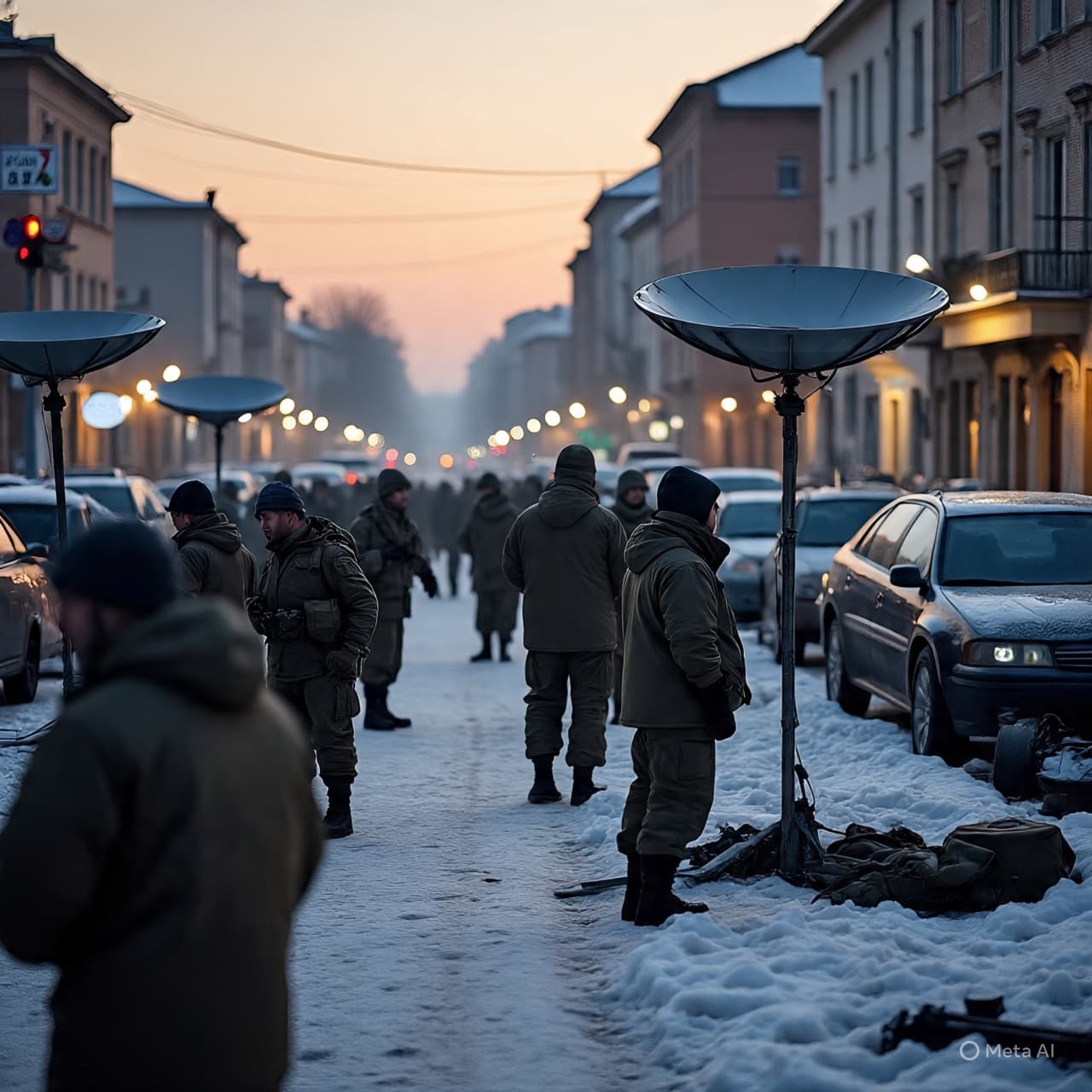
Key Highlights
- Satellite communications have significantly impacted military operations in Ukraine.
- A recent change in access has led to a notable pause in combat activities.
- Ukrainian forces are adapting to new communication challenges amid the conflict.
In the frost-touched plains of Ukraine, where winter light lingers over shell-scarred fields, a quieter rhythm has emerged in the ongoing conflict. The once-constant drone of missiles and crackle of radio chatter has softened, creating a palpable pause in the relentless machinery of war. This unexpected stillness marks a significant shift in the dynamics of military operations, influenced by the intricate web of satellite communications.
For years, the invisible threads of satellites have been crucial in stitching the war together. Starlink's constellation of low-orbit satellites has provided essential communication links for both Ukrainian and Russian forces. However, recent developments have transformed this commercial network into a critical fault line in the conflict. In late January and early February, Ukrainian officials collaborated with SpaceX engineers to sever unauthorized access that Russian forces had established on the Starlink network. This decisive action has led to the implementation of a “whitelist” system, allowing only verified terminals to communicate while silencing all others.
As this transition unfolded, soldiers stationed in cold outposts began to notice a significant change. Commands that once flowed seamlessly across digital channels now hesitated, and drones, vital for strikes and surveillance, lost their satellite connections. The Ukrainian general staff observed a stark decline in the number of active assaults reported along key points of contact, with commanders noting that days were increasingly marked by strategic silence rather than the thunder of offensive operations. This disruption has been likened to a tactical eclipse over Russian command and control.
However, this narrative is not one of immediate triumph for Ukraine. The Ukrainian forces also experienced communication challenges during the initial days of the cutover, highlighting the complexities of modern warfare where every network can be a double-edged sword. As military analysts and social media commentators debated the long-term implications of this technical shift, the situation on the ground remained fluid, with both sides seeking to adapt.
For civilians caught in the crossfire, this period of relative quiet has created a strange lull. It offers a brief respite, allowing people to step onto cracked streets and breathe a little deeper before the next phase of campaigning begins. While the war is far from over, these moments of pause suggest a shift in the battlefield's rhythm, emphasizing human resilience amid the chaos of conflict.
As dawn breaks over the horizon, soldiers and civilians alike look toward a future that balances hope and caution. The slowing of offensive operations does not provide comfort but rather clarity: in the age of digital warfare, even the silent channels of the sky can profoundly influence the course of history.
Published by Banx Network. This article is part of the Banx decentralized media programme, powered by the BXE token on the XRP Ledger.



