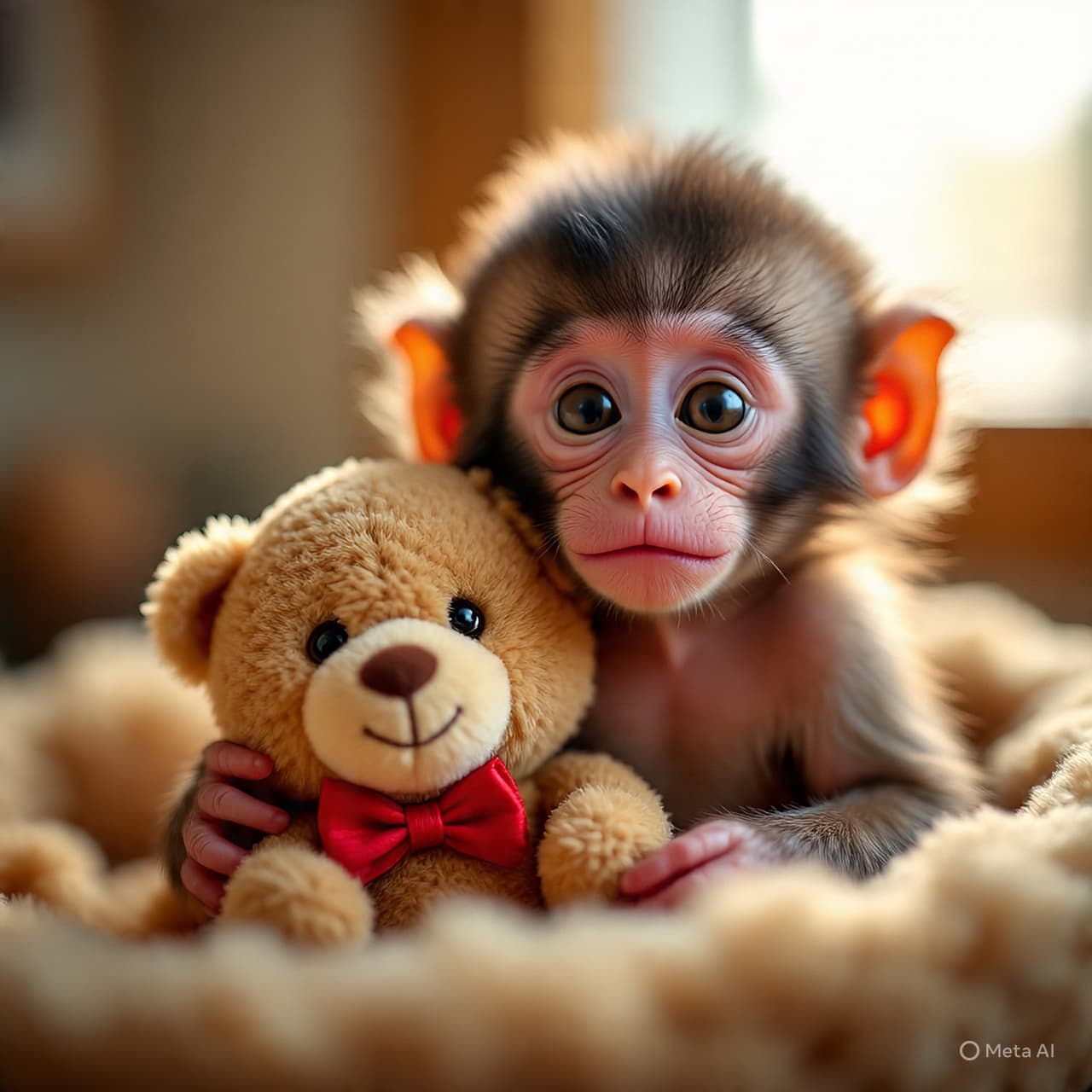
Morning arrives softly in the rescue center, filtered through mesh windows and the quiet routines of caretakers. Somewhere between the hum of warming lamps and the rustle of leaves outside, a newborn monkey curls into itself, small hands finding a shape that does not move away. The fabric is worn and stitched, a stand-in for warmth rather than blood, but it stays. In this early light, comfort is less about what something is and more about what it offers.
The infant was abandoned at birth, a fragile outcome that caregivers say can follow complicated deliveries or maternal stress in primates. Without the anchoring presence of its mother, the newborn struggled to regulate temperature and feeding. In the first hours, survival hinged on human vigilance—bottles warmed to precise degrees, careful monitoring, the quiet patience of round-the-clock care. Then came the stuffed animal, introduced not as a toy but as a constant: something to cling to, something that felt, at least in outline, like continuity.
Veterinarians and primate specialists often describe the earliest days of life as a map being drawn—sensory pathways, emotional cues, rhythms of trust. For social animals, touch is a language learned before sight sharpens. When that language is interrupted, substitutes can help bridge the silence. Soft objects are used in sanctuaries to provide pressure and warmth, encouraging calmer breathing and steadier sleep. Over time, the monkey began to settle, its grip loosening only when feeding or being examined, returning again to the familiar fabric as if to confirm the world had not vanished.
The scene is tender but not sentimental. Care teams are careful to balance comfort with a long view. The goal is not dependency on objects or people, but a gradual path toward species-appropriate bonds—first with caregivers, later with other monkeys, and eventually with a troop where grooming and play replace thread and stuffing. Each step is paced, measured, and revised as the animal grows stronger.
There are practicalities beneath the quiet. Abandonment rates can rise when habitats are disrupted or when animals are brought into captivity under stress. Rescue centers absorb the consequences, translating loss into protocols and care plans. In this nursery, the stuffed animal is a tool as much as a kindness, part of a broader effort to stabilize a life that arrived without a guide.
As afternoon light shifts and shadows lengthen, the baby monkey sleeps, one arm draped over its stand-in companion. The room breathes evenly. Tomorrow will bring another feeding schedule, another assessment, another small recalibration. For now, the fabric holds, and in that stillness, something essential is preserved—the possibility of trust, stitched together one quiet hour at a time.
AI Image Disclaimer Illustrations were created using AI tools and are not real photographs.
Sources Associated Press Reuters National Geographic BBC News
Published by Banx Network. This article is part of the Banx decentralized media programme, powered by the BXE token on the XRP Ledger.