
Key Highlights
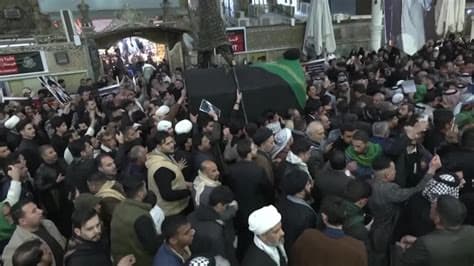
- Thousands of mourners gathered in Najaf, Iraq, for Khamenei's funeral procession.
- The procession included chants against the U.S. and Israel, reflecting regional tensions.
- Khamenei's coffin is set to be returned to Iran after the ceremonies in Iraq.
Thousands of mourners marched through Iraq’s holy city of Najaf on Wednesday, carrying portraits of Ayatollah Ali Khamenei as his coffin moved through the streets following his death in Iran. The six-day procession, which drew huge crowds in Iran, crossed into Iraq and continued as banners of Iran-linked Iraqi militias joined the route. This event highlights the deep connections between Iran and Iraq, particularly among Shi’ite communities.
As the procession progressed, attendees chanted slogans such as “Death to America” and “Death to Israel,” showcasing the ongoing political sentiments in the region. The display of Iraqi and Iranian flags above the crowd further emphasized the solidarity among the mourners, many of whom view Khamenei as a pivotal figure in Shi’ite leadership.
Najaf holds significant importance for Shi’ite Muslims, being the burial place of Imam Ali, a revered figure in Islam. The choice of this city for Khamenei's funeral procession underscores the symbolic ties between his leadership and Shi’ite religious authority. The atmosphere was charged with emotion as mourners paid their respects, reflecting on Khamenei's influence over the years.
Khamenei’s coffin arrived Tuesday evening at Najaf’s international airport, where Iraqi Prime Minister Ali al-Zaidi, senior officials, and religious figures attended an official reception. Iranian President Masoud Pezeshkian and commanders from the Islamic Revolutionary Guard Corps were also present, indicating the high-profile nature of the event and the importance of Khamenei's legacy in both countries.
The procession is expected to continue to the shrine city of Karbala, another significant location for Shi’ite Muslims, before the coffin is returned to Iran for burial. This journey not only serves as a farewell to Khamenei but also as a demonstration of the enduring ties between Iran and Iraq, particularly in the context of shared religious beliefs and political alliances.
As the procession unfolds, it is likely to draw further attention both regionally and internationally, highlighting the complex dynamics of power, religion, and nationalism in the Middle East. The reactions to Khamenei's death and the subsequent mourning rituals will be closely monitored, as they may influence future relations between Iran, Iraq, and the broader region.
Published by Banx Network. This article is part of the Banx decentralized media programme, powered by the BXE token on the XRP Ledger.



