
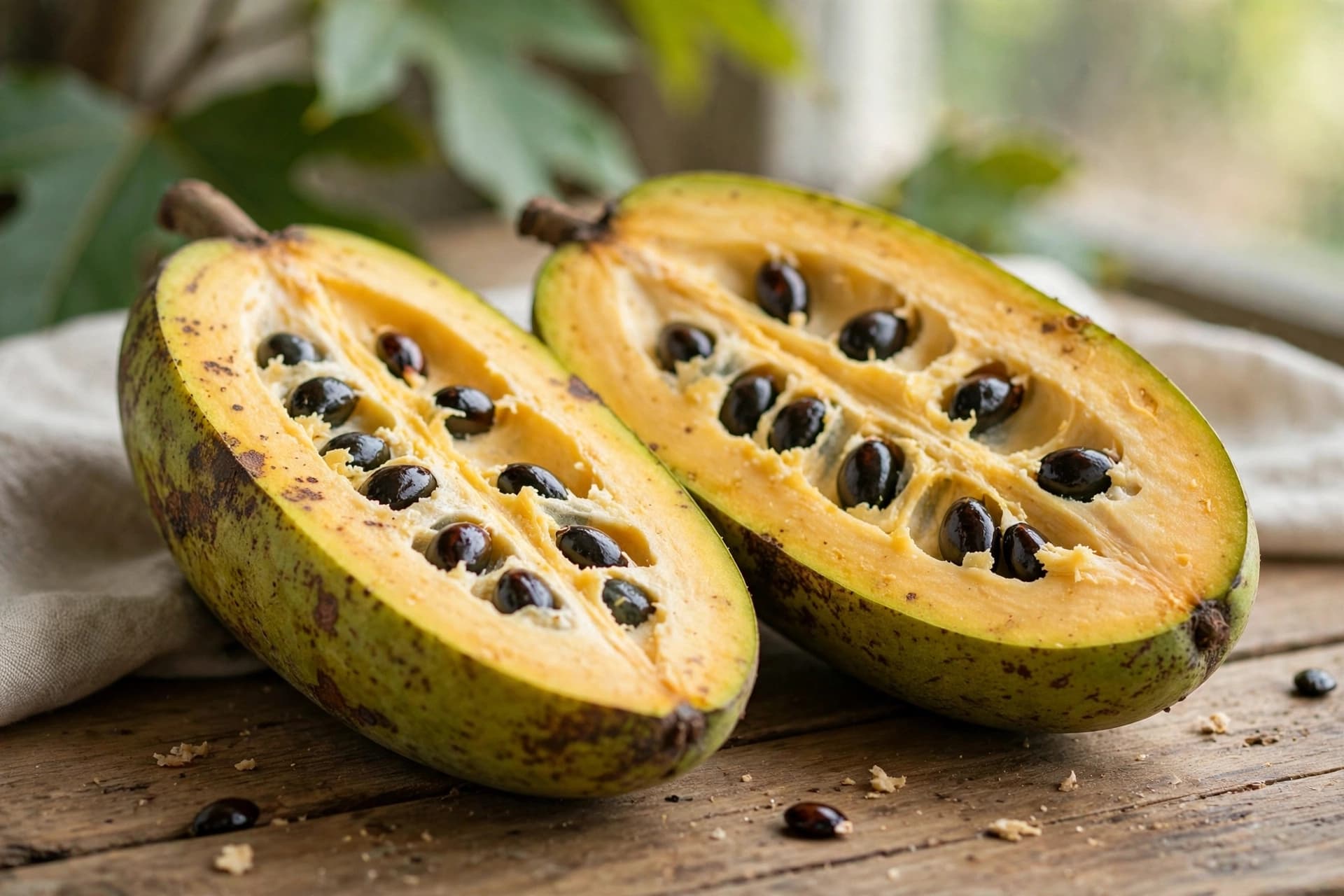
There is something quietly remarkable about a fruit that tastes of the tropics but grows in a Quebec backyard. It is a contradiction that nature sometimes offers—a reminder that the boundaries we draw between climates and cuisines are not as fixed as we assume. On Sunday, in the town of Farnham about 50 kilometers southeast of Montreal, thousands gathered to celebrate just such a contradiction: the pawpaw, a green-skinned fruit native to North America that tastes, by many accounts, like a blend of mango, banana, pineapple, and caramel .
The second annual Pawpaw Festival drew an estimated 12,000 to 14,000 visitors, up from 10,000 at its inaugural edition last year . They came with sticky fingers and bright faces, scooping up spoonfuls of yellow flesh from the mango-shaped fruit, many amazed to learn that some of the pawpaws they were eating had been picked just around the corner . “It tastes like mango, banana, pineapple and caramel,” said Vincent Renaud, founder of the non-profit Pawpaw Québec. “It has every characteristic of a tropical fruit, even if it’s a native fruit. And it grows in our backyard here in Quebec — it’s pretty incredible” .
The festival offered more than fresh fruit. Visitors sampled pawpaw beer, pastries, hot sauce, candles, and specialty dishes like pawpaw-filled arancini and pawpaw poutine . For some, the experience was a first encounter with a fruit that had been forgotten by mainstream agriculture. Pawpaw was once more popular in North America, particularly in the early 1900s, but interest faded around World War II, partly because the fruit’s short shelf life made it difficult to sell in grocery stores . “Once it’s ripe, after a day or two, it goes from the best fruit in the world to tasting like rotten bananas,” Renaud explained .
The fruit’s obscurity has not deterred its advocates. Renaud, who fell in love with pawpaws in 2019, created a Facebook group for enthusiasts that now has nearly 23,500 members . He launched the festival last year to spread the word, and the response has exceeded expectations. Visitors have come from other provinces, from the United States, and even from Europe . Rodney Dever, a pawpaw specialist from West Virginia, was on hand to share the fruit’s history and potential. “I’ve been speaking at pawpaw festivals every weekend since the second weekend of September,” he said. “It’s great to just spread the pawpaw gospel” .
For some attendees, the festival was about more than curiosity. Gabrielle Boucher, who returned for a second year with her family, sees the fruit as a step toward food sovereignty. “Everyone should plant (pawpaw) in their yard, so that maybe, some day, we eat less fruits from abroad, like bananas,” she said . Nicolas Leporé and his wife Sabrina Chiminazzo left with seeds and fresh fruit, planning to grow their own trees at home. “I’ve always been curious about the idea of trying to grow a tree at home,” Leporé said. “When I saw this festival was happening, I thought, ‘This is the perfect opportunity’” .
Dominique Lalonde, owner of Kîsisam Patisserie, discovered pawpaw through Renaud and began incorporating it into her baking. For her, the fruit represents a reconnection with local and Indigenous food traditions. “Within colonization, we’ve been told for so long that everything that we have available here isn’t good, right? And it’s kind of coming back to Mother Nature, coming back to the source, coming to Earth, and really reconnecting with those Indigenous roots” .
The pawpaw’s return is part of a broader movement that extends beyond Quebec. Dever noted that the fruit is finding new audiences in Europe and Japan, where its hardiness allows it to grow in cooler climates . But the challenge of its short shelf life remains, limiting its potential for large-scale commercial distribution. For now, the festival serves as a gathering point for those who believe the fruit deserves a place in Canadian kitchens and gardens—a tropical-tasting treasure that has been hiding in plain sight.
AI Image Disclaimer: The imagery in this article is AI-generated and serves an illustrative purpose only.
Sources:
· Delta Optimist · La Presse · Barrie 360
Published by Banx Network. This article is part of the Banx decentralized media programme, powered by the BXE token on the XRP Ledger.


.jpg&w=3840&q=75 "Head-On Collision Near Addis Ababa: Four Dead as Commercial Vehicles Crash on Highway")