There is a particular irony that attends the most consequential legal battles—a sense that the outcome may hinge not on the grandest principles but on the most unexpected alignments, on the quiet consistency of a justice whose views on one matter might, in a different context, seem to point in an entirely different direction. On Monday, the Supreme Court will hear oral arguments in Suncor Energy v. Boulder, a case that asks whether the city and county of Boulder, Colorado, can sue Exxon Mobil and Suncor Energy for the damages they say climate change has inflicted on their community . The case is, by any measure, the most significant climate dispute to reach the high court in nearly two decades. And the justice whose vote may prove most decisive is not the one environmentalists typically look to with hope.
Clarence Thomas has consistently sided against environmental interests. He has opposed federal regulation of wetlands, balked at efforts to reduce power plant emissions, and signed onto a decision allowing San Francisco to pump more sewage into the Pacific Ocean . Yet when it comes to the specific question at the heart of the Boulder case—whether federal law preempts state law—Thomas has staked out positions that align with the city's argument. As an appellate attorney, Deepak Gupta, observed at a recent Georgetown Law event, "The justices to watch here are very much Justice Gorsuch and Justice Thomas. I think they will find the lack of any textual hook for these arguments troubling" .
The case turns on a fundamental question of federalism. Boulder alleges that the oil companies knowingly contributed to climate change and misled the public about their role, causing concrete harm—flood damage, increased wildfire risk, drought, and physical damage to public infrastructure. The city seeks monetary damages under state common law claims including public nuisance, private nuisance, trespass, and civil conspiracy . Exxon and Suncor counter that regulating climate pollution is inherently a federal issue because emissions cross state lines, and that allowing every city to sue would create a chaotic patchwork of approaches .
For Thomas and Gorsuch, the question is not about climate policy but about legal text. Both justices have repeatedly rejected the idea that federal law can displace state law based on "hazy arguments about a law's intentions or policy consequences" . Kirti Datla of Earthjustice, an environmental group that submitted a brief opposing Suncor and Exxon, argues that if Thomas embraces a consistent approach, Boulder should win: "Justices Thomas and Gorsuch have both written opinions that firmly reject the idea that federal law can shove state law out of the way. That's what Suncor's arguments boil down to in this case, so they should reject this move again here" .
The composition of the court adds another layer of uncertainty. Justice Samuel Alito recused himself from the case, citing his holdings in energy stocks, which he described as making recusal "prudent" though not required . That leaves eight justices, creating the possibility of a 4-4 split. A tie would leave the Colorado Supreme Court's decision in Boulder's favor standing, though such an outcome would carry less precedential weight than a majority ruling.
The stakes extend far beyond Boulder. Dozens of other local governments have filed similar suits against energy companies, seeking damages for climate-related harms. The court's decision could determine whether those cases proceed or are swept aside by federal preemption . The Trump administration has sided with the oil companies in the dispute . Oral arguments are scheduled for Monday, October 5 . Whatever the outcome, the case will mark a significant moment in the long and contentious legal history of climate accountability in the United States.
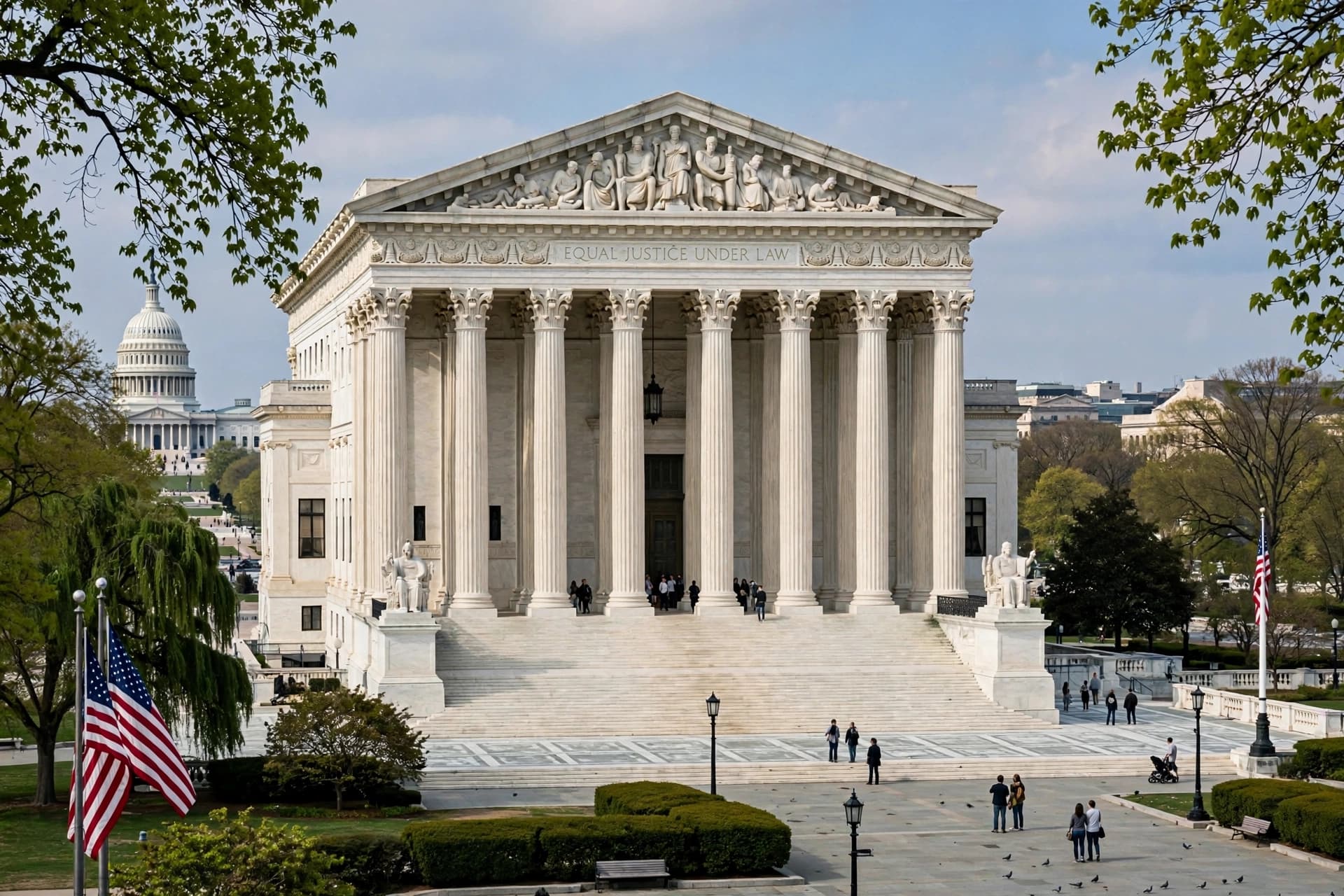
AI Image Disclaimer: All images in this article are AI-generated and are intended for illustrative purposes only.
Sources: CNN, Ballotpedia, Flipboard
Published by Banx Network. This article is part of the Banx decentralized media programme, powered by the BXE token on the XRP Ledger.