There is a particular cruelty in a death witnessed in real time, a moment that cannot be undone or edited or explained before it reaches the people watching. On Tuesday evening in Germany, Manuel Otto, the creator of the popular multiplayer game Stick Run, died at the age of thirty in what authorities and his company have described as an apparent suicide during a livestream on Twitch. The platform removed the broadcast and the associated video quickly, but the fact of it—the publicness of the final moments—has left a community struggling to absorb what it saw and what it could not prevent.
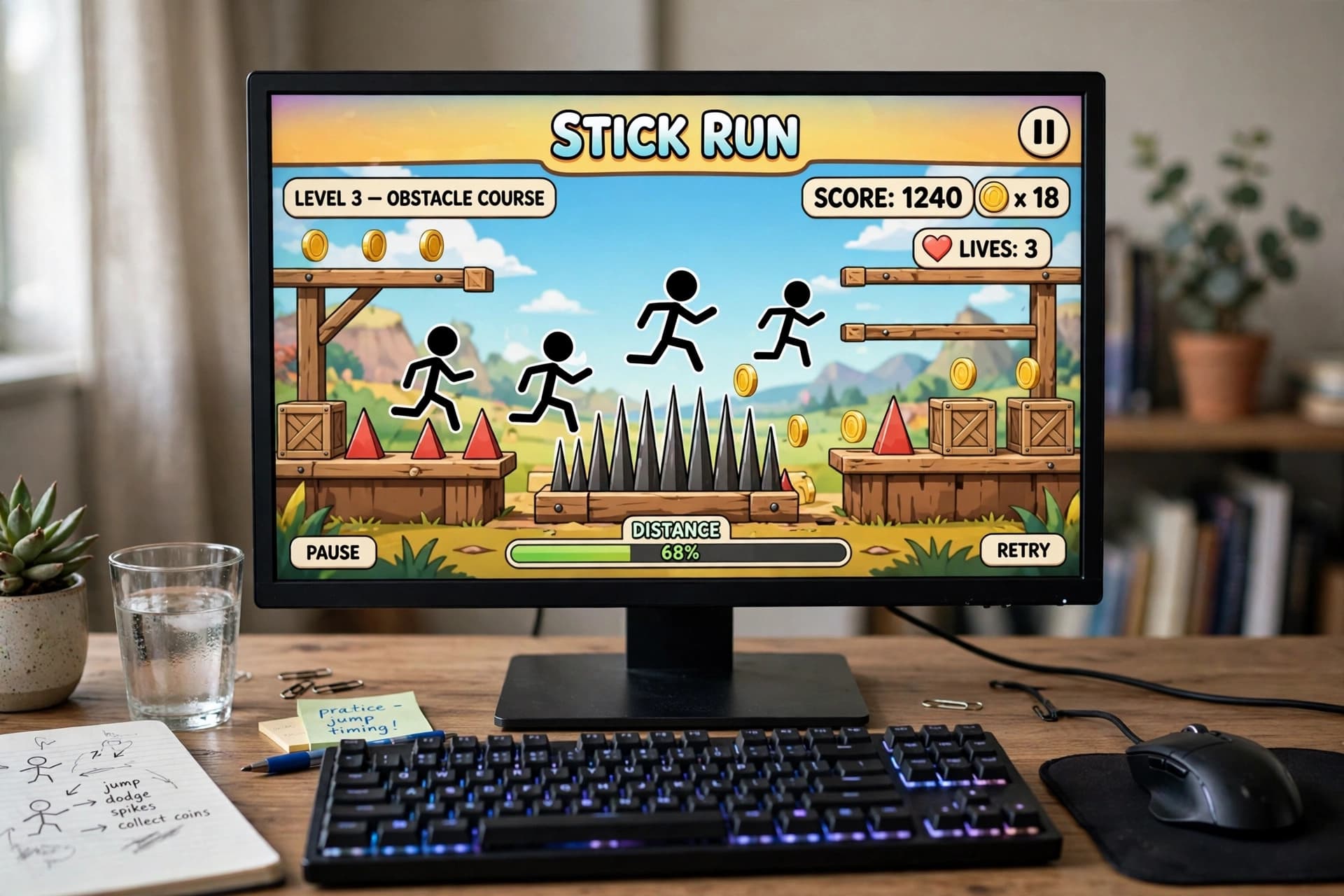
Otto was fourteen years old when he created Stick Run in 2010, a free-to-play game on Facebook that allowed players to guide stick figures through obstacle courses, collecting points and competing for high scores. It was played by more than 43 million people worldwide, on desktops and phones, and it became a part of childhood for a generation of users . The game's company confirmed his death in a statement, saying it was aware of a livestream "in which he appeared to have taken his own life" and asking the community to refrain from spreading unverified information . Twitch said it had removed the channel and the video on demand, and that the mental health and wellbeing of its community mattered deeply .
The details of what happened remain incomplete. Reports from local outlets in Bavaria described a fire at a property and a neighbor who attempted to extinguish it . The specific cause of death has not been officially confirmed, and authorities have not released further information. What is known is that Otto was thirty, that he had created something that millions of people had played, and that his final act was broadcast to an audience that had tuned in for the kind of content he had always provided.
There is a broader conversation that this death has reopened, one that the platforms and the culture have been slow to address. Livestreaming is an intimate medium, built on immediacy and the absence of a delay between the event and its transmission. That immediacy is part of its appeal, and it is also what makes it dangerous. When a person in crisis is broadcasting, the audience becomes a witness, and the platform becomes the stage. Twitch's response—removing the content, directing users to mental health resources—is the standard protocol. Whether it is sufficient is a question that has been asked before and will be asked again.
For the community that grew up playing Stick Run, the loss is personal in a way that is difficult to explain to those who did not share it. The game was simple, almost rudimentary by today's standards, but it was theirs. It was played in classrooms and bedrooms, in the quiet hours after school, in the spaces where childhood happens. Otto made that, and his company's statement acknowledged it: "His legacy will live on through every memory, every run, and every player who grew up playing Stick Run" .
What remains now is grief and the slow work of understanding. Otto's family has asked for privacy. His company has asked for restraint. The platforms have removed what can be removed. But the question of how to hold a public death—how to mourn someone whose final moments were seen by strangers—is not one that any statement can resolve. It is a question for the people who watched, and for a culture that has not yet decided what it owes to those who create the worlds it inhabits.
---
AI Image Disclaimer: The images accompanying this article are generated by artificial intelligence and are intended for illustrative purposes only.
Sources: New York Post, Daily Mail, New York Daily News, The Express Tribune
Published by Banx Network. This article is part of the Banx decentralized media programme, powered by the BXE token on the XRP Ledger.