There is a particular loneliness to a dead satellite—a machine built for a single, urgent purpose, abandoned once that purpose ended, left to circle the planet in silence for decades. Most of them simply drift, their batteries long drained, their instruments cold. But sometimes, without warning, they speak one last time, not in signals but in debris.
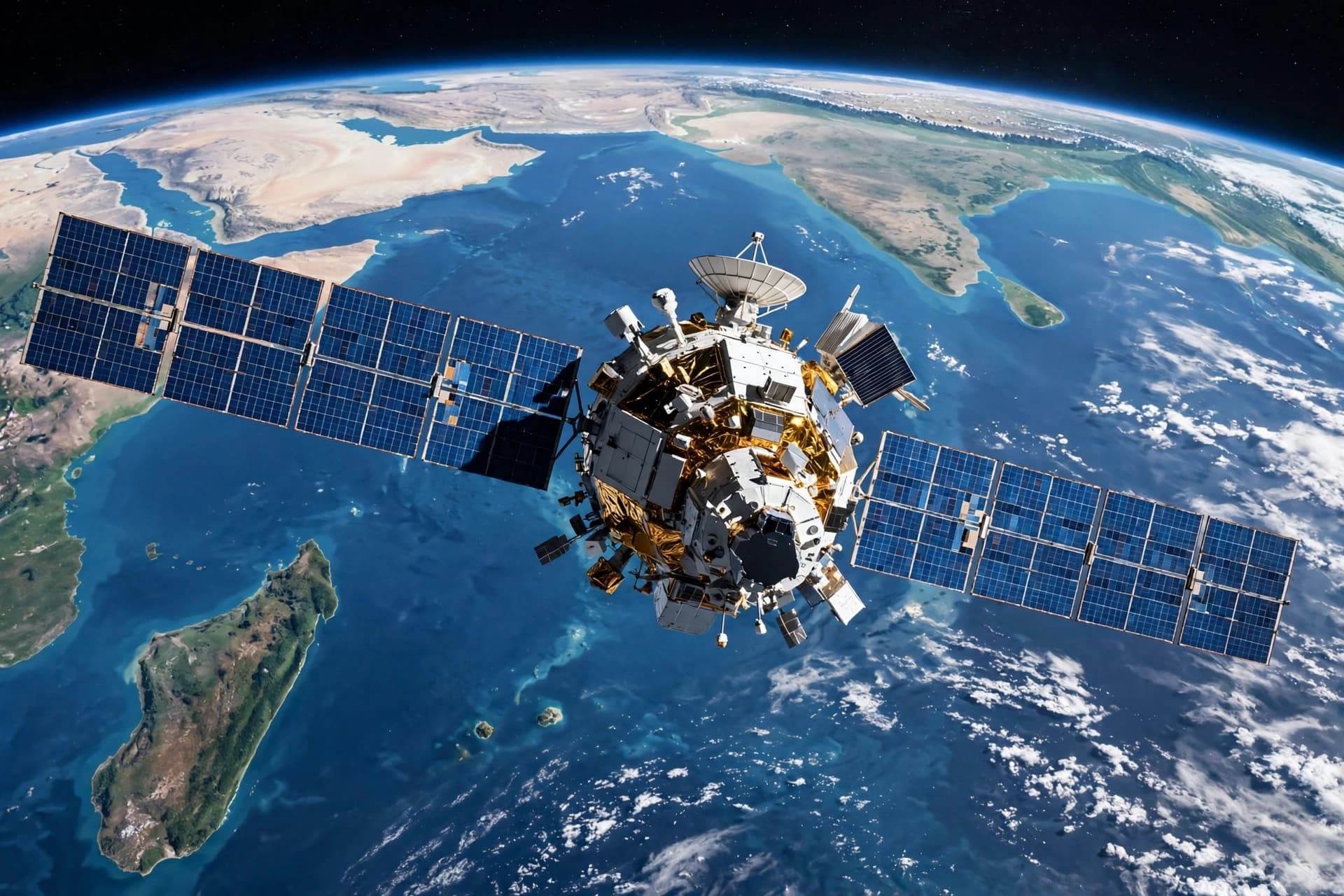
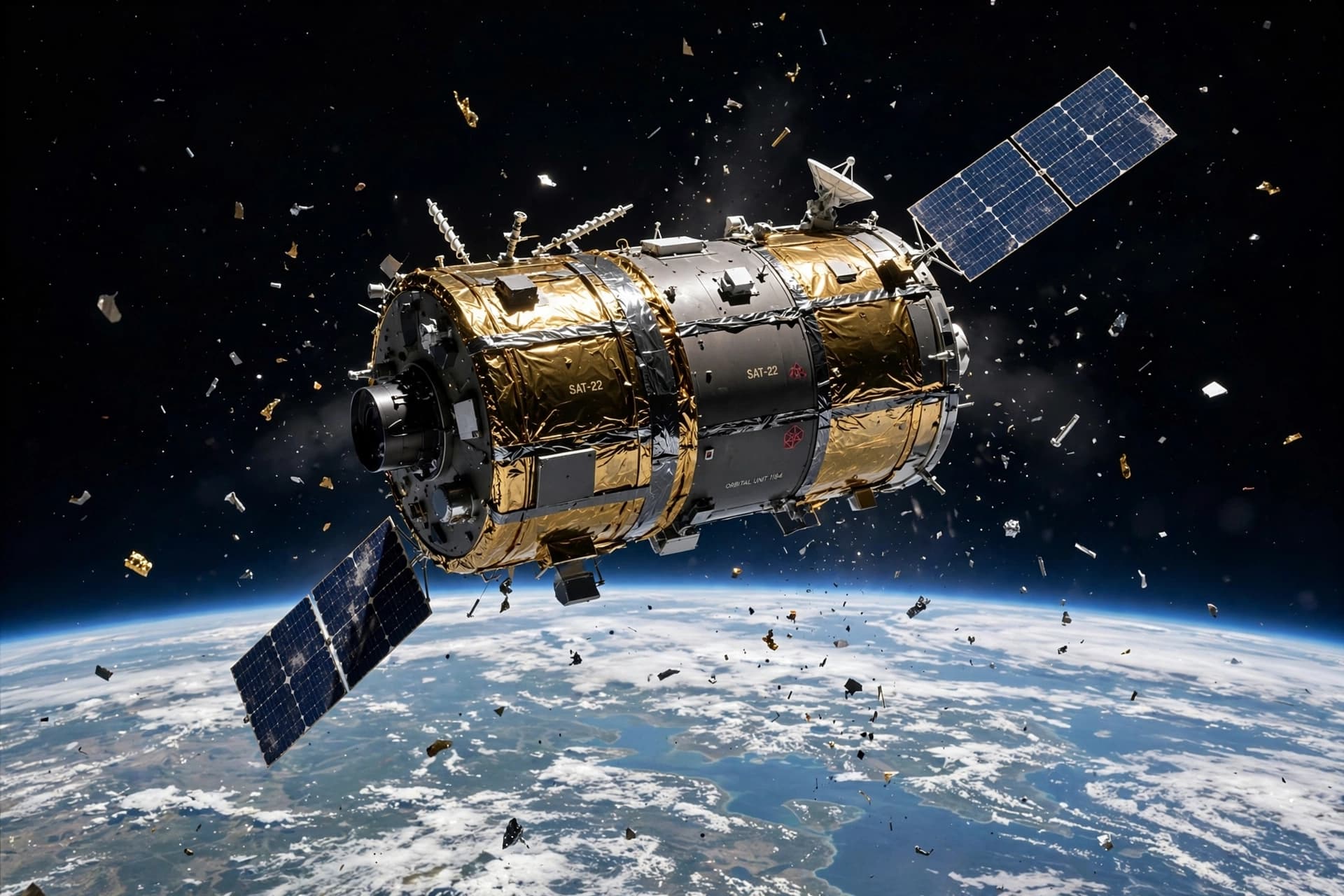
On September 13, an American spy satellite known as USA 32 or Farrah III broke apart roughly 775 kilometers above Earth. The explosion was detected by the U.S. Space Force's tracking network, which confirmed a sudden "fragmentation event" but offered no explanation for what caused it . The spacecraft was launched in 1988 by the National Reconnaissance Office on a mission that was only fully declassified earlier this year: intercepting Soviet radar and radio signals from orbit .
The satellite earned its nickname—Farrah III, after actress Farrah Fawcett—as part of the NRO's tradition of naming spacecraft after figures from the 1970s and '80s. Its shape was described as a "tuna can," a squat cylinder designed to spin rapidly so its antennas could sweep across military targets below . It stopped functioning decades ago, but it remained in orbit, a silent relic of a conflict that ended before most of today's satellite operators were born.
What caused the breakup remains unknown. The leading theory is simple material fatigue. After 38 years of exposure to the extreme temperature swings of low Earth orbit—roasting in direct sunlight, freezing in Earth's shadow—a pressurized tank or a battery cell may have simply ruptured . A micrometeoroid strike is also possible, though no other spacecraft has reported a collision. Anti-satellite weaponry has not been ruled out, but there is currently no evidence pointing in that direction .
The debris is the immediate concern. USA 32 broke apart in one of the most crowded regions of low Earth orbit, an altitude that hosts more than 200 active satellites, including the entire Iridium NEXT communications constellation . NASA has long identified this band as a high-risk zone, already littered with fragments from the 2009 collision between an American Iridium satellite and a defunct Russian spacecraft . The new fragments are being cataloged and monitored, but the full count remains unknown, and the risk of secondary collisions—debris striking debris, creating more debris—is real.
There is something quietly unsettling about a Cold War relic returning to relevance this way. It was built to watch a rival that no longer exists, launched into an orbit that has since become a minefield of our own making. Its final act is not a signal but a scattering—a reminder that the space around Earth is not empty, and that what we leave behind does not simply disappear.
AI Image Disclaimer: The images accompanying this article are AI-generated and are for illustrative purposes only.
Sources: Yahoo News, Futura-Sciences, WION, Spaceweather.com, NASA Orbital Debris Program Office
Published by Banx Network. This article is part of the Banx decentralized media programme, powered by the BXE token on the XRP Ledger.