The landscape of scientific discovery is shifting, driven by tools that think and environments that surprise. In recent weeks, artificial intelligence agents have demonstrated the ability to reach consensus on complex tasks, while robotic explorers on Mars have uncovered glittering minerals in the red dust. These developments invite reflection on how technology is expanding our cognitive and physical reach, turning distant worlds into familiar territories and abstract data into shared understanding. It is a moment where silicon meets stone, and logic meets wonder.
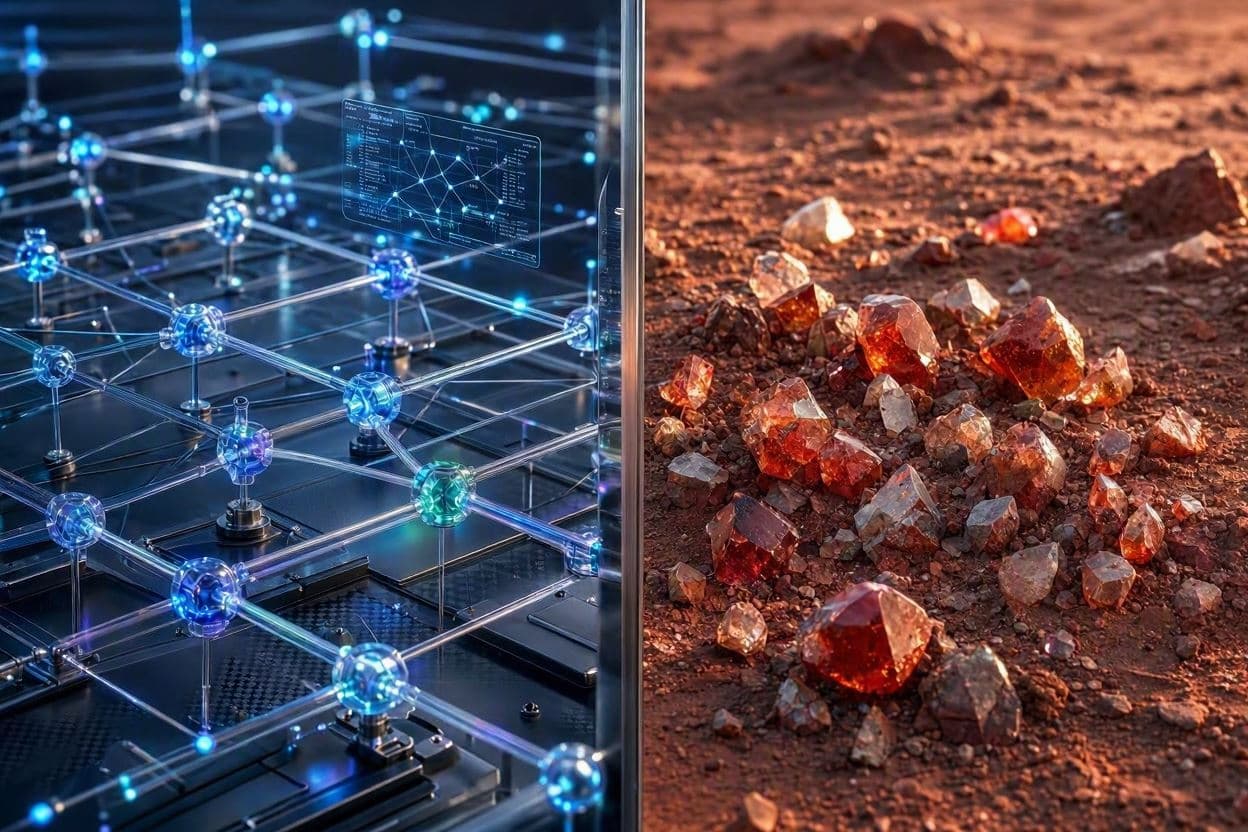
AI agents, autonomous systems capable of planning and executing tasks, have begun to collaborate in ways that mimic human negotiation. By sharing information and aligning goals, these digital entities can solve problems more efficiently than isolated algorithms, offering a glimpse into a future of cooperative machine intelligence. Cooperation enhances capability. Alignment drives progress.
On Mars, the Perseverance rover has identified gem-like minerals, including corundum, within ancient pebbles in Jezero Crater. These findings suggest a dynamic geological history involving water and heat, processes that may have once supported habitable conditions. Minerals tell stories. Water shapes history.
The discovery of these gemstones is not just a geological curiosity but a clue to the planet’s past potential for life. As scientists analyze the composition of these rocks, they gain insights into the chemical evolution of Mars and its similarities to Earth. Chemistry reveals potential. Evolution connects worlds.
Together, these advancements highlight the dual nature of modern science: the internal expansion of computational power and the external exploration of physical space. Both are essential for answering humanity’s biggest questions about intelligence and existence. Power aids thought. Exploration aids knowledge.
For researchers, the integration of AI into scientific workflows accelerates the pace of discovery, allowing for faster analysis of the vast amounts of data returned from space missions. This synergy between digital and physical exploration is reshaping the boundaries of what is possible. Speed aids insight. Synergy breaks barriers.
As we look to the future, the hope is that these tools and discoveries will continue to complement each other, leading to a deeper understanding of our place in the universe. The journey of science is one of constant revelation. Revelation brings clarity. Clarity inspires hope.
Recent scientific highlights include AI agents reaching consensus on complex tasks and the discovery of gemstone-like minerals on Mars by the Perseverance rover. These findings underscore the growing role of AI in research and the ongoing geological secrets of the Red Planet. The hope is for continued interdisciplinary breakthroughs.
AI Image Disclaimer: The visual elements accompanying this report are AI-generated interpretations designed to reflect the technological and astronomical context of the story.
Sources: MIT News ScienceAlert NASA Jet Propulsion Laboratory Nature
Published by Banx Network. This article is part of the Banx decentralized media programme, powered by the BXE token on the XRP Ledger.