The night sky has long been a canvas for human imagination, dotted with stars that hint at countless unseen stories. For centuries, we have wondered if we are alone in the universe, looking for signs of other worlds orbiting distant suns. Now, with the upcoming launch of NASA’s Nancy Grace Roman Space Telescope, we stand on the threshold of a new era in astronomy. This powerful instrument promises to unveil thousands of exoplanets, expanding our understanding of the cosmos in ways previously thought impossible.
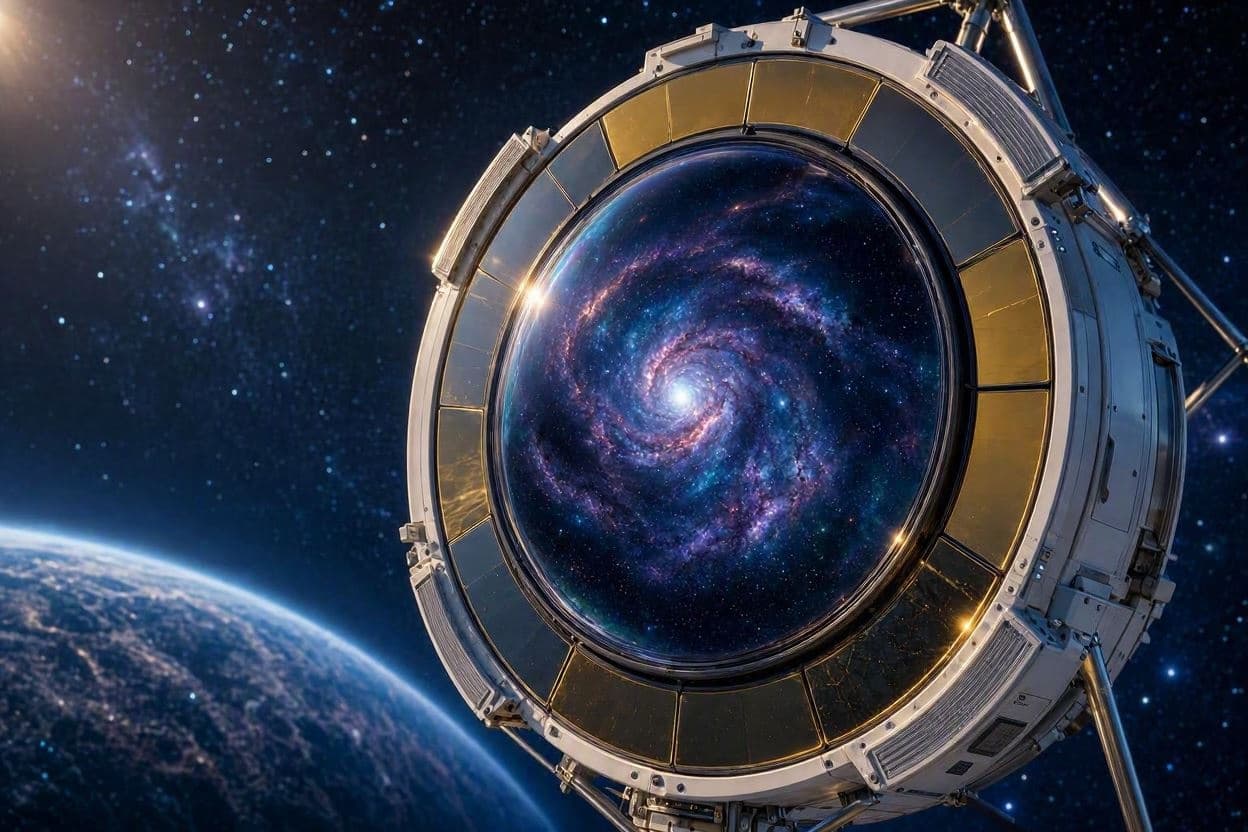
The Roman Telescope is designed with a wide field of view, allowing it to survey large swathes of the sky with unprecedented efficiency. Unlike previous missions that focused on individual stars, Roman will capture data from millions of stars simultaneously. This broad approach enables the detection of exoplanets through microlensing, a phenomenon where the gravity of a foreground star bends and magnifies the light of a background star, revealing the presence of orbiting planets.
Microlensing is particularly effective at finding planets that are far from their host stars or even free-floating planets that drift through the galaxy without a sun. These worlds are often difficult to detect using other methods, such as the transit method used by the Kepler and TESS missions. By capturing these elusive objects, Roman will provide a more complete census of planetary systems in our galaxy.
The telescope’s capabilities extend beyond just counting planets. It will help scientists understand the formation and evolution of planetary systems, offering clues about how common Earth-like worlds might be. By studying the distribution and characteristics of these newly discovered worlds, astronomers can refine models of planet formation and assess the potential for habitability in diverse environments.
Furthermore, the Roman Telescope will contribute to the study of dark energy and dark matter, two of the most mysterious components of the universe. Its precise measurements of cosmic expansion and structure will complement its exoplanet findings, providing a holistic view of the universe’s history and future. This dual purpose makes it a versatile tool for unlocking some of science’s biggest questions.
The data collected by Roman will be made available to the global scientific community, fostering collaboration and discovery. Astronomers from around the world will analyze the findings, leading to new insights and theories. This open access model accelerates progress and ensures that the benefits of the mission are shared widely, inspiring the next generation of scientists.
As we prepare for this launch, the anticipation builds within the scientific community. The promise of discovering thousands of new worlds is not just a statistical achievement; it is a step toward answering the fundamental question of our place in the universe. Each new planet discovered is a piece of the puzzle, bringing us closer to understanding the diversity of life’s potential homes.
NASA’s Nancy Grace Roman Space Telescope represents a significant leap forward in our quest to discover exoplanets. By revealing thousands of unseen worlds, it will deepen our understanding of the universe and our place within it. The mission promises to transform astronomy, offering new perspectives on the cosmos.
AI Image Disclaimer: The images associated with this article are AI-generated visualizations intended to depict the vastness of space and the concept of exoplanet discovery, using artistic and scientific imagery.
Sources: NASA Official Website Space.com Scientific American
Published by Banx Network. This article is part of the Banx decentralized media programme, powered by the BXE token on the XRP Ledger.