
Key Highlights
- Death Toll:At least 200 people killed in a landslide at a mining site in eastern Congo.
- Mining Context:The area is known for artisanal mining, often lacking safety measures.
- Ongoing Challenges:Recovery efforts hindered by unstable terrain and limited access.
In the eastern hills of the Democratic Republic of Congo, morning often arrives slowly, with mist lingering over the lush landscape. The earth, rich with minerals, seems to breathe quietly beneath the first light. Here, life follows the rhythm of the land, where men descend narrow paths with shovels and sacks, and trucks wait along muddy roads. Beneath the surface lies the promise of cobalt, gold, and coltan—minerals that are vital to global industries yet often extracted under perilous conditions.
Recently, Congolese authorities reported a devastating landslide that claimed the lives of at least 200 individuals at a mining site in the eastern region, an area already marred by years of armed conflict and fragile governance. The mine, located in territory controlled by a rebel group, operates with minimal oversight, relying on informal networks of workers and traders.
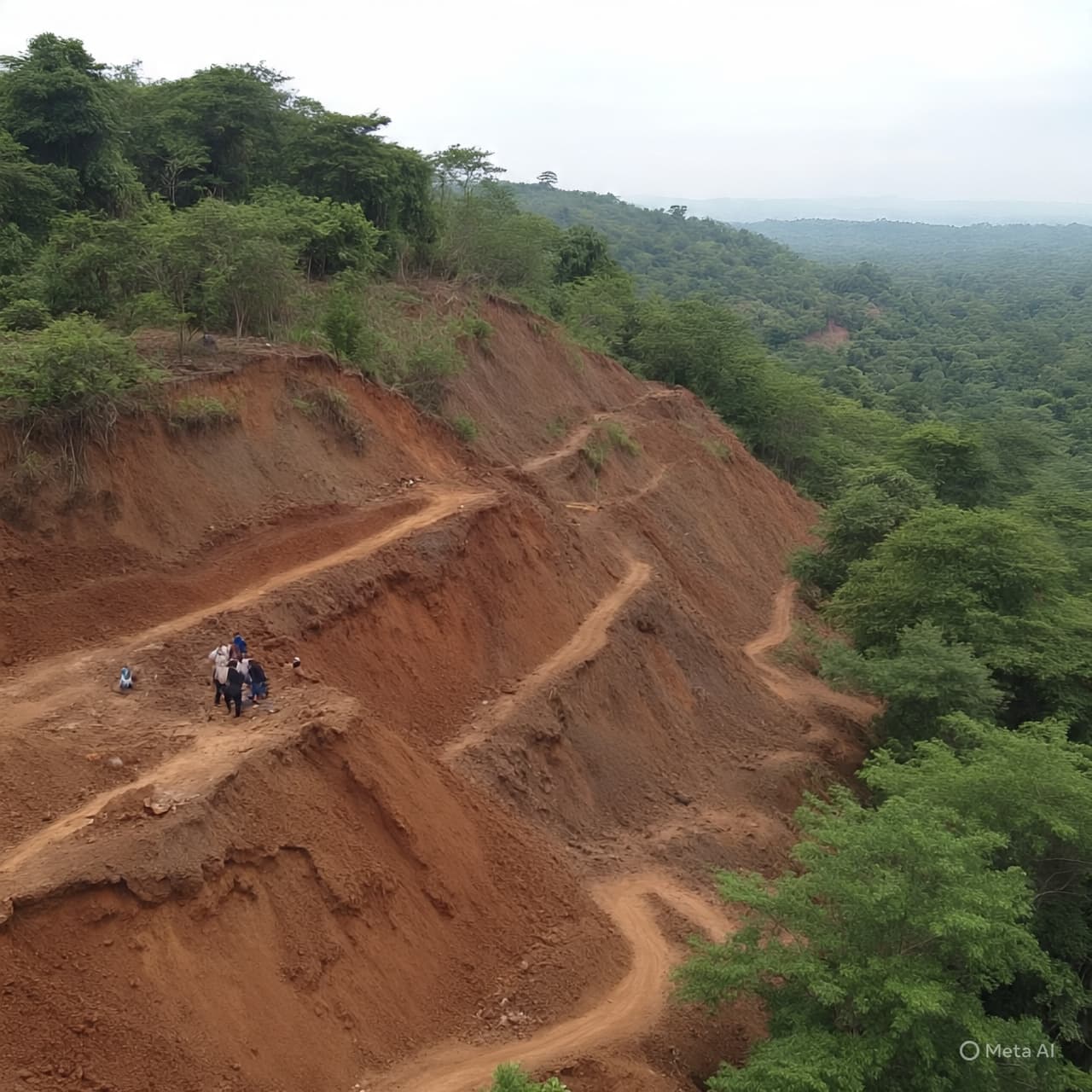
The landslide occurred suddenly, with heavy earth and rock cascading down the slope, burying miners and laborers who had gathered at the site. Many of these individuals were engaged in artisanal mining, a common practice in eastern Congo where thousands depend on small-scale extraction for their livelihoods. Unfortunately, these operations often take place in unstable environments, lacking the safety measures necessary to protect workers from such disasters.
Eastern Congo's mineral wealth has long attracted people to its hillsides. Beneath the forests and villages lie deposits essential for modern technology, from smartphones to electric vehicles. However, the geography of extraction in this region is complex. Many mines are located far from paved roads and formal industrial oversight, often in areas where government presence is weak and armed groups control trade routes and labor.
The region is a patchwork of authority, with rebel factions, local militias, and national forces all vying for control. In this environment, mining becomes more than just a job; it is a precarious intersection of survival, commerce, and power dynamics. The presence of armed groups complicates the situation further, as they often exploit the local population and resources for their gain.
Landslides are not uncommon in this region, particularly during heavy rains or intense excavation. The hills can become unstable without proper reinforcement or geological monitoring, leading to catastrophic failures. For the families of those who worked in the mine, the disaster is not merely a statistic but a profound personal loss—a father who does not return home, a brother whose footsteps are absent from the familiar path.
Authorities in Kinshasa have confirmed that at least 200 people are believed to have died in the collapse. However, the full extent of the tragedy may take time to ascertain due to the remoteness of the area and the challenges posed by accessing rebel-held territories. Rescue and recovery efforts are ongoing but are hampered by unstable ground and inadequate infrastructure, complicating the work of those searching for survivors.
In the broader context of Congo's history, the earth has often served as both a provider and a peril. Its mineral wealth fuels industries across the globe, yet in the quiet mining valleys, the cost is sometimes measured in lives lost. As the hills stand in silence, the story of this mine serves as a stark reminder of the fragility of life in a region where the ground can shift in an instant, altering countless lives forever.
Published by Banx Network. This article is part of the Banx decentralized media programme, powered by the BXE token on the XRP Ledger.



