
Key Highlights
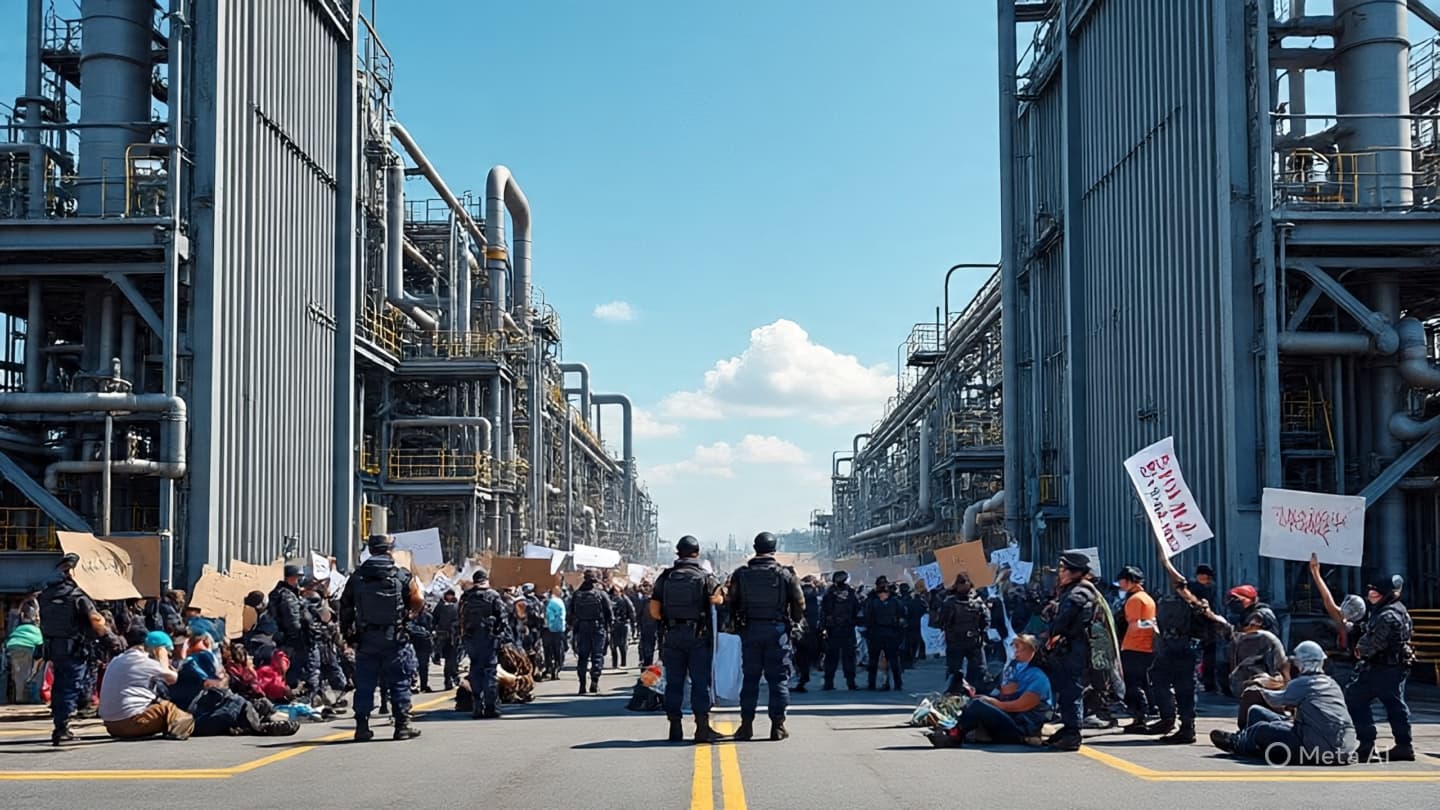
- Protest at Whitegate:Demonstrators formed a blockade at the oil refinery.
- Police Response:Authorities intervened, leading to multiple arrests.
- Ongoing Tensions:The event sparked discussions on civil rights versus public safety.
Protests are often seen as a vital expression of public sentiment, yet they can also create significant disruptions, particularly when they intersect with critical infrastructure. Recently, a protest at the Whitegate oil refinery exemplified this tension, as demonstrators gathered to voice their concerns, effectively halting operations at a key energy supply point.
The protest began as a peaceful gathering, but as demonstrators formed a blockade, the situation escalated, prompting police intervention. Authorities moved swiftly to disperse the crowd, resulting in multiple arrests. Witnesses reported that while the police response was firm, it was also measured, aiming to restore access without escalating tensions further. This careful approach reflects the complexities involved in managing public demonstrations, especially when they impact essential services.
The Whitegate refinery is not merely a facility; it plays a crucial role in the local economy and energy supply chain. As such, the protest raised important questions about the balance between the right to protest and the need for public order. For many, the blockade was a necessary act of civil disobedience, a way to draw attention to issues they felt were being ignored. However, for others, it represented an unwelcome disruption to daily life and economic stability.
As the situation unfolded, the community watched closely. The refinery's operations were temporarily halted, but the broader implications of the protest lingered. Discussions emerged about how society navigates the delicate line between allowing free expression and maintaining public safety. The event served as a reminder of the power of collective action, as well as the challenges it poses to established systems.
In the aftermath, authorities are reviewing the events to assess both the legal ramifications and the implications for public safety. The refinery, now back to its routine operations, stands as a symbol of the ongoing dialogue about civil rights and the responsibilities of both citizens and law enforcement. The questions raised by this protest are far from resolved, as communities continue to grapple with the complexities of expression and stability.
As the dust settles, the protest at Whitegate serves as a poignant reminder of the tensions that can arise when human intention meets institutional structure. The voices of the demonstrators may have faded from the streets, but the conversations they sparked are likely to resonate for some time to come.
Published by Banx Network. This article is part of the Banx decentralized media programme, powered by the BXE token on the XRP Ledger.



