

Key Highlights
- Moons play a crucial role in stabilizing planetary tilt, affecting climate.
- The relationship between moons and planets can lead to significant shifts over time.
- Research into moons' influence extends to exoplanets, revealing their hidden impact.
The universe is filled with stories that often begin not with stillness, but with imbalance. A tilt here, a collision there—these small shifts can, over time, shape entire worlds. Among these quiet transformations lies the intriguing concept of the moon's influence on its host planet, a phenomenon that some scientists refer to as 'the moon that tipped a planet.' This phrase invites both curiosity and reflection, highlighting the subtle yet profound impact moons can have on the worlds they orbit.
On Earth, the Moon is more than just a visual companion in the night sky. It plays a vital role in stabilizing our planet's axial tilt, keeping it within a relatively narrow range. This stability is crucial for maintaining consistent seasons over geological timescales. Without the Moon's gravitational influence, Earth's tilt could vary dramatically, leading to extreme climate changes that could threaten the planet's habitability.
However, the relationship between a planet and its moon is not always one of gentle balance. In certain scenarios, moons can contribute to shifts in a planet's tilt, particularly during their early formation or through long-term gravitational interactions. A sufficiently large moon, or one with specific orbital characteristics, can exert torques that gradually reshape how a planet spins in space, potentially altering its climate and environment.
These concepts extend beyond our own planet. In the study of distant worlds—exoplanets orbiting stars far beyond our solar system—astronomers consider how unseen moons might influence observable characteristics. A planet's axial tilt affects its climate patterns, atmospheric circulation, and even the way it reflects light. Thus, the presence of a moon can indirectly shape the signals that reach telescopes across vast distances, providing insights into the nature of these distant worlds.
The phrase 'the moon that tipped a planet' also evokes the history of planetary formation, when collisions and gravitational interactions were more common. Some theories suggest that Earth's Moon formed from a massive impact early in the planet's history—an event that not only created the Moon but also established Earth's initial tilt. In this context, the Moon's influence is both immediate and ancient, a legacy of formation that continues to affect our planet today.
What emerges from these studies is a picture of quiet influence rather than dramatic control. Moons do not always announce their role; instead, they participate in the long choreography of planetary systems. Their presence can steady, shift, or subtly reshape the worlds they accompany, often in ways that are not immediately apparent.
This nuanced understanding of moons as central players in planetary dynamics is compelling. A moon, often perceived as secondary, becomes vital—not through force alone, but through persistence. Over millions or billions of years, even gentle gravitational interactions can leave lasting marks on a planet's behavior and environment.
Research into how moons influence planetary tilt and climate continues to evolve, offering valuable insights into both our own solar system and distant exoplanets. While the exact mechanisms may vary, the role of moons in shaping planetary behavior remains an active area of scientific inquiry, revealing the intricate connections that define our universe.
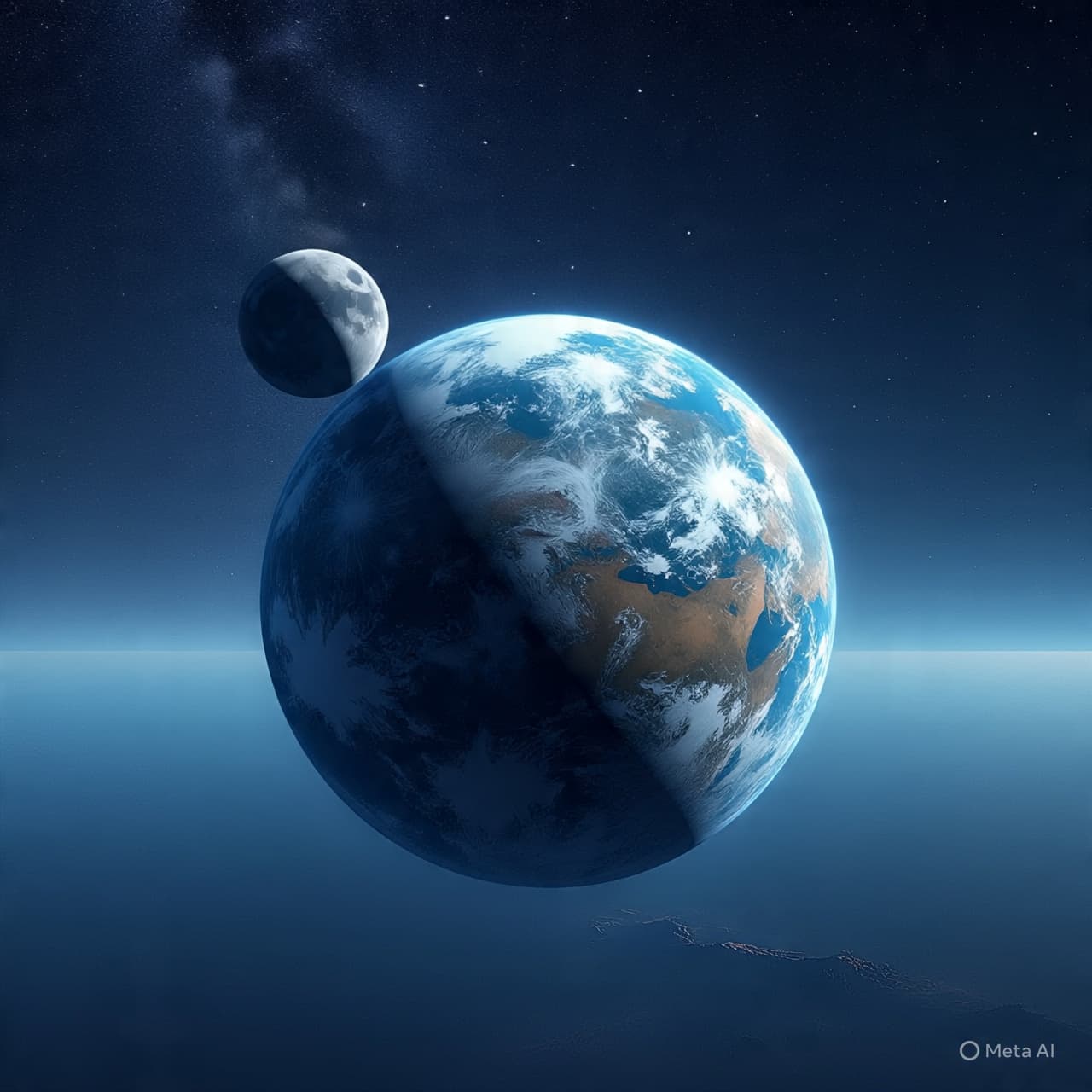
Images in this article are AI-generated illustrations, meant for concept only.
Published by Banx Network. This article is part of the Banx decentralized media programme, powered by the BXE token on the XRP Ledger.




