Before dawn, the sea often holds its breath. In the narrow stretch of water where the Persian Gulf opens toward wider oceans, the horizon seems closer than elsewhere—as if the world itself narrows, funnels, and waits. Tankers drift through this passage like quiet, burdened silhouettes, their hulls carrying not just oil, but the weight of distant economies, unseen dependencies, and fragile assurances.
In recent days, the Strait of Hormuz has returned to the center of that quiet tension. Iranian officials, addressing the United Nations, have stated that vessels deemed “non-hostile” may continue to pass through the strait—a phrase that lingers in the air with both reassurance and ambiguity. The wording does not close the door, but neither does it fully open it.
This narrow channel, through which roughly a fifth of the world’s oil supply typically flows, has long functioned as both artery and fault line. Its geography is simple—barely 21 miles wide at its narrowest point—but its meaning is layered. For decades, it has been a place where diplomacy and deterrence overlap, where commercial routes intersect with military calculations. Every ship that enters does so under an invisible canopy of geopolitical awareness.
The current moment unfolds against a backdrop of heightened regional strain. Exchanges of rhetoric and limited strikes have sharpened the sense that the strait could again become more than a passage—it could become a pressure point. Iran’s message, delivered through diplomatic channels, appears to balance two currents: an effort to signal restraint toward neutral shipping, and a simultaneous reminder that control over the strait remains within its reach.
For global markets, such signals are rarely abstract. Oil prices have shown sensitivity to even the suggestion of disruption, while shipping firms weigh risk against necessity. Insurance premiums rise and fall with each new statement, each movement tracked across satellite screens. The choreography of global trade—usually so vast as to feel automatic—reveals its vulnerability in moments like these, when a single corridor carries disproportionate consequence.
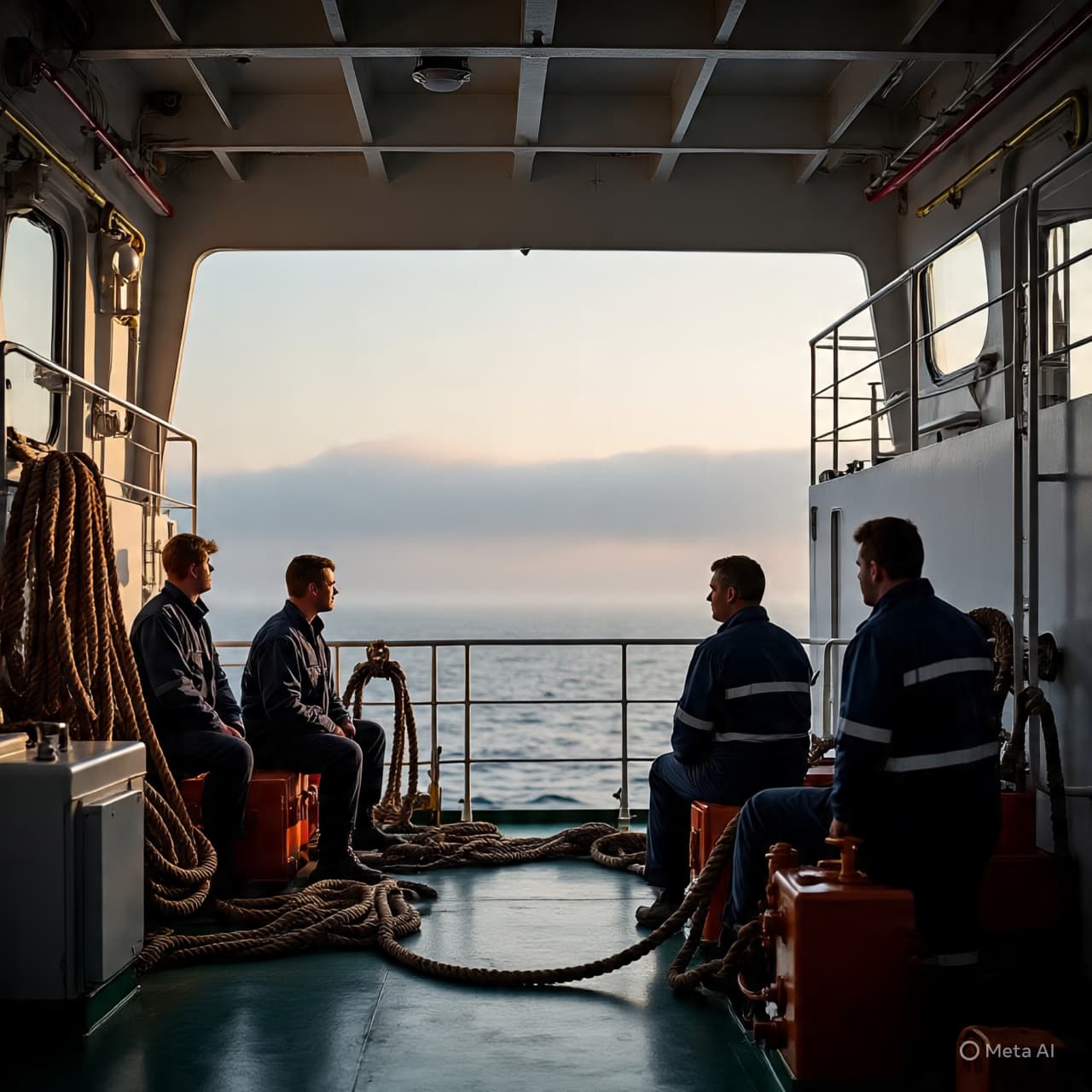
Yet beyond markets and policy, there is also the quieter human rhythm: crews navigating uncertain waters, ports awaiting cargo, economies tethered to distant routes they cannot see. The strait becomes, in this sense, less a line on a map and more a shared threshold—one that connects distant lives through the movement of fuel, goods, and time itself.
As officials emphasize that “non-hostile” ships may transit, the phrase settles into global discourse with cautious weight. It suggests continuity, but not certainty; passage, but not permanence. In the days ahead, vessels will continue to pass through the strait, their journeys measured not only in miles, but in the fragile space between assurance and risk.
And so the water remains in motion—quiet, watchful, and central to a world that, for all its distance, seems to narrow at this single, strategic point.
AI Image Disclaimer Illustrations were created using AI tools and are not real photographs.
Sources
Reuters Associated Press Al Jazeera BBC News The Guardian
Published by Banx Network. This article is part of the Banx decentralized media programme, powered by the BXE token on the XRP Ledger.
.jpg&w=3840&q=75 "US Declares Drought Disaster for Parts of Puerto Rico as Dry Conditions Persist")