
Key Highlights
- Ongoing government shutdown enters its 45th day, affecting citizens.
- Political tensions within the Republican Party deepen amid funding disputes.
- Bipartisan Senate measure contrasts with House leadership's rejection.
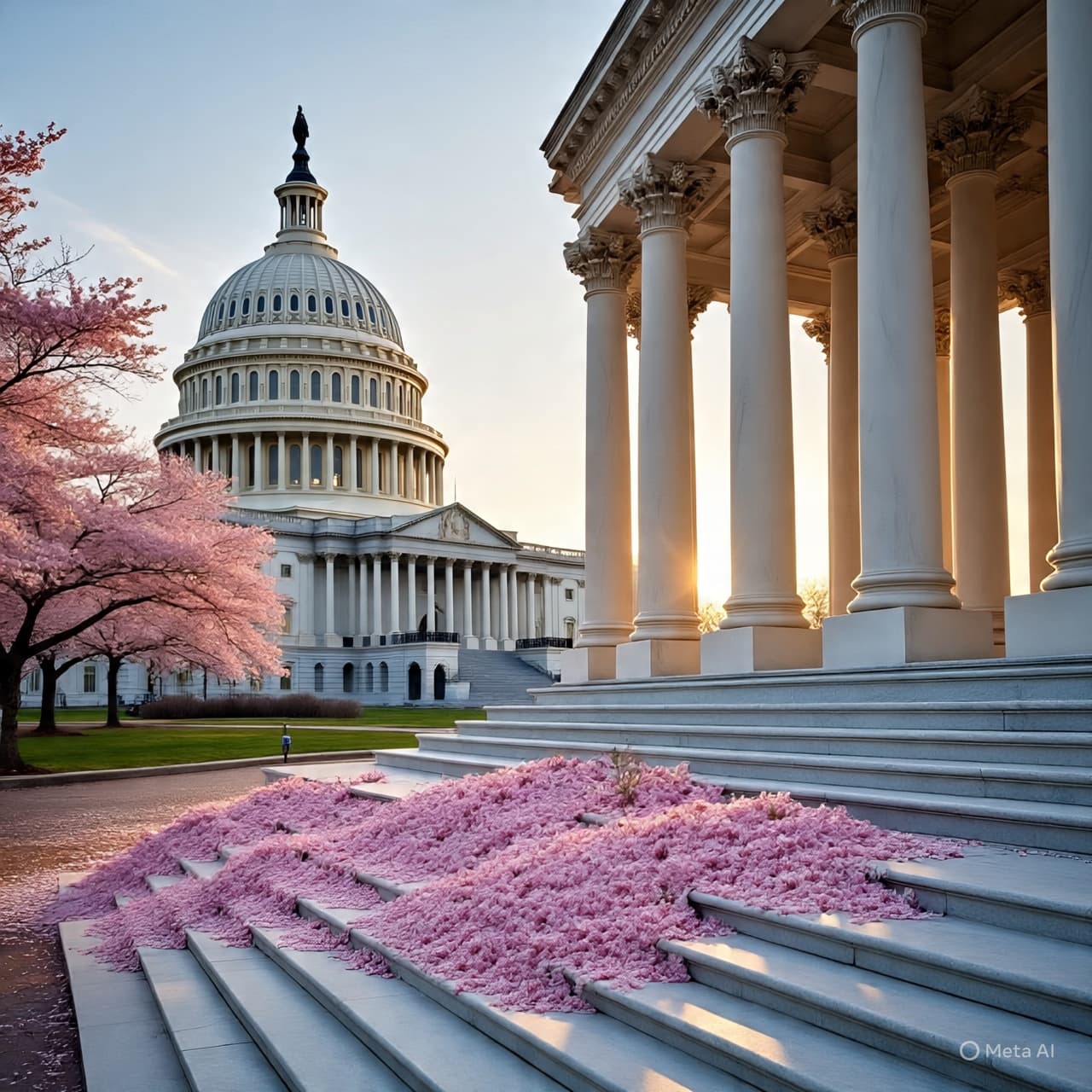
As dawn breaks over Washington, the iconic Roman columns of the Capitol stand in stark contrast to the political turmoil that has unfolded in recent weeks. The early spring light casts a serene glow over the cherry blossoms, yet beneath this tranquil facade lies a growing unease. The ongoing government shutdown, now entering its 45th day, has not only disrupted the operations of the Department of Homeland Security but has also exposed deep fractures within the Republican Party.
What began as a dispute over funding has escalated into a significant rift among Republican lawmakers. Senate Majority Leader John Thune's recent negotiations aimed at ending the shutdown garnered bipartisan support, yet the House of Representatives, led by Speaker Mike Johnson, rejected this compromise. Instead, they pushed forward with their own strategy, which has only widened the divide among party members who once stood united. This discord highlights the fragility of political unity when faced with contentious policy debates.
The repercussions of this political standoff extend far beyond the halls of Congress. At airports across the nation, travelers are experiencing the tangible effects of the shutdown. With Transportation Security Administration workers forced into unpaid service, long lines and delays have become commonplace. Many TSA officers have left their posts due to financial strain, illustrating how legislative impasses can disrupt everyday life for citizens. As lawmakers embark on a two-week spring recess, the consequences of their decisions resonate in the lives of constituents who are left to navigate the fallout.
Within the Republican conferences, the ongoing debates reflect a struggle between pragmatism and principle. Thune's willingness to negotiate with Democrats was driven by a desire to end the longest partial shutdown in DHS history. In contrast, Johnson's insistence on a more comprehensive, party-line approach has garnered support from conservative factions but has also drawn criticism from those who view the impasse as detrimental to the party's public image. As midterm elections approach, the stakes are high, and the lack of a clear path forward leaves lawmakers grappling with the implications of their discord.
The quiet moments in Washington, marked by the beauty of cherry blossoms and the stillness of the Capitol, serve as a backdrop for reflection on the state of political unity. Constituents across the nation are acutely aware of how decisions made in these hallowed halls impact their daily lives. The ongoing shutdown serves as a reminder that political unity is not a given; it requires ongoing effort and collaboration.
As Congress returns from recess, the continuation of the shutdown underscores the reality that political disagreements have real-world consequences. The ripples of division extend into the fabric of everyday life, prompting a deeper examination of collective purpose and the costs associated with political strife. In this moment of uncertainty, the Capitol stands as a symbol of both the promise of governance and the challenges that arise when leaders fail to find common ground.
Published by Banx Network. This article is part of the Banx decentralized media programme, powered by the BXE token on the XRP Ledger.



