
Key Highlights
- Emergency declared in Nelson due to severe flooding.
- Community mobilizes with sandbags and evacuations.
- Emergency crews work tirelessly to ensure safety.
The Maitai River has long been the lifeblood of Nelson, a winding ribbon of silver that defines the geography of this sun-drenched corner of the South Island. Usually, its presence is a gentle one, a rhythmic companion to the parks and the quiet streets that line its banks. However, the sky above Tasman Bay has recently traded its famous blue for a heavy, relentless gray, releasing a volume of water that the land could no longer hold. There is a specific, low-frequency roar that accompanies a river in flood—a sound of the landscape losing its boundaries and the water reclaiming its ancient, wider path.
A state of emergency is more than a legal declaration; it is a shift in the very atmosphere of a community. In Nelson, the familiar sounds of the city were replaced by the urgent hum of pumps and the heavy splashing of tires through growing lagoons on the roadway. The breach of the river was not a single moment of collapse, but a steady, overwhelming surrender to the pressure of the rain. It is a humbling sight to see a civilized space—a park, a road, a garden—suddenly transformed into a wild, moving extension of the river’s will.
The response from the community was one of quiet, determined mobilization. Sandbags, those humble humps of burlap and grit, were laid in rows against the rising tide, a human-scale barrier against a planetary-scale event. There is a profound sense of unity that emerges when the elements turn against the structures of home. Neighbors who might only share a nod in the morning were suddenly waist-deep in the same struggle, their movements synchronized by the necessity of the moment. The rain continued to fall, a persistent curtain that blurred the line between the earth and the sky.
Evacuation is a process of leaving behind the solid and the known for the temporary and the uncertain. Families moved toward the higher ground of the hills, their cars packed with the essentials of a life suddenly made portable. There is a quiet dignity in this retreat, a recognition that some forces are too great to be met with anything but caution. The emergency centers, filled with the scent of damp wool and hot tea, became the temporary heart of the city, a place where the narrative of the flood was shared and the anxiety of the night was managed through collective presence.
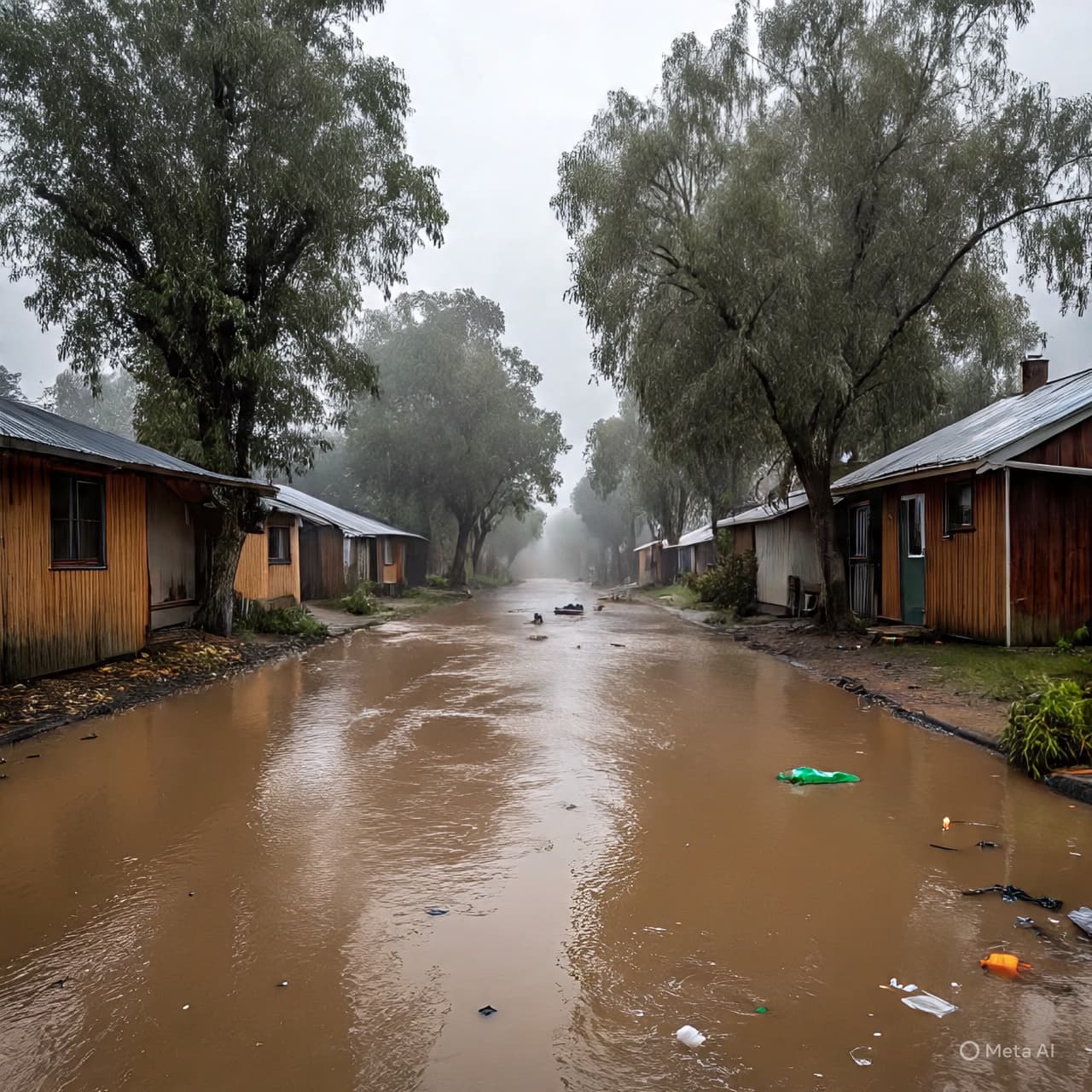
The water, brown and thick with the silt of the hills, moved with a deceptive, heavy grace through the inundated streets. It carried the debris of the upstream world—branches, silt, and the remnants of fences—depositing them in the middle of the suburban landscape. To look out over a familiar street and see only a moving expanse of water is to experience a strange kind of displacement. It is a reminder that our tenure on the land is subject to the cycles of the climate, and that the river always remembers where it used to flow before the first stone was laid.
Emergency crews, their vehicles casting long, sweeping beams of light through the downpour, worked through the dark hours to monitor the levees and check on the isolated. Their work is a slow and careful navigation of a landscape that has become unrecognizable, where a simple culvert can become a dangerous vortex. There is a deep, quiet heroism in this persistence, a commitment to the safety of others that transcends the discomfort of the cold and the wet. They are the guardians of the breach, standing between the community and the rising weight of the Maitai.
As the first light of dawn broke through the clouds, revealing a Nelson that was saturated and weary, the rain finally began to lose its intensity. The river, though still high and angry, appeared to have reached its peak, a tentative truce between the water and the shore. The state of emergency remains, a necessary framework for the long and difficult task of recovery that lies ahead. There is a heavy stillness that follows a flood, a damp quiet that settles over the silt-covered lawns and the water-logged homes as the residents begin to assess what the river has left behind.
In the coming days, the water will recede, leaving behind a new topography of mud and debris that will require months to clear. Yet, the spirit of the region remains unyielding, a resilience that is as much a part of the landscape as the river itself. The event will be recorded in the annals of the city’s history, a chapter of rain and rising tides that tested the resolve of the community. As the sun begins to peek through the thinning clouds, the recovery process will begin, marking a new chapter in Nelson's story.
Published by Banx Network. This article is part of the Banx decentralized media programme, powered by the BXE token on the XRP Ledger.



