There are mornings when a nation wakes to news that feels less like information and more like a weight—a heaviness that settles into the chest before the mind has fully understood what it is being asked to hold. In South Africa, that weight arrived twice in a single weekend.
South African police have launched a manhunt after two separate mass shootings near the country's largest cities left at least 27 people dead and more than 20 wounded. In the first attack, eight gunmen armed with AK-47 rifles and pistols opened fire on patrons at a bar in Wedela township, southwest of Johannesburg, late Saturday night. Seventeen people were killed, including 13 men and four women. Fifteen others were wounded .
Hours later, in the early hours of Sunday, gunmen entered an entertainment venue in Lwandle, near Cape Town, and opened fire on patrons. Ten people were killed and 11 wounded. Five victims died at the scene; five others succumbed to their injuries at hospitals .
The attacks came just five days after a mass shooting at a house party near Durban killed 11 people, including a pregnant woman . No arrests have been made in any of the three incidents, and police have not confirmed a motive for the weekend shootings .
The details emerging from the scenes are fragmentary but harrowing. At the Wedela bar, police said the suspects searched some patrons and took their cellphones before fleeing in two vehicles, which they set on fire . At the Lwandle venue, an entertainment spot known locally as a shisanyama, gunmen "shot at patrons" before escaping .
South Africa has long struggled with violent crime, recording roughly 60 murders a day—among the highest rates globally. In March, President Cyril Ramaphosa deployed soldiers to violence hotspots in Johannesburg to support police efforts, describing organized crime as "one of the biggest threats facing the country" . Yet the week's shootings were shocking even in a nation accustomed to high levels of violence .
The killings also unfolded against a backdrop of heightened fear in Johannesburg, where the bodies of at least nine murdered women had been discovered over two months, some dumped by roadsides. A suspect has been taken into custody in one of those cases, and police have offered a reward for information .
For the communities of Wedela, Lwandle, and KwaMakhutha, the questions are immediate: who did this, and why. For the country, the questions are older and harder—about illegal firearms, gang rivalries, and the slow pace of justice. The manhunts continue. The funerals will begin soon.
---
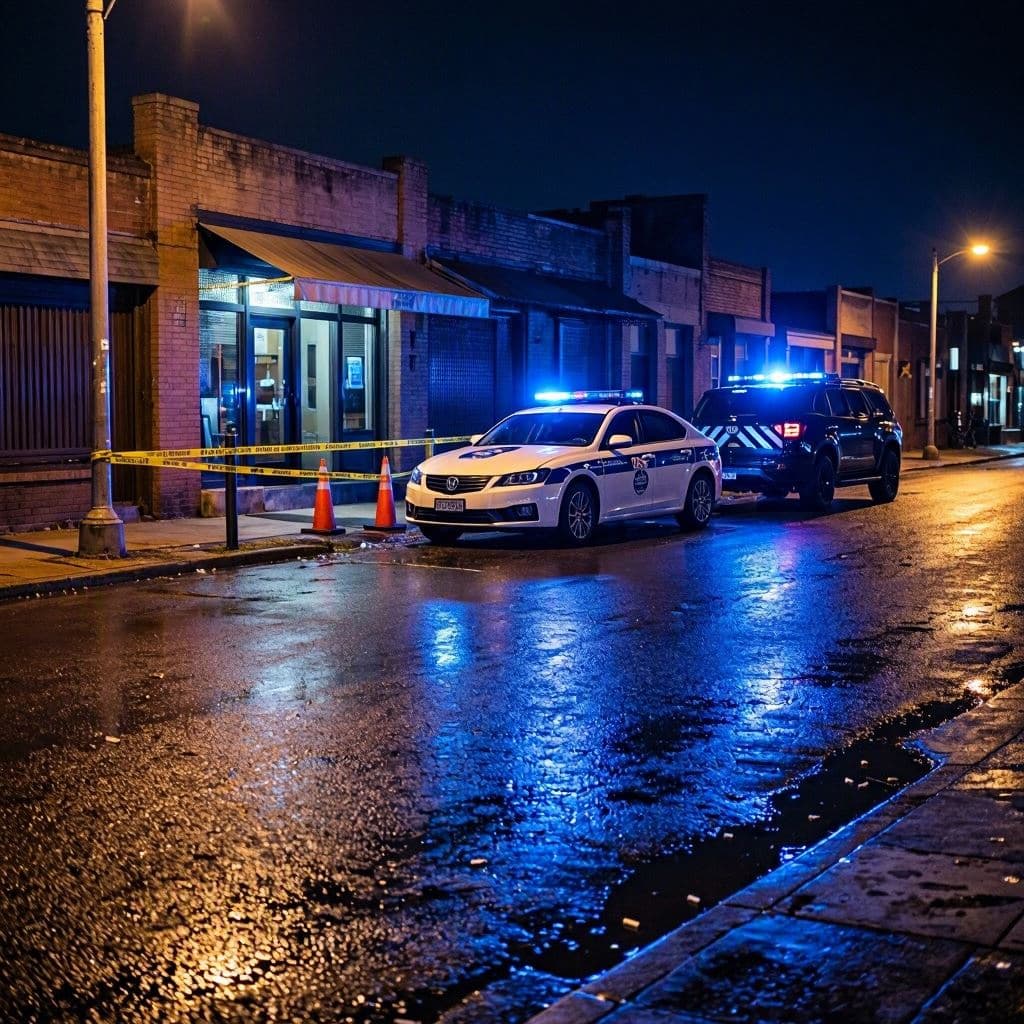
AI Image Disclaimer: The visuals accompanying this article are AI-generated and do not depict the actual victims or crime scenes.
Sources: AP News, ABC News, BBC News, CBC News, Sohu, Guangming Net, CCTV
Published by Banx Network. This article is part of the Banx decentralized media programme, powered by the BXE token on the XRP Ledger.