
Key Highlights
- Syrian-linked billionaires are seeking influence in Washington.
- The name of Donald Trump is being invoked to navigate political barriers.
- Ongoing sanctions complicate financial interactions with Syria.
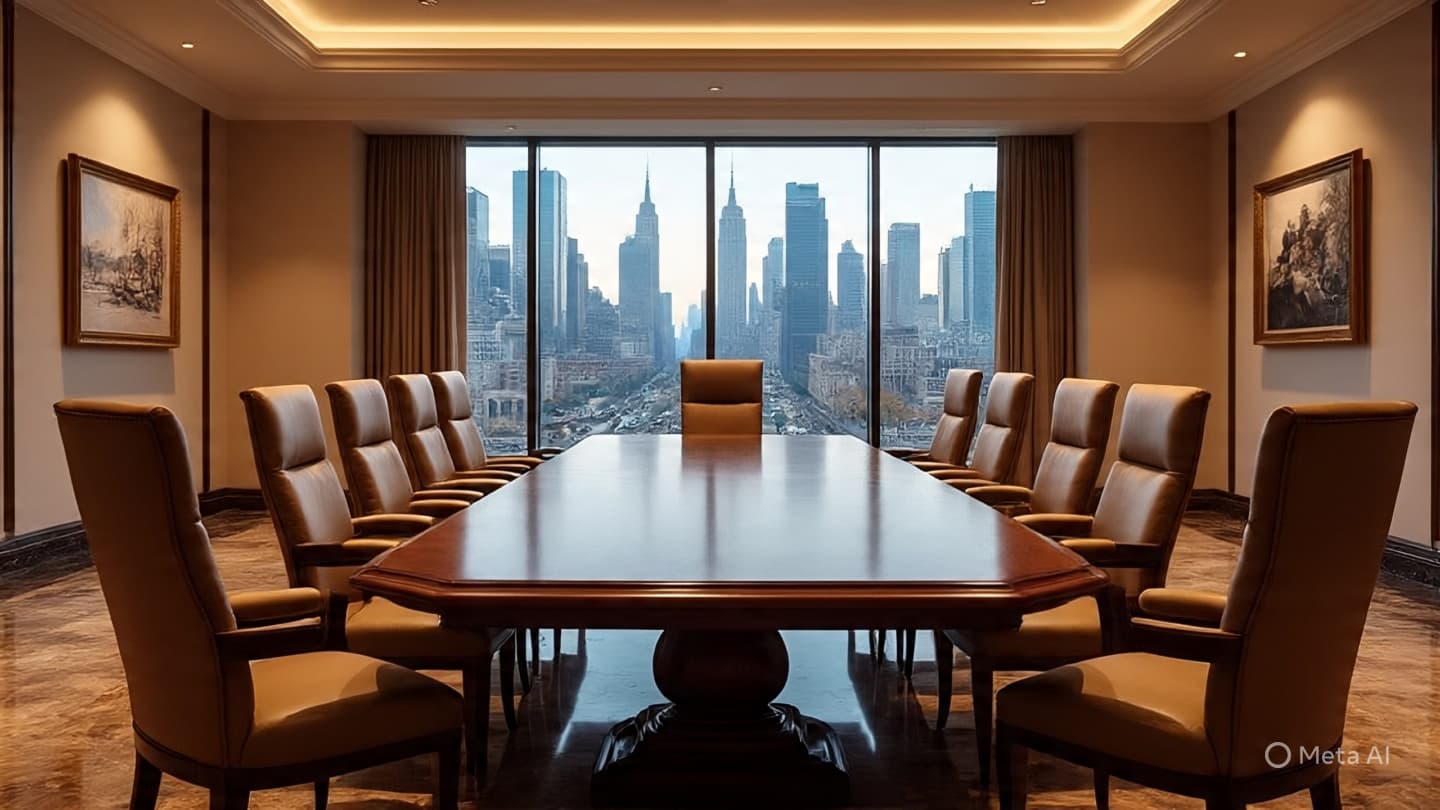
In Washington, influence rarely arrives loudly. It moves instead through corridors of restraint—through introductions made in private rooms, through names spoken carefully, as if sound itself might alter the balance of what is possible. Behind the glass façades and muted carpets of power, access often depends less on presence than on proximity to memory: who once mattered, and who still might.
It is within this subtle architecture that a new set of interactions has drawn attention, involving wealthy figures linked to Syria and their efforts to re-enter or reshape relationships within United States political and financial circles. At the center of these efforts, according to accounts circulating in diplomatic and financial communities, is the invocation of a familiar name—Donald Trump.
Reports suggest that certain Syrian-linked billionaires, navigating restrictions and reputational barriers shaped by years of conflict and sanctions, have sought informal pathways to engagement. In doing so, they have referenced connections, or perceived connections, to the former U.S. president as a means of opening doors that would otherwise remain closed.
Such gestures are not uncommon in the broader landscape of global finance and diplomacy. Names carry weight beyond formal office, especially in environments where policy and personal association often overlap in complex ways. The invocation of a political figure’s name can function less as a claim of direct access and more as a signal—an attempt to situate oneself within a network of influence that extends beyond official channels.
For Syria, the context is particularly layered. Years of conflict, shifting international alignments, and extensive sanctions have created a financial environment where movement is heavily constrained. Wealth, where it exists in connection to Syrian-linked figures abroad, often intersects with questions of origin, legitimacy, and political association. Navigating this terrain requires not only resources but also narrative positioning.
Within Washington, such attempts are observed with a mixture of caution and procedural distance. Institutions tasked with oversight—financial regulators, legal advisors, and policy analysts—operate within frameworks designed to separate formal policy from informal influence. Yet the boundary between the two is often more porous in practice than in principle, shaped by intermediaries, consultants, and longstanding networks.
The reference to Donald Trump in this context does not necessarily indicate direct involvement, but rather the enduring symbolic weight of political figures in global transactional environments. In the years following his presidency, his name has remained present in various business and diplomatic conversations, sometimes as association, sometimes as shorthand for a broader era of U.S. policy engagement.
Observers note that these dynamics reflect a larger pattern in international relations, where sanctioned or restricted actors seek alternative routes into mainstream systems. These routes are rarely straightforward. They move through layers of legal interpretation, reputational assessment, and informal dialogue, each step shaped by uncertainty and discretion.
At the same time, Washington’s institutional landscape continues to emphasize separation between private ambition and public policy. Mechanisms for screening, compliance, and due diligence remain central to how such approaches are evaluated. Whether any informal overtures translate into formal engagement depends on a complex interplay of law, politics, and perception.
As with many such stories, what is visible is only part of the structure. Beneath it lies a quieter network of conversations—some recorded, others not—through which global capital and political memory intersect. These are not moments of resolution but of positioning, where actors test the boundaries of what may still be possible.
What can be stated clearly is this: individuals linked to Syrian wealth have reportedly sought access or engagement in Washington, at times invoking the name of Donald Trump, while navigating the constraints surrounding Syria and its international financial standing. Beyond that, the situation remains fluid, shaped by interpretation, response, and the slow movement of institutional scrutiny.
Published by Banx Network. This article is part of the Banx decentralized media programme, powered by the BXE token on the XRP Ledger.



