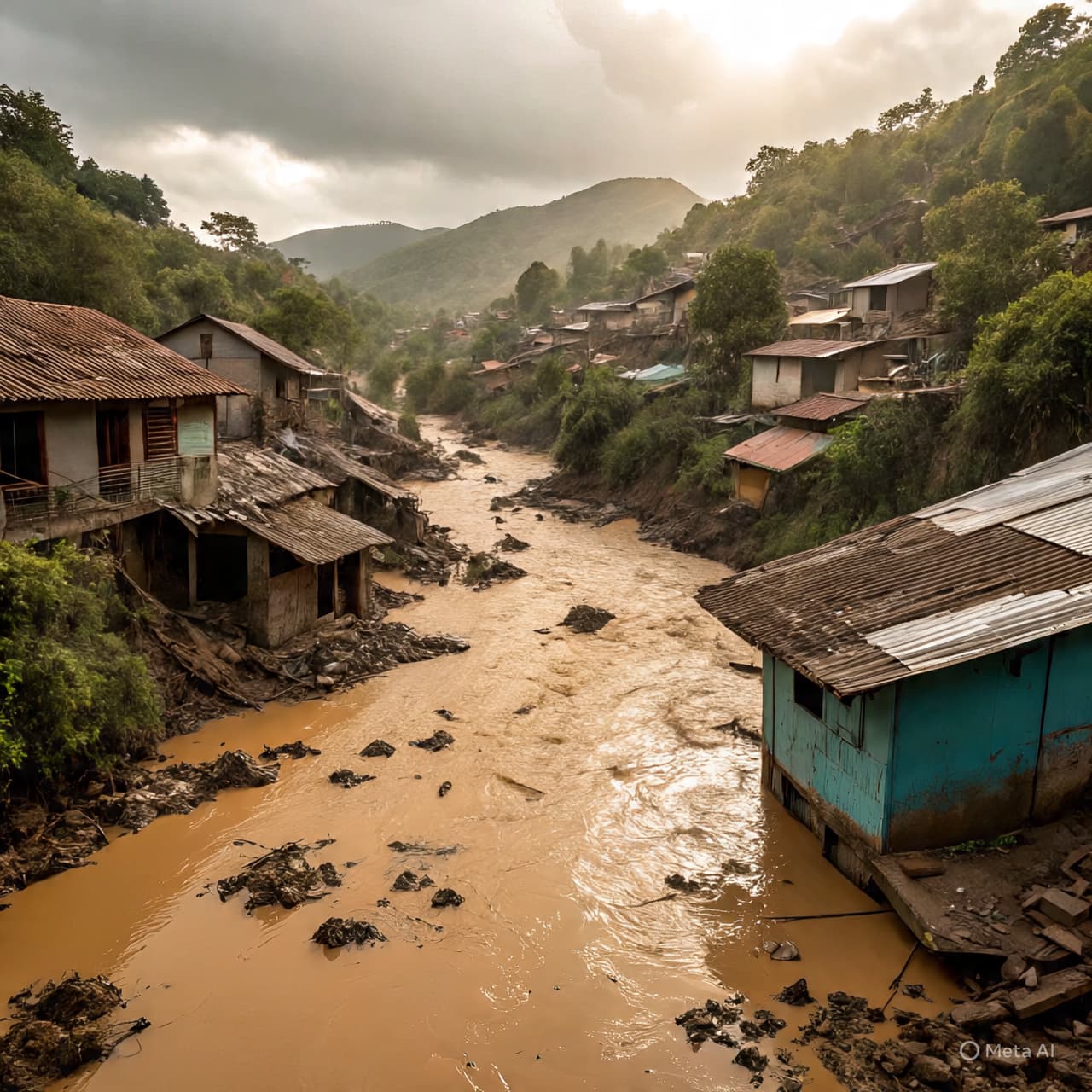
In the quiet dawn of a late summer morning, when hope usually rises with the sun, the earth itself seemed to weep. Rivers that once murmured gently through hillside towns swelled into angry veins of rushing water. In the southeastern reaches of Brazil’s Minas Gerais state, where steamy clouds often drift languidly over verdant hills, this February brought a different kind of tempest — one that crept in with unrelenting rain and upended lives in its wake.
The land remembers the rhythm of seasons, yet when the sky answered with rains twice the usual February measure, soil and stone seemed to forget their patterns. Homes perched on gentle slopes — once symbols of shelter and warmth — were overtaken by landslides and rising waters, transforming familiar streets into stilled and silent corridors of mud. Juiz de Fora and nearby Ubá saw neighborhoods vanish beneath torrents that rushed down tired hillsides, leaving families grasping for memories rather than belongings.
Among the poorest treasures swept away were stories of dear lives lost too soon. At least forty-six souls, among them children whose laughter once filled bright rooms, are confirmed dead. Tragedy visited families unannounced, collapsing walls that had stood against daily life’s trials and washing away the ordinary with extraordinary force. Across makeshift shelters, prayers rose softly — a chorus of hopes for those still unaccounted for, with more than twenty names yet awaiting the comfort of certainty.
Emergency crews, volunteers, and neighbors worked side by side, their efforts a testament to human solidarity against nature’s capricious outpouring. Firefighters sifted through debris, while community centers and churches opened doors to the displaced. Yet, behind every arm extended in aid lived the quiet ache of loss — stories that neither rescue boats nor blankets alone can truly console.
This calamity also spotlights the vulnerability of communities built where the land meets sky in steep echoes. Rapid and repeated rainfall events raise questions about how civilization coexists with nature’s rhythms — a delicate dance of respect, preparation, and adaptation. Scientists remind us that heavy rainstorms have grown more frequent as global temperatures edge upward, though no single event can be wholly tied to these shifts. Still, the frequency of such episodes leaves an impression in the lives of those whose routines are reshaped by water and time.
As the floodwaters begin to recede, they leave behind not just thick layers of mud but reflections on resilience and the fragility of life’s holdings. Streets once vibrant with laughter and daily bustle now carry the quiet footsteps of reconstruction — slow, deliberate, and laden with memory. Homes will be rebuilt, but the echo of what was lost remains in the hearts of many. In this pause between sorrow and renewal, communities gather strength from shared stories of courage and collective resolve.
AI Image Disclaimer (Rotated) Illustrations were produced with AI and serve as conceptual depictions.
Sources Associated Press, Reuters, Al Jazeera, ANTARA News, WRAL/Associated Press reprint.
Published by Banx Network. This article is part of the Banx decentralized media programme, powered by the BXE token on the XRP Ledger.