

Key Highlights
- Vastness of Space:Game developers face the challenge of creating engaging experiences in an overwhelmingly empty universe.
- Procedural Generation:Titles like No Man’s Sky and Elite Dangerous use algorithms to simulate billions of planets, yet often feel repetitive.
- Human Perspective:Navigating vast distances in space can be disorienting, necessitating simplified user interfaces.
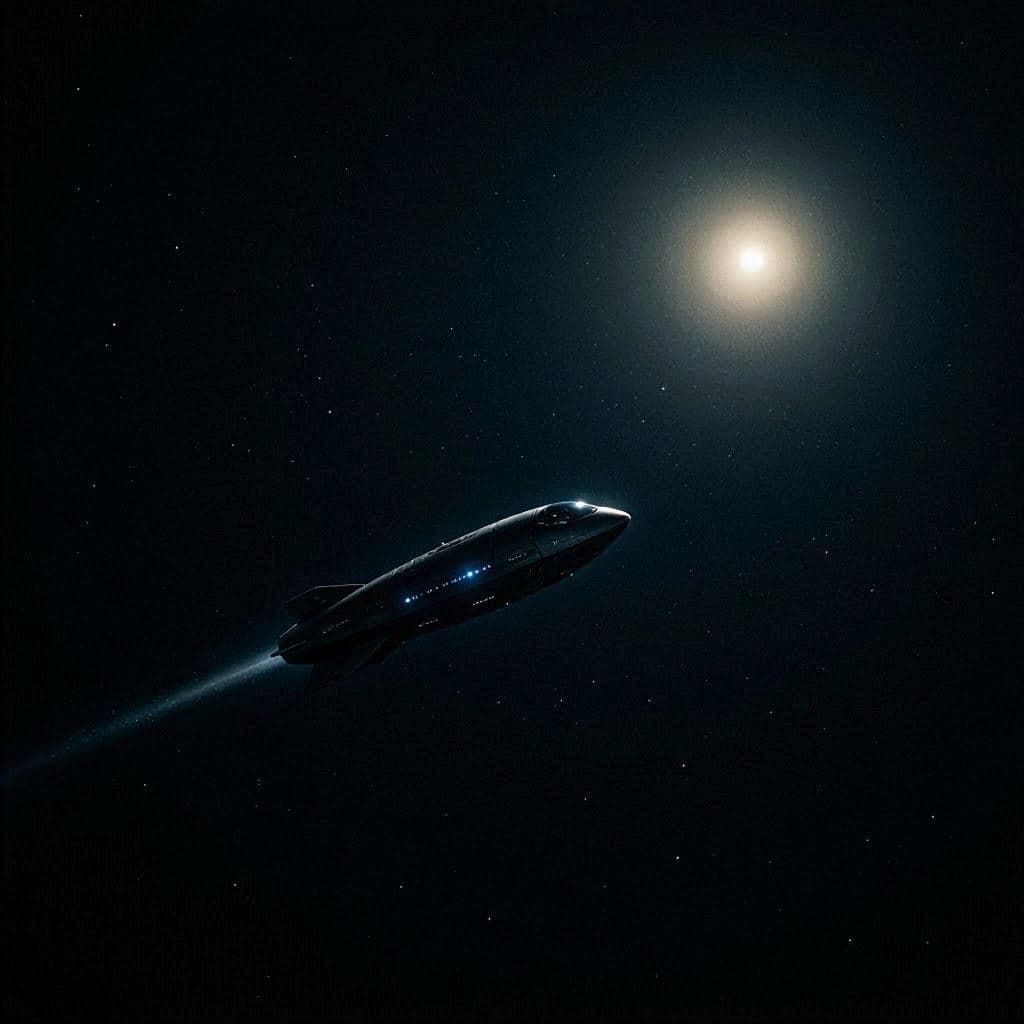
The universe is vast, silent, and overwhelmingly empty. For game developers, this presents a unique paradox: how to create a sense of infinite possibility without boring the player with infinite nothingness. Space games have long struggled to capture the true scale of the cosmos, often sacrificing realism for playability. This tension between authenticity and engagement invites reflection on what we seek in virtual exploration. Do we want the truth of the void, or the thrill of adventure?
Games like No Man’s Sky and Elite Dangerous attempt to simulate the entire universe, using procedural generation to create billions of planets. Yet, even with advanced algorithms, the experience can feel repetitive. The sheer distance between stars means that travel, if realistic, would take hours or days. To keep players engaged, developers often compress space, allowing faster-than-light travel or shrinking solar systems. This compromise breaks immersion for purists but saves the game from becoming a simulator of waiting.
The problem of scale is not just about distance; it is about content. In a truly scaled universe, most space is empty. Filling every corner with meaningful encounters is impossible. Developers must choose between a vast, empty sandbox and a smaller, curated experience. Many opt for the latter, creating "hand-crafted" sectors that feel dense with activity, even if they represent a tiny fraction of the galaxy. This approach prioritizes narrative and interaction over astronomical accuracy.
Another challenge is the human perspective. We are evolved to understand scales of meters and kilometers, not light-years. Navigating a 3D space of such magnitude can be disorienting and frustrating. User interfaces must simplify complex orbital mechanics and navigation data, often abstracting them into 2D maps or autopilots. This simplification helps accessibility but can detach the player from the physical reality of spaceflight.
Despite these struggles, some games succeed by embracing the emptiness. Titles that focus on the solitude and beauty of space can turn the void into a feature rather than a bug. The silence becomes atmospheric, and the rare encounter with another ship or planet feels significant. These games appeal to a niche audience that values realism and patience over constant action.
Technological limitations also play a role. Rendering a universe at true scale requires immense computational power. Even with modern hardware, streaming assets and managing physics for billions of objects is a daunting task. Developers must use tricks like level-of-detail scaling and fog to hide the limits of their engines. These technical constraints shape the design choices, often forcing compromises in visual fidelity or simulation depth.
The future of space games may lie in hybrid models. Combining procedural generation with hand-crafted stories could offer the best of both worlds. AI-driven content creation might also help fill the void with dynamic events, making the universe feel alive without requiring manual design for every star. As technology advances, the gap between simulation and playability may narrow.
In the end, the struggle to capture the scale of the universe in games is a testament to the ambition of developers. It highlights the difficulty of translating the sublime into the interactive. While no game may ever perfectly replicate the cosmos, the attempt itself pushes the boundaries of what digital entertainment can achieve, offering us glimpses of infinity from the comfort of our screens.
Published by Banx Network. This article is part of the Banx decentralized media programme, powered by the BXE token on the XRP Ledger.




