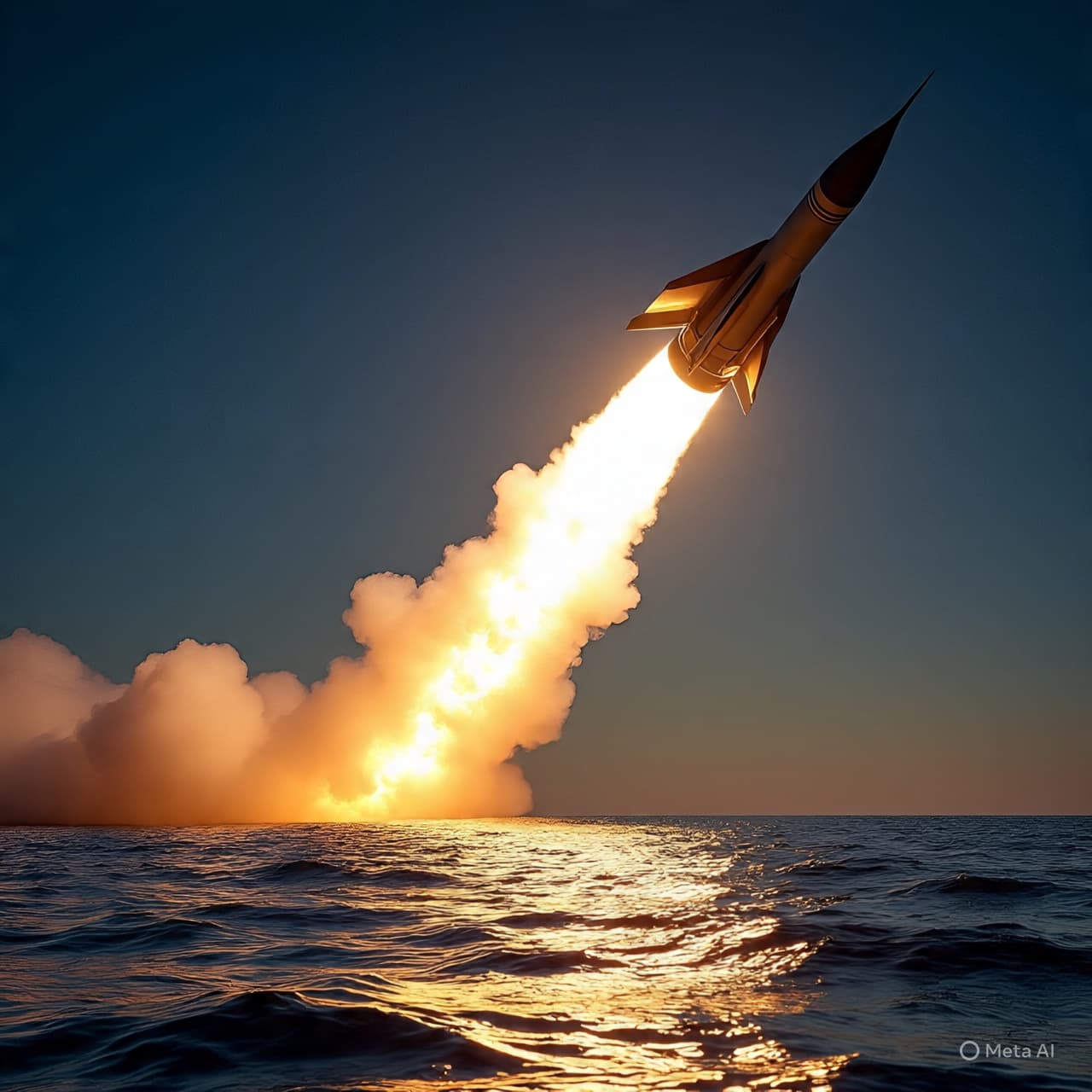
At dawn along the Sea of Japan, before the sun’s first glow warmed the still water, the sky became a stage not for fishermen’s nets but for streaks of fire stretching toward the horizon. In North Korea, where moments of quiet often fold into the rhythms of a state shaped by history and hidden from the world’s gaze, the latest spectacle came from an unexpected quarter: the roar of hypersonic missiles slicing across the air, their paths tracked by distant radars and anxious capitals alike. This was not merely a demonstration of hardware but a chapter written in iron and rhetoric, one that raised questions as much as it fired projectiles.
State media reported that leader Kim Jong Un personally oversaw the tests on Sunday, underscoring their importance to the country’s strategic deterrent. According to the Korean Central News Agency, the missiles — travelling at extreme speeds and capable of unpredictable flight paths — struck targets about 1,000 kilometers away, over waters to North Korea’s east. For Pyongyang, such a display was meant to examine readiness and enhance the operational skill of its missile troops, yet the message carried heavier undertones about posture and purpose.
Kim framed the exercises against the backdrop of what he and official media called a “recent geopolitical crisis” and complex global circumstances requiring a “strong and reliable” deterrent. Though he did not expressly name specific events, analysts connected his remarks to international developments that have unsettled allies and adversaries alike, including recent military actions abroad by the United States — moves that drew sharp condemnation from Pyongyang as violations of sovereignty.
For the people of North Korea, such drills are often narrated as essential bulwarks against perceived threats; for the outside world, especially in East Asia and Washington, they can register as unsettling escalations. Hypersonic missiles — designed to travel at speeds many times that of sound while evading traditional tracking systems — are among the most advanced weapons in modern arsenals. Their testing reiterates Pyongyang’s intent to press forward with strategic capabilities that are not easily deterred or intercepted.
The timing of the tests was watched closely by regional capitals as South Korea’s president set out on a visit to China, a diplomatic moment aimed at easing tensions on the Korean Peninsula. Yet even as officials in Seoul and Tokyo condemned the launches as destabilizing and in violation of U.N. resolutions, Pyongyang maintained its course, asserting the exercises as critical to national defence and as signals of preparedness.
In the delicate balance of global power plays, where words and weapons each carry weight, this latest chapter from Pyongyang reminds observers that beneath the surface of quiet diplomacy lie the hum of engines, the glare of contrails, and the persistent echo of strategic uncertainty.
AI Image Disclaimer “Visuals are created with AI tools and are not real photographs.”
Sources Reuters, Al Jazeera, UPI, France 24, AFP syndicated reports.
Published by Banx Network. This article is part of the Banx decentralized media programme, powered by the BXE token on the XRP Ledger.