1. Nuclear energy is making a comeback
For years, nuclear energy faced an uncertain future. The Fukushima disaster in 2011 damaged public confidence, several countries reconsidered their nuclear programmes and some governments accelerated plans to shut down existing reactors.
The industry is now experiencing a significant change in direction.
Rising electricity demand, energy security concerns and the need for dependable low-carbon power are encouraging governments to reconsider nuclear energy.
Countries including the United States, China, India, France and the United Kingdom are pursuing different combinations of reactor construction, existing plant extensions and advanced nuclear technologies.
The International Energy Agency has identified nuclear power as an important part of the future electricity system, particularly as demand increases and countries attempt to reduce emissions.
The consequences extend beyond electricity generation. Every operating nuclear reactor requires a continuous supply of nuclear fuel, creating a long-term market for uranium producers.
According to the OECD Nuclear Energy Agency and International Atomic Energy Agency's September 2026 Uranium 2026 report, 418 commercial reactors were operating worldwide at the beginning of 2025, with combined capacity of approximately 378 gigawatts of electricity. These reactors required around 64,500 tonnes of uranium annually. 1
The renewed interest in nuclear power is therefore creating a potentially important opportunity for the global uranium industry.
2. Why uranium is becoming a strategic resource
Uranium is a naturally occurring radioactive metal used as fuel in nuclear fission reactors.
Inside a conventional nuclear reactor, uranium fuel undergoes a controlled chain reaction. The energy released generates heat, which is used to produce steam and drive turbines that generate electricity.
Unlike wind and solar power, nuclear plants can generate electricity continuously, regardless of weather conditions.
This makes nuclear energy particularly attractive to countries seeking reliable electricity to support industrial activity, growing cities and increasingly energy-intensive technologies.
Uranium is also strategically important because it cannot simply be replaced with another conventional fuel without changing the reactor's fuel system and operating arrangements.
Nuclear operators need dependable supplies, and securing those supplies involves long-term relationships with mining companies, conversion facilities, enrichment providers and fuel manufacturers.
This creates a specialised international supply chain in which uranium has a role extending beyond its commodity value.
For governments, access to nuclear fuel is increasingly connected to energy independence and national security.
3. The supply problem: mines are struggling to keep up
One of the most important developments in the uranium market is the gap between the amount of uranium required by nuclear reactors and the amount supplied by newly mined production.
The World Nuclear Association estimates that uranium mines supplied approximately 90% of reactor requirements in recent years. The remainder came from secondary sources, including inventories, recycled material and other previously produced uranium. 2
This matters because existing inventories cannot necessarily provide a permanent solution to a sustained increase in demand.
Mining companies need to discover deposits, secure financing, obtain permits, construct processing facilities and develop the infrastructure required to extract uranium commercially.
These processes can take many years.
The September 2026 OECD-NEA and IAEA report highlights the scale of the challenge. It estimates that identified recoverable uranium resources exceed 8.1 million tonnes at costs below $260 per kilogram of uranium.
That resource base is sufficient to meet even the report's highest projected demand through 2050. However, the report warns that turning resources into actual production requires substantial and sustained investment. 1
In other words, the world does not necessarily lack uranium underground. It faces the challenge of developing enough commercially viable production to meet future requirements.
4. Kazakhstan: the world's uranium powerhouse
<escape>Kazakhstan</escape> occupies a central position in the global uranium industry.
The Central Asian country has become the world's largest uranium producer, supported by extensive deposits and mining operations using in-situ recovery techniques.
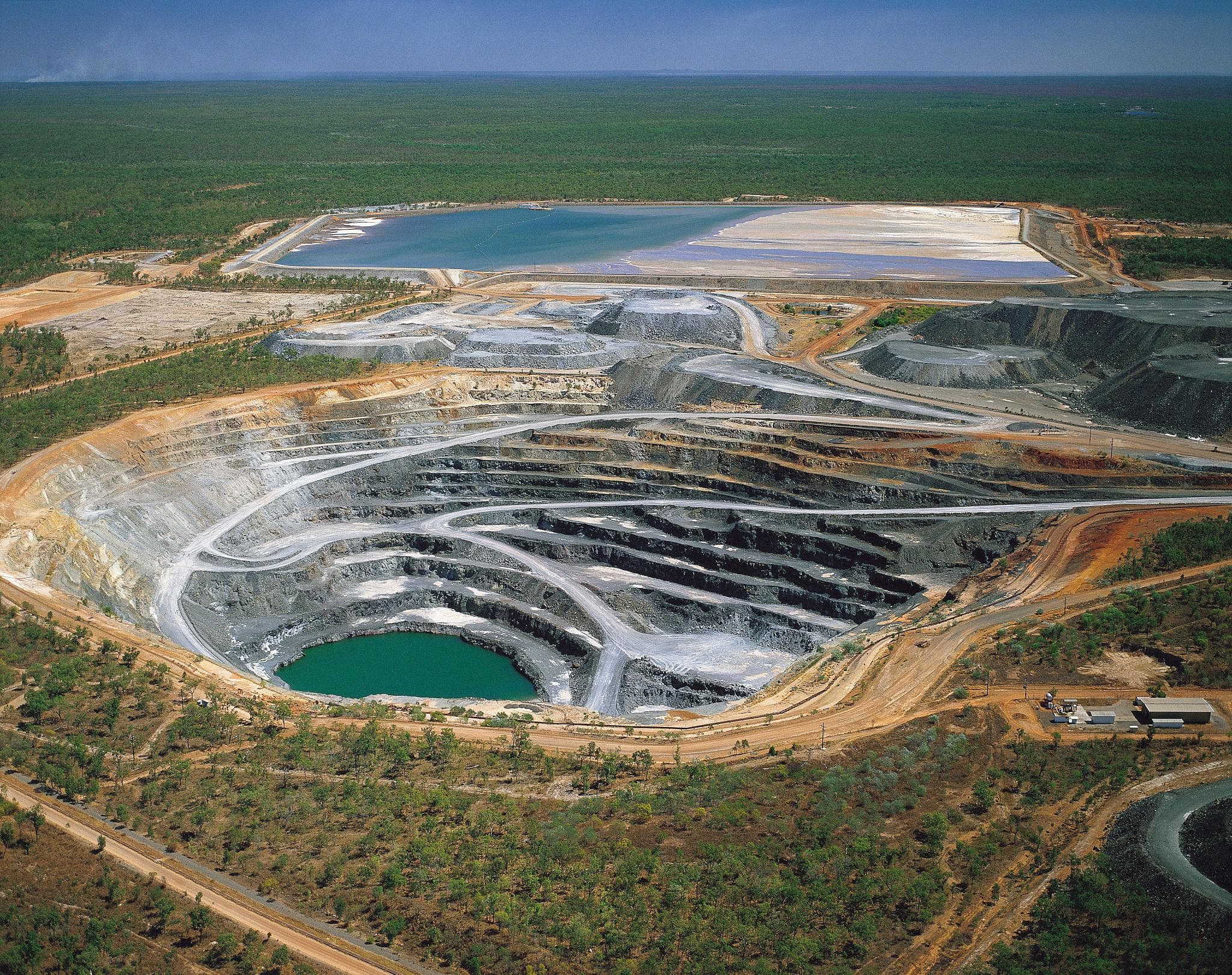
In-situ recovery involves circulating a specially controlled solution through underground mineral deposits to dissolve uranium, which can then be brought to the surface and processed.
This method can be less disruptive to the surface environment than conventional open-pit mining, although it still requires careful management of groundwater and surrounding geology.
Kazakhstan's position gives it considerable influence over the international uranium supply chain.
However, its production faces challenges, including shortages of sulphuric acid, labour constraints and operational difficulties.
These pressures demonstrate how concentrated uranium production can create vulnerabilities for the wider nuclear industry.
If a major producing country experiences disruptions, utilities may need to compete more aggressively for alternative supplies.
The importance of Kazakhstan is therefore not simply that it possesses large uranium deposits. Its production decisions can influence the availability of nuclear fuel worldwide.
5. Canada, Australia and Africa: competing for the next mining boom
Although Kazakhstan dominates production, several other countries possess substantial uranium resources and opportunities for expansion.
Canada
Canada is one of the world's most important uranium-producing countries.
Its Athabasca Basin in Saskatchewan contains some exceptionally high-grade uranium deposits, attracting international mining companies and investment.
Companies including Cameco and other mining developers are involved in projects designed to strengthen future supply.
Canada also has an established nuclear industry, making it an important participant across several stages of the nuclear fuel cycle.
Australia
Australia possesses some of the world's largest identified uranium resources.
However, political decisions and restrictions on uranium mining have limited the development of its domestic industry.
The country has significant potential to become a more important supplier if regulatory and political conditions change.
Namibia
Namibia has become a major uranium producer, supported by established mines and significant investment in the sector.
Its position in southern Africa makes it an important source of supply for international nuclear markets.
Uzbekistan
Uzbekistan is another important Central Asian producer. Its uranium industry has attracted attention as nuclear fuel buyers seek to diversify their sources of supply.
Together, these countries demonstrate that the future uranium market will depend on a relatively concentrated group of producers.
The United States Geological Survey identifies Kazakhstan, Canada, Namibia, Australia, Uzbekistan and Russia among the leading uranium-producing countries. 3
6. AI data centres are creating a new source of nuclear demand
One of the most interesting developments in the uranium market is the connection between nuclear energy and artificial intelligence.
AI data centres require enormous amounts of electricity to operate processors, networking equipment and cooling systems.
As technology companies expand their infrastructure, access to reliable power is becoming a major consideration.
This is encouraging renewed interest in nuclear energy.
Unlike intermittent renewable generation, nuclear power can provide continuous electricity, making it attractive for energy-intensive facilities that need dependable supplies around the clock.
Several major technology companies have explored nuclear power agreements and investments.
Microsoft, for example, announced an agreement in 2024 with Constellation Energy to support the planned restart of Three Mile Island Unit 1, subject to regulatory approvals. The project was subsequently associated with a 20-year power purchase agreement intended to supply electricity to Microsoft's operations. 4
Amazon has also announced investments and agreements connected to nuclear energy and small modular reactor development. 5
These developments are important because they demonstrate how major technology companies are becoming involved in the energy supply chain.
However, there is an important distinction: a data centre agreement does not automatically mean a new nuclear reactor will be built. Some projects involve existing plants, while others remain at earlier development stages.
If nuclear capacity expands substantially to support future electricity demand, the uranium industry could benefit from an additional source of long-term demand.
7. The small modular reactor opportunity
Small modular reactors, commonly known as SMRs, are another development attracting attention.
Traditional nuclear power stations are large infrastructure projects that can require substantial upfront investment and long construction periods.
SMRs are designed to use smaller reactor units, with the possibility of standardised manufacturing and more flexible deployment.
Their potential applications include:
Electricity generation for smaller grids.
Power supplies for remote industrial facilities.
Energy for large data centres.
Industrial heat production.
Supporting electricity systems with growing demand.
Companies and governments are investing in SMR development, hoping that standardised designs can reduce construction complexity and improve project economics.
However, the technology is not yet commercially established at the scale required to transform the global nuclear industry.
Licensing, financing, construction costs, fuel availability and public acceptance remain significant challenges.
There is also a question about how much additional uranium these reactors will actually consume.
The OECD-NEA and IAEA's projections indicate that the longer-term uranium market will depend much more broadly on the overall expansion of nuclear generating capacity, rather than on SMRs alone. 1
8. Uranium prices and the investment opportunity
The renewed interest in nuclear power has helped bring uranium back into the attention of commodity investors.
Unlike oil or copper, uranium is not traded through a single centralised exchange in the same way as many major commodities.
A significant proportion of the market operates through privately negotiated contracts between uranium producers and nuclear utilities.
These agreements can provide producers with longer-term revenue visibility while giving utilities greater confidence in securing future fuel supplies.
The World Nuclear Association reported that long-term uranium price indicators reached $96.50 per pound of U3O8 at the end of August 2026, exceeding the previous 2007–08 peak of $95 per pound. 2
The market is also attracting financial investors through uranium-focused investment vehicles and mining equities.
Several areas are worth watching:
Uranium mining companies
Businesses that own and operate producing mines could benefit if long-term contract prices remain strong and production expands.
Examples include:
Cameco — one of the world's major uranium producers, headquartered in Canada.
Kazatomprom — Kazakhstan's national uranium company and a major global producer.
Paladin Energy — an Australian uranium company with operations in Namibia.
Uranium Energy Corp — a US-focused uranium company developing domestic production capabilities.
Energy Fuels — a US-based uranium and critical minerals producer.
Physical uranium investment vehicles
Investment products such as the Sprott Physical Uranium Trust provide exposure to physical uranium holdings rather than relying exclusively on mining company shares.
However, their market prices can trade at premiums or discounts to the value of their underlying assets.
Nuclear fuel supply companies
The nuclear fuel cycle also includes conversion, enrichment and fuel fabrication. Companies operating in these areas could benefit from increased investment in nuclear infrastructure.
Investors should remember that uranium equities can be highly volatile. Mining costs, political decisions, project delays, commodity prices and financing conditions can all affect company performance.
A rising uranium price does not guarantee that every uranium-related company will become profitable.
9. The geopolitical battle for nuclear fuel
Uranium is becoming increasingly important in international relations.
The nuclear fuel supply chain is not limited to mining. Uranium must also undergo conversion and enrichment before it can be manufactured into suitable reactor fuel.
These stages are highly specialised, and global capacity is concentrated among a relatively small number of major operators.
Russia has historically played an important role in the international enrichment market.
This has created concerns among Western governments about dependence on Russian nuclear fuel services, particularly following the invasion of Ukraine.
The United States has introduced restrictions on Russian uranium imports, with waivers available under specified circumstances. The restrictions are scheduled to take full effect in 2028, subject to the legislation's provisions. 6
This is encouraging investment in alternative supply chains.
The United States, Canada, France and other countries are seeking to strengthen domestic or allied capabilities across uranium conversion, enrichment and fuel fabrication.
The geopolitical competition is therefore not simply about who owns the uranium deposits.
It is also about who controls the infrastructure needed to turn uranium into usable nuclear fuel.
10. The risks that could derail the uranium boom
Despite the positive outlook, the uranium industry faces several important risks.
Nuclear construction delays
Nuclear power stations are expensive and complex projects. Delays, regulatory problems and rising construction costs can weaken demand forecasts.
Political opposition
Changes in government policy, public attitudes and environmental regulations can affect the future of nuclear energy.
Mining development risks
New uranium mines can take many years to develop. Financing difficulties, permitting delays and operational problems may prevent planned projects from reaching production.
Alternative energy technologies
Renewable energy, battery storage and improvements in electricity networks could influence how much additional nuclear capacity countries ultimately require.
Commodity market volatility
Uranium prices can rise sharply when utilities compete for supply, but they can also decline if inventories increase, demand disappoints or new production enters the market.
The investment case depends on nuclear capacity actually expanding and the uranium industry successfully developing enough reliable supply.
11. The uranium market towards 2050
The long-term outlook for uranium is closely linked to the future of nuclear power.
The September 2026 Uranium 2026 report from the OECD Nuclear Energy Agency and International Atomic Energy Agency projects that global nuclear generating capacity could reach between approximately 84,800 and 143,900 tonnes of annual uranium requirements by 2050 under its low- and high-growth scenarios. 1
These projections highlight the potential scale of the market, but they are scenarios rather than guaranteed outcomes.
Achieving the higher levels would require substantial investment in new reactors, existing plant extensions, fuel infrastructure and uranium mining.
It would also require governments to maintain supportive policies over several decades.
The industry therefore faces a long-term investment challenge: production capacity needs to be developed before future demand arrives.
That creates opportunities for mining companies and fuel suppliers, but also exposes them to the risks associated with long development timelines.
12. The next major commodity opportunity?
The uranium market is entering an important period.
Nuclear energy is gaining renewed political and commercial support, electricity demand is increasing and governments are becoming more concerned about energy security.
At the same time, the uranium supply chain remains dependent on a relatively concentrated group of producing countries and specialised fuel-processing facilities.
This combination is creating renewed interest in uranium as both an industrial commodity and a strategic resource.
The opportunity extends beyond mining. Conversion, enrichment, fuel fabrication, reactor construction and specialist engineering could all become important parts of the next nuclear investment cycle.
But the uranium story should not be viewed as a guaranteed commodity boom.
The future market will depend on whether governments actually build the reactors they have announced, whether mining companies can deliver new supply and whether nuclear power remains economically competitive.
One thing is clear: as the world searches for reliable electricity to support its next phase of industrial and technological development, uranium is becoming increasingly difficult to ignore.
The next energy race may not simply be about who can generate the most electricity.
It could also be about who can secure the fuel needed to keep the reactors running.
Sources
OECD Nuclear Energy Agency — Adequate Uranium Resources Available, but Sustained Investment Essential to Support Global Nuclear Capacity Growth (September 2026)
World Nuclear Association — Uranium Markets (Updated October 2026)
US Geological Survey — Uranium: Deposits, Production, Resources, Market Dynamics and Supply Chain Risks
Constellation Energy — Restart of Three Mile Island Unit 1 to Support Microsoft's Electricity Needs
Amazon — Nuclear Energy Investments and Small Modular Reactor Development
US Congress — Prohibiting Russian Uranium Imports Act
International Energy Agency — Nuclear Power and Energy Security
Published by Banx Network. This article is part of the Banx decentralized media programme, powered by the BXE token on the XRP Ledger.