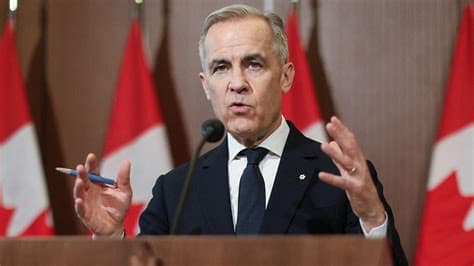
In the theater of international diplomacy, gifts are often more than mere tokens; they are symbols of relationship, intent, and sometimes, subtle messaging. Mark Carney, the former Governor of the Bank of Canada and current political figure, recently recounted a peculiar anecdote from his time interacting with the Trump administration. He described receiving a gift from the White House accompanied by an unusual warning: "Maybe they'll shoot you." This remark, while perhaps intended as humor or a stark reminder of security risks, underscores the complex and often unpredictable nature of high-stakes political engagement.
Carney’s recollection highlights the tension that can exist even in formal diplomatic exchanges. The comment suggests an awareness of the dangers inherent in public life, particularly for figures who may find themselves in the crosshairs of political controversy or public scrutiny. It reflects a worldview where threats are not abstract but immediate, requiring constant vigilance. For Carney, this moment served as a poignant reminder of the physical realities that accompany political influence and visibility.
The context of such a warning is significant, given the heightened security concerns surrounding political leaders in recent years. The reference to potential violence speaks to a broader climate of polarization and unrest, where rhetoric can sometimes translate into action. It is a sobering thought that even in the protected environs of the White House, the shadow of danger looms. This anecdote offers a glimpse into the personal experiences of those navigating the upper echelons of power.
Diplomatic gifts often carry historical or cultural weight, serving as bridges between nations. However, when accompanied by such a stark comment, the gesture takes on a different tone. It becomes a mix of courtesy and caution, blending tradition with a raw acknowledgment of risk. This duality is characteristic of modern politics, where formalities coexist with underlying tensions and uncertainties. It challenges recipients to interpret not just the object, but the intent behind the words.
For observers, Carney’s story provides insight into the interpersonal dynamics of global leadership. It humanizes the figures involved, showing that they too navigate fears and uncertainties. The humor, if intended, may have been a way to diffuse tension, but it also reveals a deep-seated awareness of vulnerability. It reminds us that behind the polished public personas are individuals dealing with the pressures of their roles.
The incident also raises questions about communication styles in diplomacy. Directness can be refreshing, but it can also be jarring when it involves threats of violence. Understanding the nuance of such interactions requires a keen sense of context and cultural sensitivity. For Carney, sharing this story now may serve to illustrate the unique challenges he faced and the resilience required to operate in such environments.
As political landscapes shift, these personal anecdotes become part of the historical record. They offer color and depth to our understanding of past administrations and their interactions with international counterparts. Carney’s account adds a layer of complexity to the narrative of US-Canada relations, highlighting the personal dimensions of political diplomacy. It is a reminder that history is made not just by policies, but by people.
In the end, the story of the White House gift and its odd warning is a testament to the unpredictable nature of political life. It invites reflection on the costs of public service and the importance of security in an uncertain world. As we look to the future of international relations, let us remember the human elements that shape these interactions, striving for dialogue that is both respectful and safe.
Note: Visuals for this article are AI-generated representations of diplomatic settings and symbolic gestures, designed to complement the narrative.
Sources: CBC News, Reuters, The Globe and Mail, Politico
Published by Banx Network. This article is part of the Banx decentralized media programme, powered by the BXE token on the XRP Ledger.